
Is Turkey-Pakistan axis & Kashmir push a new threat for India? What this ex-Pentagon official warns
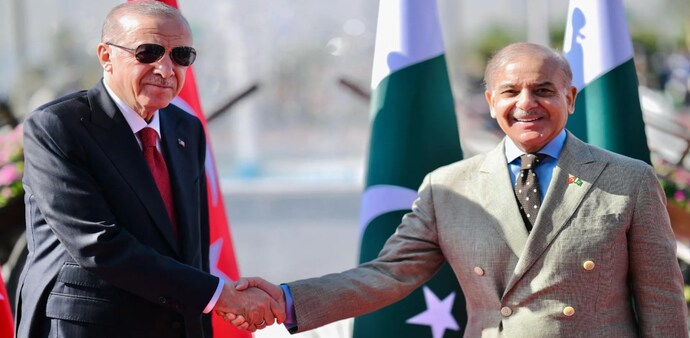
Turkey’s alignment with Pakistan became more visible during Operation Sindoor, India’s military response to cross-border terror infrastructure earlier this year.
- May 17, 2026,
- Updated May 17, 2026 3:57 PM IST
Turkey’s unveiling of a new long-range ballistic missile and its growing support for Pakistan during Operation Sindoor have renewed concerns in India’s strategic circles.
Former US Department of Defence official Michael Rubin argued in The Sunday Guardian that Turkey’s new “Yildirimhan” intercontinental ballistic missile signals a broader geopolitical shift aimed at strengthening Pakistan’s position against India.
Turkey’s “Yildirimhan” missile
Turkey unveiled the “Yildirimhan” missile at the SAHA 2026 Defence and Aerospace Exhibition in Istanbul on May 5. Turkish officials claimed the missile can carry a 3,000-kg warhead at speeds of Mach 25.
If accurate, the missile’s range would extend across Europe, Africa, West Asia, and India.
Rubin argued that the missile’s strategic purpose points toward India, noting that Turkey, as a NATO member, already has collective defence protection against threats such as Russia.
He said the development reflects the expanding geopolitical ambitions of Turkish President Recep Tayyip Erdoğan, whom he described as increasingly driven by Islamist ideology.
Erdoğan’s Kashmir positioning
Erdoğan has repeatedly raised Kashmir at international forums while backing Pakistan’s position on the issue.
In 2020, he said “Kashmir is as close to us as Turkey” and later described it as a “burning issue.” India strongly rejected those remarks, reiterating that Jammu and Kashmir is an internal matter.
Rubin claimed Turkey has also expanded outreach programmes and scholarships for Kashmiri students as part of a wider ideological influence campaign.
The article argued that Erdoğan’s worldview combines “neo-Ottoman” and “neo-Mughal” ambitions, positioning Turkey as a champion of Muslim political causes globally.
Turkey’s backing for Pakistan during Operation Sindoor
Turkey’s alignment with Pakistan became more visible during Operation Sindoor, India’s military response to cross-border terror infrastructure earlier this year.
Ankara openly backed Islamabad diplomatically, criticised India’s actions, and called for restraint. Pro-government Turkish media outlets also amplified Pakistan’s narrative on Kashmir and regional escalation.
Indian analysts have increasingly pointed to expanding Turkey-Pakistan defence cooperation, including drones, naval platforms, military training, and intelligence ties.
Concerns over a wider strategic axis
Rubin warned that Turkey may not directly confront India militarily but could attempt to shield Pakistan during future India-Pakistan crises.
According to the analysis, Turkey’s missile capability and ideological hostility toward India could complicate India’s strategic calculations during any future escalation linked to Kashmir-based terrorism.
India has not officially commented on Rubin’s latest claims. However, New Delhi has repeatedly objected to Turkey’s statements on Kashmir and has recalibrated ties with Ankara in recent years.
India-Turkey ties under strain
Relations between India and Turkey have remained strained over Ankara’s support for Pakistan on Kashmir.
India maintains that Jammu and Kashmir is an integral part of the country and rejects external interference on the issue.
Strategic experts believe the growing Turkey-Pakistan partnership could increasingly influence regional security dynamics as Ankara expands its missile and defence capabilities.
Turkey’s unveiling of a new long-range ballistic missile and its growing support for Pakistan during Operation Sindoor have renewed concerns in India’s strategic circles.
Former US Department of Defence official Michael Rubin argued in The Sunday Guardian that Turkey’s new “Yildirimhan” intercontinental ballistic missile signals a broader geopolitical shift aimed at strengthening Pakistan’s position against India.
Turkey’s “Yildirimhan” missile
Turkey unveiled the “Yildirimhan” missile at the SAHA 2026 Defence and Aerospace Exhibition in Istanbul on May 5. Turkish officials claimed the missile can carry a 3,000-kg warhead at speeds of Mach 25.
If accurate, the missile’s range would extend across Europe, Africa, West Asia, and India.
Rubin argued that the missile’s strategic purpose points toward India, noting that Turkey, as a NATO member, already has collective defence protection against threats such as Russia.
He said the development reflects the expanding geopolitical ambitions of Turkish President Recep Tayyip Erdoğan, whom he described as increasingly driven by Islamist ideology.
Erdoğan’s Kashmir positioning
Erdoğan has repeatedly raised Kashmir at international forums while backing Pakistan’s position on the issue.
In 2020, he said “Kashmir is as close to us as Turkey” and later described it as a “burning issue.” India strongly rejected those remarks, reiterating that Jammu and Kashmir is an internal matter.
Rubin claimed Turkey has also expanded outreach programmes and scholarships for Kashmiri students as part of a wider ideological influence campaign.
The article argued that Erdoğan’s worldview combines “neo-Ottoman” and “neo-Mughal” ambitions, positioning Turkey as a champion of Muslim political causes globally.
Turkey’s backing for Pakistan during Operation Sindoor
Turkey’s alignment with Pakistan became more visible during Operation Sindoor, India’s military response to cross-border terror infrastructure earlier this year.
Ankara openly backed Islamabad diplomatically, criticised India’s actions, and called for restraint. Pro-government Turkish media outlets also amplified Pakistan’s narrative on Kashmir and regional escalation.
Indian analysts have increasingly pointed to expanding Turkey-Pakistan defence cooperation, including drones, naval platforms, military training, and intelligence ties.
Concerns over a wider strategic axis
Rubin warned that Turkey may not directly confront India militarily but could attempt to shield Pakistan during future India-Pakistan crises.
According to the analysis, Turkey’s missile capability and ideological hostility toward India could complicate India’s strategic calculations during any future escalation linked to Kashmir-based terrorism.
India has not officially commented on Rubin’s latest claims. However, New Delhi has repeatedly objected to Turkey’s statements on Kashmir and has recalibrated ties with Ankara in recent years.
India-Turkey ties under strain
Relations between India and Turkey have remained strained over Ankara’s support for Pakistan on Kashmir.
India maintains that Jammu and Kashmir is an integral part of the country and rejects external interference on the issue.
Strategic experts believe the growing Turkey-Pakistan partnership could increasingly influence regional security dynamics as Ankara expands its missile and defence capabilities.