
Fortifying skies: India plans to buy advanced S-500 missile system from Russia
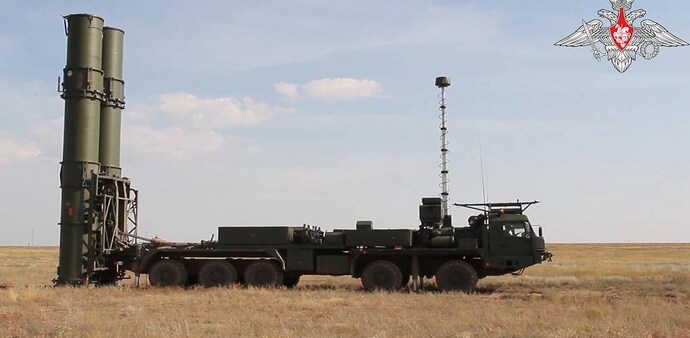
S-500 system is intended for intercepting and destroying ballistic missiles, hypersonic cruise missiles, and aircraft.
- Sep 29, 2025,
- Updated Sep 29, 2025 2:28 PM IST
India is evaluating the purchase of additional S-400 or latest S-500 systems from Russia following the performance of its current missile defence arsenal during Operation Sindoor, The Print reported Monday.
The report cited defence and security officials who confirmed that both systems are under active consideration. "The S-400 performed very well in Operation Sindoor, and has a huge deterrence and punitive capability. Yes, we are looking at procuring more of the same, or the S-500," a source was quoted as saying by The Print.
The existing contract for five S-400 units, signed in 2018 for $5.43 billion, includes a follow-on clause allowing India to procure five more at the same terms, adjusted for inflation and exchange rate fluctuations. Four of the systems have already been delivered, and Russia is expected to hand over the final unit by September 2026.
During Operation Sindoor, the S-400 reportedly intercepted five Pakistani fighter aircraft and downed an AEW&C/ELINT platform at a range of roughly 300 kilometres - "the longest surface-to-air kill recorded in history," Air Chief Marshal A.P. Singh said. He described the system as a "game-changer" for Indian air defence.
India's interest in the S-500 dates back to the initial S-400 agreement, but Russia was unwilling to offer the newer system at the time due to its limited domestic induction. That may soon change.
Russian Deputy Prime Minister Yury Borisov told RBC TV in December 2021 that "India will be the first on the list, if it expresses its desire to buy these advanced armaments."
Russia's Defence Ministry confirmed in mid-2021 that the S-500 had successfully intercepted a fast-moving ballistic target during trials at the Kapustin Yar test site. The system is designed to counter all current and future airborne threats, including ballistic missiles, hypersonic weapons, and low-flying cruise missiles.
The S-500 system is intended for intercepting and destroying ballistic missiles, hypersonic cruise missiles, and aircraft. It has operational range of up to 600 km for anti-ballistic missile roles and up to 500 km for air defense. According to TASS, the system can engage targets up to 180–200 km altitude and track up to 10 hypersonic ballistic targets at once. The system has anti-ballistic and anti-satellite capability.
India is evaluating the purchase of additional S-400 or latest S-500 systems from Russia following the performance of its current missile defence arsenal during Operation Sindoor, The Print reported Monday.
The report cited defence and security officials who confirmed that both systems are under active consideration. "The S-400 performed very well in Operation Sindoor, and has a huge deterrence and punitive capability. Yes, we are looking at procuring more of the same, or the S-500," a source was quoted as saying by The Print.
The existing contract for five S-400 units, signed in 2018 for $5.43 billion, includes a follow-on clause allowing India to procure five more at the same terms, adjusted for inflation and exchange rate fluctuations. Four of the systems have already been delivered, and Russia is expected to hand over the final unit by September 2026.
During Operation Sindoor, the S-400 reportedly intercepted five Pakistani fighter aircraft and downed an AEW&C/ELINT platform at a range of roughly 300 kilometres - "the longest surface-to-air kill recorded in history," Air Chief Marshal A.P. Singh said. He described the system as a "game-changer" for Indian air defence.
India's interest in the S-500 dates back to the initial S-400 agreement, but Russia was unwilling to offer the newer system at the time due to its limited domestic induction. That may soon change.
Russian Deputy Prime Minister Yury Borisov told RBC TV in December 2021 that "India will be the first on the list, if it expresses its desire to buy these advanced armaments."
Russia's Defence Ministry confirmed in mid-2021 that the S-500 had successfully intercepted a fast-moving ballistic target during trials at the Kapustin Yar test site. The system is designed to counter all current and future airborne threats, including ballistic missiles, hypersonic weapons, and low-flying cruise missiles.
The S-500 system is intended for intercepting and destroying ballistic missiles, hypersonic cruise missiles, and aircraft. It has operational range of up to 600 km for anti-ballistic missile roles and up to 500 km for air defense. According to TASS, the system can engage targets up to 180–200 km altitude and track up to 10 hypersonic ballistic targets at once. The system has anti-ballistic and anti-satellite capability.