
From 1965 to Balakot: How MiG-21 shaped India’s air battles. A look at the jet that downed Pak F-16
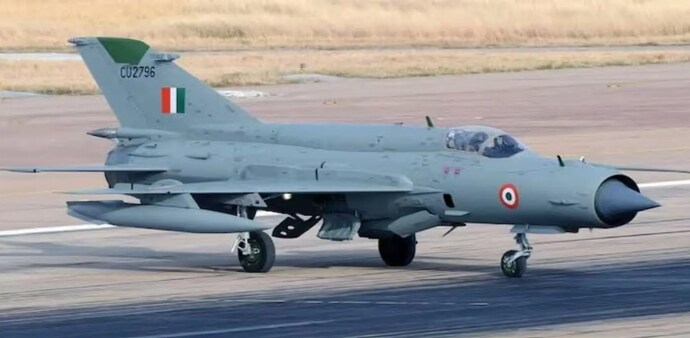
In the aftermath of the Balakot strikes, MiG-21 Bisons were scrambled to intercept Pakistani fighters. In a rare modern dogfight, Wing Commander Abhinandan Varthaman shot down a Pakistani F-16 before his aircraft was downed, cementing the MiG-21’s reputation as a fighter that could still punch above its weight even in the 21st century.
- Sep 26, 2025,
- Updated Sep 26, 2025 7:20 PM IST
When Sunny Deol’s Border hit the screens in 1997, audiences were gripped by its dramatic retelling of the 1971 Battle of Longewala. While the film immortalised the grit of Indian soldiers on the ground, it also showcased the air power that turned the tide — most notably the Indian Air Force’s MiG-21s, alongside Hunters, which struck enemy armour advancing through the desert. Beyond Bollywood, the MiG-21 was not just cinematic spectacle but a critical asset in the IAF’s arsenal, shaping India’s aerial dominance from 1965 to Balakot and carving a combat legacy across the world.
The Mikoyan-Gurevich MiG-21 (NATO reporting name: Fishbed), once the pride of the Indian Air Force (IAF), has not only shaped the outcome of key battles in South Asia but also earned a reputation worldwide as one of the most battle-tested fighter jets in aviation history. Inducted into India’s fleet in 1963, it went on to become the backbone of the IAF for decades.
Role in India’s wars
1965 Indo-Pak War: A Supersonic Debut
India’s MiG-21s made their combat debut in the 1965 war with Pakistan. Though inducted in small numbers, they gave the IAF a crucial technological edge as South Asia’s first supersonic jets, used mainly in air defence roles.
1971 Indo-Pak War: Turning the Tide
By 1971, the MiG-21 had matured into India’s primary air superiority fighter. It claimed multiple kills against Pakistan’s F-104 Starfighters, F-86 Sabres, and Mirage IIIs, while also flying bombing sorties against enemy airbases and infrastructure. The aircraft’s dominance was a defining factor in India’s victory and the creation of Bangladesh.
Kargil War 1999: Flying in the Mountains
During the Kargil conflict, MiG-21s carried out ground attack and reconnaissance missions in high-altitude terrain. The loss of Sqn Ldr Ajay Ahuja to a Pakistani Stinger missile became one of the most remembered tragedies of the war.
Balakot Aerial Clash 2019: Dogfighting Legacy
In the aftermath of the Balakot strikes, MiG-21 Bisons were scrambled to intercept Pakistani fighters. In a rare modern dogfight, Wing Commander Abhinandan Varthaman shot down a Pakistani F-16 before his aircraft was downed, cementing the MiG-21’s reputation as a fighter that could still punch above its weight even in the 21st century.
MiG-21 in global wars & conflicts
The MiG-21 was not just India’s warhorse. With more than 11,500 units produced and service in over 60 countries, it became the most produced and most widely used supersonic jet in history.
- Vietnam War (1965-73): North Vietnam used MiG-21s to deadly effect against American F-4 Phantoms, scoring over 200 kills.
- Arab-Israeli wars: Egyptian and Syrian MiG-21s clashed with Israeli Mirages and Phantoms, with mixed results.
- Iran-Iraq War (1980-88): Iraqi MiG-21s flew both air-to-air and ground missions but struggled against Iranian F-14s.
- Angolan civil war: Cuban-piloted MiG-21s fought South African Mirage F1s.
- Other deployments: From Afghanistan to the Ogaden War in Africa, the MiG-21 often found itself fighting on both sides of the same battlefield.
Notable features that made it iconic
- Supersonic speed: Among the first mass-produced jets capable of Mach 2.
- Delta wing agility: Fast climb rate and maneuverability in dogfights.
- Multi-role versatility: Served as interceptor, ground-attack platform, and reconnaissance aircraft.
- Affordable & easy to maintain: Exported widely during the Cold War.
- Longevity: In service since the 1960s, with India’s upgraded MiG-21 Bison still flew missions in the 2020s.
Mixed legacy
While the MiG-21’s combat record is legendary, it has also drawn criticism for high peacetime accident rates in India, earning nicknames like “Flying Coffin.” Yet, few aircraft in history can claim such a wide and impactful service record — from the skies of Vietnam and the Middle East to the Himalayas and Kashmir. For India, the MiG-21 remains not just a jet but a symbol of a transformative era in air combat history.
When Sunny Deol’s Border hit the screens in 1997, audiences were gripped by its dramatic retelling of the 1971 Battle of Longewala. While the film immortalised the grit of Indian soldiers on the ground, it also showcased the air power that turned the tide — most notably the Indian Air Force’s MiG-21s, alongside Hunters, which struck enemy armour advancing through the desert. Beyond Bollywood, the MiG-21 was not just cinematic spectacle but a critical asset in the IAF’s arsenal, shaping India’s aerial dominance from 1965 to Balakot and carving a combat legacy across the world.
The Mikoyan-Gurevich MiG-21 (NATO reporting name: Fishbed), once the pride of the Indian Air Force (IAF), has not only shaped the outcome of key battles in South Asia but also earned a reputation worldwide as one of the most battle-tested fighter jets in aviation history. Inducted into India’s fleet in 1963, it went on to become the backbone of the IAF for decades.
Role in India’s wars
1965 Indo-Pak War: A Supersonic Debut
India’s MiG-21s made their combat debut in the 1965 war with Pakistan. Though inducted in small numbers, they gave the IAF a crucial technological edge as South Asia’s first supersonic jets, used mainly in air defence roles.
1971 Indo-Pak War: Turning the Tide
By 1971, the MiG-21 had matured into India’s primary air superiority fighter. It claimed multiple kills against Pakistan’s F-104 Starfighters, F-86 Sabres, and Mirage IIIs, while also flying bombing sorties against enemy airbases and infrastructure. The aircraft’s dominance was a defining factor in India’s victory and the creation of Bangladesh.
Kargil War 1999: Flying in the Mountains
During the Kargil conflict, MiG-21s carried out ground attack and reconnaissance missions in high-altitude terrain. The loss of Sqn Ldr Ajay Ahuja to a Pakistani Stinger missile became one of the most remembered tragedies of the war.
Balakot Aerial Clash 2019: Dogfighting Legacy
In the aftermath of the Balakot strikes, MiG-21 Bisons were scrambled to intercept Pakistani fighters. In a rare modern dogfight, Wing Commander Abhinandan Varthaman shot down a Pakistani F-16 before his aircraft was downed, cementing the MiG-21’s reputation as a fighter that could still punch above its weight even in the 21st century.
MiG-21 in global wars & conflicts
The MiG-21 was not just India’s warhorse. With more than 11,500 units produced and service in over 60 countries, it became the most produced and most widely used supersonic jet in history.
- Vietnam War (1965-73): North Vietnam used MiG-21s to deadly effect against American F-4 Phantoms, scoring over 200 kills.
- Arab-Israeli wars: Egyptian and Syrian MiG-21s clashed with Israeli Mirages and Phantoms, with mixed results.
- Iran-Iraq War (1980-88): Iraqi MiG-21s flew both air-to-air and ground missions but struggled against Iranian F-14s.
- Angolan civil war: Cuban-piloted MiG-21s fought South African Mirage F1s.
- Other deployments: From Afghanistan to the Ogaden War in Africa, the MiG-21 often found itself fighting on both sides of the same battlefield.
Notable features that made it iconic
- Supersonic speed: Among the first mass-produced jets capable of Mach 2.
- Delta wing agility: Fast climb rate and maneuverability in dogfights.
- Multi-role versatility: Served as interceptor, ground-attack platform, and reconnaissance aircraft.
- Affordable & easy to maintain: Exported widely during the Cold War.
- Longevity: In service since the 1960s, with India’s upgraded MiG-21 Bison still flew missions in the 2020s.
Mixed legacy
While the MiG-21’s combat record is legendary, it has also drawn criticism for high peacetime accident rates in India, earning nicknames like “Flying Coffin.” Yet, few aircraft in history can claim such a wide and impactful service record — from the skies of Vietnam and the Middle East to the Himalayas and Kashmir. For India, the MiG-21 remains not just a jet but a symbol of a transformative era in air combat history.