
Grandson has no right to grandfather’s property held by father, Supreme Court rules
The court also pointed out that a son's son is not listed as a Class I heir under the Hindu Succession Act.
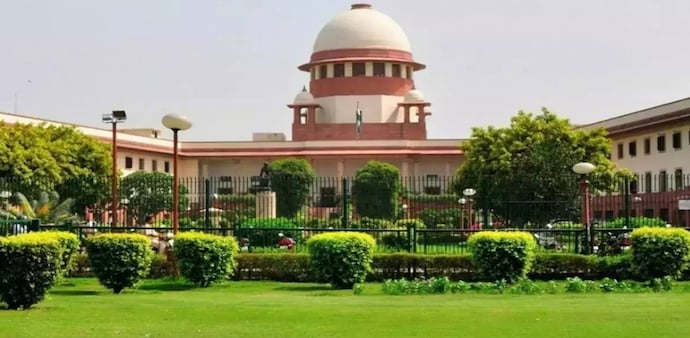
- Nov 11, 2026,
- Updated Nov 11, 2026 1:36 PM IST
A grandson cannot claim a share in property inherited by his father from his grandfather, the Supreme Court has ruled. The court said that once a person inherits property from his father under Section 8 of the Hindu Succession Act, he becomes the absolute owner of that property and can deal with it as he wishes, including excluding his own sons, The Times of India reported on Wednesday.
The ruling came as the Supreme Court ended a 29-year legal battle over a property dispute. A bench of Justices Augustine George Masih and Sunita Agarwal rejected a son's plea seeking partition of his father's property.
The son had filed the suit in 1997, claiming that the property was ancestral or joint family property. The Supreme Court, however, upheld the High Court's order and said a grandson cannot seek partition of property held by his father.
Referring to Section 8 of the Hindu Succession Act, which lays down the rules for succession when a Hindu male dies intestate, the bench said a son becomes the absolute owner of property inherited from his father. His own son does not get a right in that property merely by birth.
The court also pointed out that a son's son is not listed as a Class I heir under the Hindu Succession Act.
" A son's son is not mentioned as an heir under Class I of the Schedule, and therefore, he could not get any right in the property of his grandfather," it said.
Don't Miss: 'Completely hijacked': Supreme Court slams Corporate Affairs Ministry over NCLT administration
Why the law matters
The bench said Class I heirs inherit simultaneously, to the exclusion of all others. It also said the 1956 law did not preserve the right under personal Hindu law for a grandson to claim a share in his grandfather's property during his father's lifetime.
Section 8, the court said, must be read as a self-contained provision governing the devolution of property of a Hindu male dying intestate.
The bench also rejected the argument that a son inheriting property under Section 8 holds it as the karta of his undivided family.
It said such an interpretation would create two classes among Class I heirs by treating the property as joint family property for male heirs but not female heirs.
"The express wording of Sec 8 must prevail," the bench said.
Upholding the High Court's order, the Supreme Court said that when a son or daughter receives property through partition, whether ancestral or self-acquired, they become absolute owners of their shares and can deal with them exclusively, including excluding their sons.