
'Great to be back': US Ambassador-designate Sergio Gor arrives in India amid 500% tariff bill threat
As US ambassador, his primary challenge is likely to be rebuilding India-US ties, which have come under significant stress following President Trump’s decision to sharply raise tariffs on Indian goods.
- Jan 9, 2026,
- Updated Jan 9, 2026 10:59 PM IST
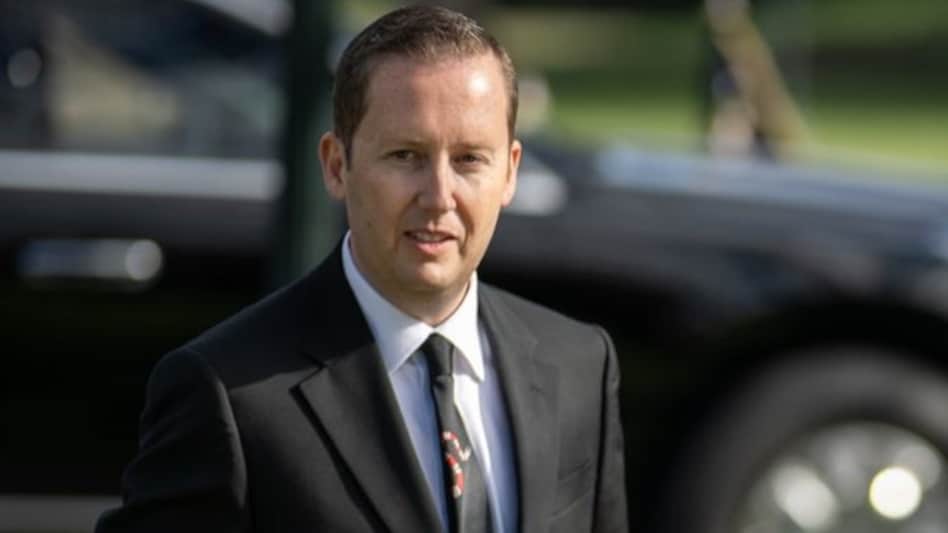
US ambassador-designate Sergio Gor, a close aide and key member of President Donald Trump’s inner circle, arrived in India on January 9, signalling the start of his tenure at a time of heightened strain in bilateral relations.
In a post on X (formerly Twitter), Gor wrote, “Great to be back in India! Incredible opportunities ahead for our two nations!” — striking an optimistic note despite recent tensions between New Delhi and Washington.
Gor, 38, was serving as the White House personnel director when President Trump named him in August as the next US envoy to India. Known for his proximity to Trump and influence within the administration, Gor is expected to play a critical role in shaping Washington’s India policy during a sensitive phase.
As US ambassador, his primary challenge is likely to be rebuilding India-US ties, which have come under significant stress following President Trump’s decision to sharply raise tariffs on Indian goods. The US recently doubled duties on Indian exports to 50 per cent, including a 25 per cent additional levy linked to India’s continued purchase of Russian crude oil.
The move has triggered unease in New Delhi, with officials and industry groups warning of its impact on trade and broader strategic cooperation. Against this backdrop, Gor’s arrival is being closely watched by policymakers on both sides.
Gor was sworn in as US ambassador to India in mid-November, after the US Senate confirmed his appointment in October, clearing the way for his posting to New Delhi.
Gor’s visit comes at a time when India is facing the threat of steep tariff hikes over its continued purchase of crude oil from Russia.
Ambassador Gor, who has previously said the US-India relationship will “define the 21st century,” has indicated that advancing bilateral trade ties will be a key priority, while ensuring the relationship remains “fair” to American businesses. He has also raised concerns over India’s protectionist policies and regulatory barriers, arguing that they have prevented the partnership from reaching its full potential. Gor has further underlined that persuading India to scale back its imports of Russian oil remains a “top priority” for Washington.
US tariffs on imports from India and China could rise by as much as 500 per cent as early as next week. US Senator Lindsey Graham said on Thursday that President Donald Trump has approved legislation aimed at “punishing” countries such as India, China and Brazil for continuing to buy Russian oil despite Western sanctions.
Graham said Trump cleared the proposal, known as the Russia Sanctions Bill, after a “productive” meeting on Wednesday, adding that it could be brought up for a vote as soon as next week. He also described the timing of the bill as “well-timed.”
The legislation is being jointly sponsored by Republican Senator Lindsey Graham and Democratic Senator Richard Blumenthal.
US ambassador-designate Sergio Gor, a close aide and key member of President Donald Trump’s inner circle, arrived in India on January 9, signalling the start of his tenure at a time of heightened strain in bilateral relations.
In a post on X (formerly Twitter), Gor wrote, “Great to be back in India! Incredible opportunities ahead for our two nations!” — striking an optimistic note despite recent tensions between New Delhi and Washington.
Gor, 38, was serving as the White House personnel director when President Trump named him in August as the next US envoy to India. Known for his proximity to Trump and influence within the administration, Gor is expected to play a critical role in shaping Washington’s India policy during a sensitive phase.
As US ambassador, his primary challenge is likely to be rebuilding India-US ties, which have come under significant stress following President Trump’s decision to sharply raise tariffs on Indian goods. The US recently doubled duties on Indian exports to 50 per cent, including a 25 per cent additional levy linked to India’s continued purchase of Russian crude oil.
The move has triggered unease in New Delhi, with officials and industry groups warning of its impact on trade and broader strategic cooperation. Against this backdrop, Gor’s arrival is being closely watched by policymakers on both sides.
Gor was sworn in as US ambassador to India in mid-November, after the US Senate confirmed his appointment in October, clearing the way for his posting to New Delhi.
Gor’s visit comes at a time when India is facing the threat of steep tariff hikes over its continued purchase of crude oil from Russia.
Ambassador Gor, who has previously said the US-India relationship will “define the 21st century,” has indicated that advancing bilateral trade ties will be a key priority, while ensuring the relationship remains “fair” to American businesses. He has also raised concerns over India’s protectionist policies and regulatory barriers, arguing that they have prevented the partnership from reaching its full potential. Gor has further underlined that persuading India to scale back its imports of Russian oil remains a “top priority” for Washington.
US tariffs on imports from India and China could rise by as much as 500 per cent as early as next week. US Senator Lindsey Graham said on Thursday that President Donald Trump has approved legislation aimed at “punishing” countries such as India, China and Brazil for continuing to buy Russian oil despite Western sanctions.
Graham said Trump cleared the proposal, known as the Russia Sanctions Bill, after a “productive” meeting on Wednesday, adding that it could be brought up for a vote as soon as next week. He also described the timing of the bill as “well-timed.”
The legislation is being jointly sponsored by Republican Senator Lindsey Graham and Democratic Senator Richard Blumenthal.