
'GST is Modi's landmark reform, poverty cut to 3%': Arvind Panagariya on PM's economic legacy
Panagariya, who worked with Modi from 2015 to 2017 as Niti Aayog's first vice chairman, said his association with the Prime Minister began years earlier when Modi was the chief minister of Gujarat.
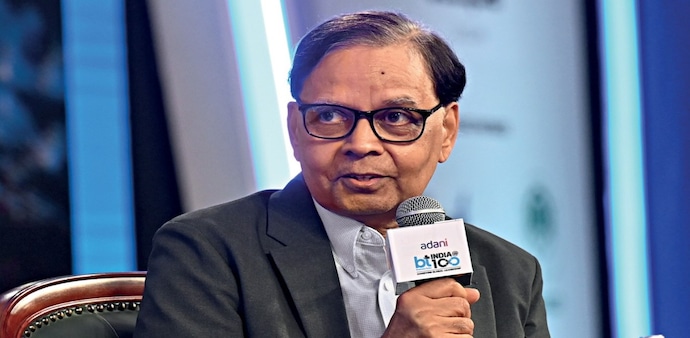
- Sep 17, 2025,
- Updated Sep 17, 2025 5:11 PM IST
16th Finance Commission Chairman Arvind Panagariya on Wednesday said Prime Minister Narendra Modi's economic legacy stands out for its breadth and depth, with the Goods and Services Tax (GST) marking the most transformative reform of his tenure.
Speaking to India Today on Modi's 75th birthday, Panagariya called the Prime Minister "an incredible holistic leader" who has advanced policy across multiple fronts.
"These have been phenomenal 11 years for the country as a whole," he said. "I kind of describe the prime minister as a holistic prime minister in the sense that he pays attention to every conceivable area of policy - whether it's economic development, infrastructure reform, defense, or regional development of the northeast and eastern India."
Asked to identify one reform that will define Modi's economic legacy, Panagariya pointed to GST. "If you ask me just one, then that has to be the GST. Because this was an extremely difficult reform involving about three different amendments to the constitution, requiring all the states to be on board, and replacing a myriad of indirect taxes at both union and state levels with a single tax. If you tell me one, that's the one I will point to."
Panagariya, who worked with Modi from 2015 to 2017 as Niti Aayog's first vice chairman, said his association with the Prime Minister began years earlier when Modi was the chief minister of Gujarat.
"I had been very impressed with his policies and outcomes in Gujarat," he recalled. "Around 2012, I studied Gujarat closely, alongside Andhra Pradesh and Bihar. This was also the time there was a big debate happening because people were seeing the then chief minister as a possible future prime minister."
"I ended up giving him quite a bit of briefings on India's economy. From there we started, and very quickly I found out a lot of the things that unfolded later on — like Swachh Bharat, development of the northeast, strengthening defense — were things he had already been talking about."
Panagariya said Modi's courage to push reforms was evident early on. "From the beginning, you could see that he had the courage to do the reforms which he actually did do. The outcomes are for us to see - from 10th largest we are now fifth largest economy in the world. Very soon, we'll be the third largest. And this has come with widespread reduction in poverty. From about 22% under the Tendulkar poverty line in 2011–12, today that percentage has come down to 3%."
On criticism that Modi has centralised economic decision-making, Panagariya was dismissive. "This kind of criticism to me is neither here nor there. The prime minister has certain authority and he's got to exercise that authority. If rural roads are not being built, then building rural roads is the job the prime minister has to intervene in. The criticism that you are exercising the authority that is given to you is to me not here not there."
Discussing global trade realignments, Panagariya said India has remained broadly open. "Since about 2007 tariffs had really come down. There have been small ups and downs but by and large we have been open. Right now we stand at a crossroads, with the United States having shaken up the entire trading system. Where we ultimately land is to be seen. A lot of negotiations are underway, and I'm hoping for good news on all those fronts."
16th Finance Commission Chairman Arvind Panagariya on Wednesday said Prime Minister Narendra Modi's economic legacy stands out for its breadth and depth, with the Goods and Services Tax (GST) marking the most transformative reform of his tenure.
Speaking to India Today on Modi's 75th birthday, Panagariya called the Prime Minister "an incredible holistic leader" who has advanced policy across multiple fronts.
"These have been phenomenal 11 years for the country as a whole," he said. "I kind of describe the prime minister as a holistic prime minister in the sense that he pays attention to every conceivable area of policy - whether it's economic development, infrastructure reform, defense, or regional development of the northeast and eastern India."
Asked to identify one reform that will define Modi's economic legacy, Panagariya pointed to GST. "If you ask me just one, then that has to be the GST. Because this was an extremely difficult reform involving about three different amendments to the constitution, requiring all the states to be on board, and replacing a myriad of indirect taxes at both union and state levels with a single tax. If you tell me one, that's the one I will point to."
Panagariya, who worked with Modi from 2015 to 2017 as Niti Aayog's first vice chairman, said his association with the Prime Minister began years earlier when Modi was the chief minister of Gujarat.
"I had been very impressed with his policies and outcomes in Gujarat," he recalled. "Around 2012, I studied Gujarat closely, alongside Andhra Pradesh and Bihar. This was also the time there was a big debate happening because people were seeing the then chief minister as a possible future prime minister."
"I ended up giving him quite a bit of briefings on India's economy. From there we started, and very quickly I found out a lot of the things that unfolded later on — like Swachh Bharat, development of the northeast, strengthening defense — were things he had already been talking about."
Panagariya said Modi's courage to push reforms was evident early on. "From the beginning, you could see that he had the courage to do the reforms which he actually did do. The outcomes are for us to see - from 10th largest we are now fifth largest economy in the world. Very soon, we'll be the third largest. And this has come with widespread reduction in poverty. From about 22% under the Tendulkar poverty line in 2011–12, today that percentage has come down to 3%."
On criticism that Modi has centralised economic decision-making, Panagariya was dismissive. "This kind of criticism to me is neither here nor there. The prime minister has certain authority and he's got to exercise that authority. If rural roads are not being built, then building rural roads is the job the prime minister has to intervene in. The criticism that you are exercising the authority that is given to you is to me not here not there."
Discussing global trade realignments, Panagariya said India has remained broadly open. "Since about 2007 tariffs had really come down. There have been small ups and downs but by and large we have been open. Right now we stand at a crossroads, with the United States having shaken up the entire trading system. Where we ultimately land is to be seen. A lot of negotiations are underway, and I'm hoping for good news on all those fronts."