
Haifa rewrites history: Israel honours Indian soldiers for 1918 liberation from Ottoman rule in World War I
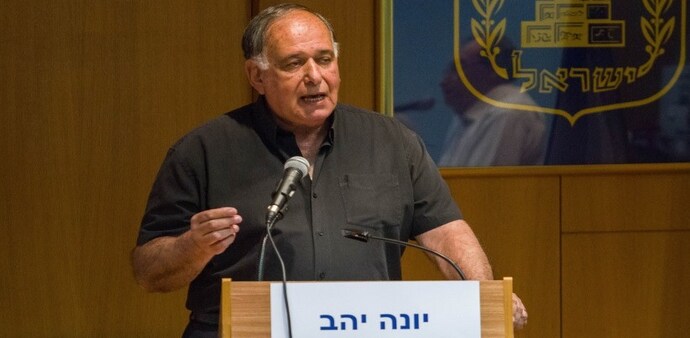
The announcement was made by Mayor Yona Yahav at a memorial ceremony honouring fallen Indian soldiers at their cemetery in Haifa. “In every school, we are changing the texts and saying that it wasn’t the British but the Indians who liberated us,” Yahav declared.
- Sep 29, 2025,
- Updated Sep 29, 2025 9:40 PM IST
The Israeli city of Haifa is rewriting its history textbooks to formally recognize the role of Indian soldiers in liberating the city from Ottoman rule during World War I.
The announcement was made by Mayor Yona Yahav at a memorial ceremony honoring fallen Indian soldiers at their cemetery in Haifa.
“In every school, we are changing the texts and saying that it wasn’t the British but the Indians who liberated us,” Yahav declared. He recalled growing up being taught that the British freed the city, until new research by the local Historical Society revealed otherwise.
The correction highlights the valor of the Mysore, Hyderabad, and Jodhpur Lancers, whose cavalry charge on September 23, 1918, is remembered as one of the last great cavalry campaigns in history. During World War I, Indian cavalry regiments armed with spears and swords cleared the Ottoman forces from the rocky slopes of Mt Carmel under all odds to liberate the city, in what most war historians consider “the last great cavalry campaign in history”.
Among the heroes was Major Dalpat Singh, celebrated as the “Hero of Haifa,” who was posthumously honored for his courage. India observes September 23 as Haifa Day each year to commemorate the sacrifice of its soldiers.
The Jodhpur Lancers lost eight men and had 34 wounded in the battle. But they also captured over 700 prisoners, 17 field guns and 11 machine guns.
The battle was described as "almost the only occasion when a fortified town was captured by cavalry on the gallop," India’s Ambassador to Israel JP Singh said during his address at the event.
Over 74,000 Indian soldiers lost their lives in World War I, with more than 4,000 falling in West Asia alone. Their memories are preserved in war cemeteries across Israel, including Haifa, Jerusalem, and Ramle.
History textbooks in Haifa teach about the story of the liberation of Haifa by Indian soldiers from classes 3 to 5. The Haifa Historical Society has also been going around to schools in the city telling the story to youngsters over the last decade.
To deepen this shared history, the Embassy of India and Israeli authorities are developing “The India Trail,” a cultural and historical initiative in Israel. In recent years, both nations have strengthened this legacy: India renamed New Delhi’s Teen Murti Chowk to “Teen Murti Haifa Chowk” in 2018, and Prime Minister Narendra Modi paid tribute at Haifa’s Indian cemetery during his 2017 state visit.
The centenary celebrations in 2018 also saw the Indian Army’s 61st Cavalry participate in Haifa’s official events, further cementing the city’s gratitude for a chapter of history long overlooked but now set to be rightfully remembered.
The Israeli city of Haifa is rewriting its history textbooks to formally recognize the role of Indian soldiers in liberating the city from Ottoman rule during World War I.
The announcement was made by Mayor Yona Yahav at a memorial ceremony honoring fallen Indian soldiers at their cemetery in Haifa.
“In every school, we are changing the texts and saying that it wasn’t the British but the Indians who liberated us,” Yahav declared. He recalled growing up being taught that the British freed the city, until new research by the local Historical Society revealed otherwise.
The correction highlights the valor of the Mysore, Hyderabad, and Jodhpur Lancers, whose cavalry charge on September 23, 1918, is remembered as one of the last great cavalry campaigns in history. During World War I, Indian cavalry regiments armed with spears and swords cleared the Ottoman forces from the rocky slopes of Mt Carmel under all odds to liberate the city, in what most war historians consider “the last great cavalry campaign in history”.
Among the heroes was Major Dalpat Singh, celebrated as the “Hero of Haifa,” who was posthumously honored for his courage. India observes September 23 as Haifa Day each year to commemorate the sacrifice of its soldiers.
The Jodhpur Lancers lost eight men and had 34 wounded in the battle. But they also captured over 700 prisoners, 17 field guns and 11 machine guns.
The battle was described as "almost the only occasion when a fortified town was captured by cavalry on the gallop," India’s Ambassador to Israel JP Singh said during his address at the event.
Over 74,000 Indian soldiers lost their lives in World War I, with more than 4,000 falling in West Asia alone. Their memories are preserved in war cemeteries across Israel, including Haifa, Jerusalem, and Ramle.
History textbooks in Haifa teach about the story of the liberation of Haifa by Indian soldiers from classes 3 to 5. The Haifa Historical Society has also been going around to schools in the city telling the story to youngsters over the last decade.
To deepen this shared history, the Embassy of India and Israeli authorities are developing “The India Trail,” a cultural and historical initiative in Israel. In recent years, both nations have strengthened this legacy: India renamed New Delhi’s Teen Murti Chowk to “Teen Murti Haifa Chowk” in 2018, and Prime Minister Narendra Modi paid tribute at Haifa’s Indian cemetery during his 2017 state visit.
The centenary celebrations in 2018 also saw the Indian Army’s 61st Cavalry participate in Haifa’s official events, further cementing the city’s gratitude for a chapter of history long overlooked but now set to be rightfully remembered.