
He headed IIT Delhi. Now, he tells what's wrong with IITs - and his solution
According to Rao, IIT classrooms have become increasingly diverse, with students arriving from vastly different academic backgrounds
- Sep 23, 2026,
- Updated Sep 23, 2026 7:22 PM IST
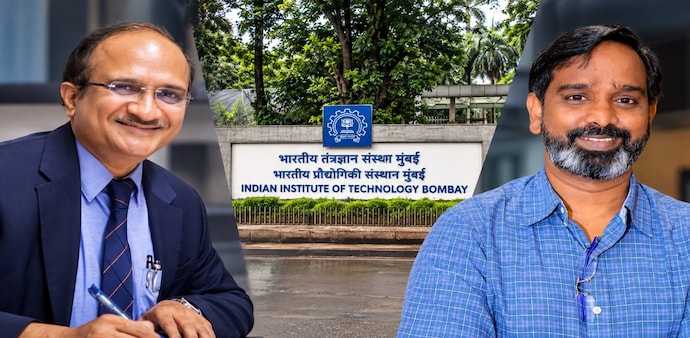
Former IIT Delhi director and BITS Pilani Group Vice-Chancellor V. Ramgopal Rao has voiced support for IIT Bombay professor Suryanarayana Doolla, who has recently faced criticism and controversy. Rao said he was “disturbed” to see Doolla being vilified and urged that the issues raised against the professor be examined fairly rather than through a public campaign.
In a post on X, Rao said he has known Doolla personally and described him as “one of the finest faculty members” he has known in the IIT system and “a gentleman of the highest integrity”. He argued that the controversy should be addressed through a fair examination of the concerns rather than public criticism of an individual.
Rao, who said he has more than 25 years of experience at IIT Bombay and IIT Delhi, also used the controversy to highlight what he believes is a broader challenge facing the IIT system: the “one-size-fits-all” approach to education.
READ THIS: IIT-B student death: Suryanaryana Doolla sent on leave, institute appoints 10-member panel
According to Rao, IIT classrooms have become increasingly diverse, with students arriving from vastly different academic backgrounds. He pointed to the intensive coaching culture surrounding competitive examinations and noted that students entering IITs can have significantly different JEE Advanced ranks and levels of preparedness.
He also highlighted language as another factor contributing to classroom differences.
“The question to ask therefore is, with such heterogeneity, can we expect every student to learn at the same pace?” Rao wrote.
He said faculty members cannot realistically teach every class at several different levels simultaneously. Moving too slowly could cause highly prepared students to lose interest, while moving too quickly could leave others struggling to keep up.
Rao further argued that the challenge is not restricted to students from any particular admission category. He said the transition from coaching-based preparation to independent learning can be difficult for students from different backgrounds.
Rao proposes flexible five-year BTech programme
As a possible solution, Rao proposed reconsidering the structure of BTech programmes at IITs by allowing students to complete them over five years instead of following a rigid four-year timeline.
Under his proposal, students who meet the required academic standards could complete their degrees in four years, while others could use additional time, potentially three-and-a-half to five years, along with greater academic support.
He suggested that students could receive recorded lectures, online learning material and language support where required. The pace, he said, should ultimately be determined by academic performance within the IIT rather than a student's admission category or entrance rank.
Rao also argued that a five-year programme could reduce the psychological pressure associated with taking longer to graduate.
“We must uphold academic standards,” he said, while adding that institutions must recognise that students do not all arrive at the same point or learn at the same pace. According to Rao, providing students with the time and support needed to meet those standards should be considered a responsibility of the education system.
Former IIT Delhi director and BITS Pilani Group Vice-Chancellor V. Ramgopal Rao has voiced support for IIT Bombay professor Suryanarayana Doolla, who has recently faced criticism and controversy. Rao said he was “disturbed” to see Doolla being vilified and urged that the issues raised against the professor be examined fairly rather than through a public campaign.
In a post on X, Rao said he has known Doolla personally and described him as “one of the finest faculty members” he has known in the IIT system and “a gentleman of the highest integrity”. He argued that the controversy should be addressed through a fair examination of the concerns rather than public criticism of an individual.
Rao, who said he has more than 25 years of experience at IIT Bombay and IIT Delhi, also used the controversy to highlight what he believes is a broader challenge facing the IIT system: the “one-size-fits-all” approach to education.
READ THIS: IIT-B student death: Suryanaryana Doolla sent on leave, institute appoints 10-member panel
According to Rao, IIT classrooms have become increasingly diverse, with students arriving from vastly different academic backgrounds. He pointed to the intensive coaching culture surrounding competitive examinations and noted that students entering IITs can have significantly different JEE Advanced ranks and levels of preparedness.
He also highlighted language as another factor contributing to classroom differences.
“The question to ask therefore is, with such heterogeneity, can we expect every student to learn at the same pace?” Rao wrote.
He said faculty members cannot realistically teach every class at several different levels simultaneously. Moving too slowly could cause highly prepared students to lose interest, while moving too quickly could leave others struggling to keep up.
Rao further argued that the challenge is not restricted to students from any particular admission category. He said the transition from coaching-based preparation to independent learning can be difficult for students from different backgrounds.
Rao proposes flexible five-year BTech programme
As a possible solution, Rao proposed reconsidering the structure of BTech programmes at IITs by allowing students to complete them over five years instead of following a rigid four-year timeline.
Under his proposal, students who meet the required academic standards could complete their degrees in four years, while others could use additional time, potentially three-and-a-half to five years, along with greater academic support.
He suggested that students could receive recorded lectures, online learning material and language support where required. The pace, he said, should ultimately be determined by academic performance within the IIT rather than a student's admission category or entrance rank.
Rao also argued that a five-year programme could reduce the psychological pressure associated with taking longer to graduate.
“We must uphold academic standards,” he said, while adding that institutions must recognise that students do not all arrive at the same point or learn at the same pace. According to Rao, providing students with the time and support needed to meet those standards should be considered a responsibility of the education system.