
'He said no, there are many issues': Nripendra Misra recalls how Modi initially rejected GST plan
Modi had opposed GST when he was the chief minister of Gujarat
- Oct 13, 2025,
- Updated Oct 13, 2025 2:45 PM IST
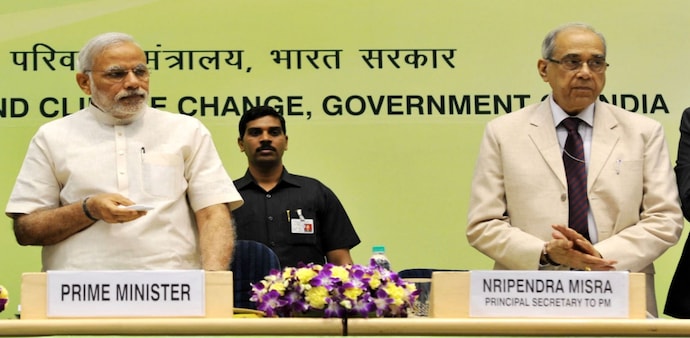
Former Principal Secretary to the Prime Minister Nripendra Misra has revealed that Prime Minister Narendra Modi initially dismissed the first presentation on the Goods and Services Tax (GST) when it was introduced to him by then Finance Minister Arun Jaitley, but later backed it after being convinced by its vision of "one nation, one taxation" and its promise of economic freedom.
"He (Modi) has a vision. He is much more ambitious than we were right from the beginning. His targets were much higher. So we had to work within his 'vision', and wherever there were occasional differences. I faced one within three-four months. This was about GST," Misra said in an interview with Hindustan Times.
"Prime Minister as a Gujarat chief minister had opposed the imposition of GST. So how could he change? So when the presentation was made by Mr Jaitley along with officers, the first time he just dismissed it. He said, no...no...there are many issues and I will have to consult both the manufacturing states and consuming states and therefore I cannot approve it," Misra recalled.
"We were disappointed. We went out. Jaitley called me in his room again to discuss. We thought of some strategy. It needed two more presentations to him and perhaps he got convinced only when two words were mentioned to him. One, it is one nation, one taxation, which is GST. No doubt about that. Number two, it was mentioned that anybody who will impose GST or pass GST or accept and get it implemented perhaps will become the front-runner for introducing economic freedom," Misra said.
According to the former secretary, the Prime Minister was told that this taxation would free the traders from the rigors of taxation policy and multiple taxes at various levels. "On these two, he (PM) stopped and heard very patiently. He said, okay - work on it. I will give my doubts to you people, come with a solution. But it will be implemented. Once he decides, he doesn’t change," he added.
GST was officially rolled out on July 1, 2017, marking India's most significant tax reform since independence. The unified indirect tax replaced multiple central and state levies such as excise, service tax, and VAT, creating a single national market.
Former Principal Secretary to the Prime Minister Nripendra Misra has revealed that Prime Minister Narendra Modi initially dismissed the first presentation on the Goods and Services Tax (GST) when it was introduced to him by then Finance Minister Arun Jaitley, but later backed it after being convinced by its vision of "one nation, one taxation" and its promise of economic freedom.
"He (Modi) has a vision. He is much more ambitious than we were right from the beginning. His targets were much higher. So we had to work within his 'vision', and wherever there were occasional differences. I faced one within three-four months. This was about GST," Misra said in an interview with Hindustan Times.
"Prime Minister as a Gujarat chief minister had opposed the imposition of GST. So how could he change? So when the presentation was made by Mr Jaitley along with officers, the first time he just dismissed it. He said, no...no...there are many issues and I will have to consult both the manufacturing states and consuming states and therefore I cannot approve it," Misra recalled.
"We were disappointed. We went out. Jaitley called me in his room again to discuss. We thought of some strategy. It needed two more presentations to him and perhaps he got convinced only when two words were mentioned to him. One, it is one nation, one taxation, which is GST. No doubt about that. Number two, it was mentioned that anybody who will impose GST or pass GST or accept and get it implemented perhaps will become the front-runner for introducing economic freedom," Misra said.
According to the former secretary, the Prime Minister was told that this taxation would free the traders from the rigors of taxation policy and multiple taxes at various levels. "On these two, he (PM) stopped and heard very patiently. He said, okay - work on it. I will give my doubts to you people, come with a solution. But it will be implemented. Once he decides, he doesn’t change," he added.
GST was officially rolled out on July 1, 2017, marking India's most significant tax reform since independence. The unified indirect tax replaced multiple central and state levies such as excise, service tax, and VAT, creating a single national market.