
Headache for Trump: US Soyabean farmers face worst crisis in decades as China halts imports
Retaliatory tariffs leave growers with no market for $12 billion exports, industry warns of "five-alarm fire"
- Sep 28, 2025,
- Updated Sep 29, 2025 8:39 AM IST
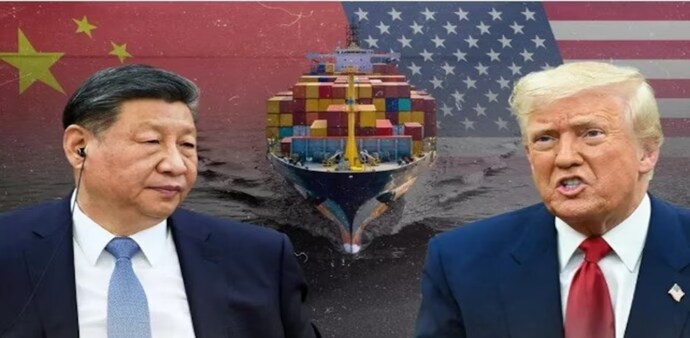
American soyabean farmers are facing mounting uncertainty after China halted purchases of the crop in retaliation for U.S. tariffs, leaving producers with no access to their biggest foreign buyer. Soyabean plants are ripe for harvest in the US but farmers don't know where they will sell their crop because China has stopped buying, the Associated Press reported on Saturday.
Beijing, which typically accounts for at least a quarter of U.S. soyabean sales, stopped imports in May after President Donald Trump imposed steep tariffs on Chinese goods. China responded with duties of up to 34% on American soyabeans, making South American supply cheaper. "This is a five-alarm fire for our industry," said Caleb Ragland, who heads the American Soyabean Association trade group.
Last year, the U.S. exported nearly $24.5 billion worth of soyabeans, with China purchasing $12.5 billion-by far the largest share. This year, the New York Times reported, the figure has dropped to zero. The European Union, the second-largest buyer, accounted for just $2.45 billion in purchases last year.
Jim Sutter, CEO of the U.S. Soyabean Export Council, voiced concern over the approaching harvest season. "I'm honestly getting worried that the time is running out," he said, adding that no progress on soyabean trade has emerged despite four rounds of talks between May and September.
Trump said Thursday he is considering an aid package to farmers if a deal is not reached, similar to support offered during his first term. Farmers say such aid would be only a temporary fix.
China has reiterated that Washington must take the first step. "Regarding the trade of soyabeans, the United States should take positive action to cancel the relevant unreasonable tariffs to create conditions for expanding bilateral trade," Chinese Commerce Ministry spokesperson He Yadong said Thursday.
Senior Chinese negotiator Li Chenggang visited U.S. Midwest leaders earlier this week, signaling some willingness to discuss purchases ahead of wider negotiations. But disagreements on technical details continue to complicate talks.
In addition to soyabeans, China's retaliatory tariffs have hit U.S. growers of sorghum, corn, and cotton, as well as seafood exports. Still, soyabeans stand out as America’s top food export, accounting for 14% of all farm goods sold overseas.
(With inputs from agencies)
American soyabean farmers are facing mounting uncertainty after China halted purchases of the crop in retaliation for U.S. tariffs, leaving producers with no access to their biggest foreign buyer. Soyabean plants are ripe for harvest in the US but farmers don't know where they will sell their crop because China has stopped buying, the Associated Press reported on Saturday.
Beijing, which typically accounts for at least a quarter of U.S. soyabean sales, stopped imports in May after President Donald Trump imposed steep tariffs on Chinese goods. China responded with duties of up to 34% on American soyabeans, making South American supply cheaper. "This is a five-alarm fire for our industry," said Caleb Ragland, who heads the American Soyabean Association trade group.
Last year, the U.S. exported nearly $24.5 billion worth of soyabeans, with China purchasing $12.5 billion-by far the largest share. This year, the New York Times reported, the figure has dropped to zero. The European Union, the second-largest buyer, accounted for just $2.45 billion in purchases last year.
Jim Sutter, CEO of the U.S. Soyabean Export Council, voiced concern over the approaching harvest season. "I'm honestly getting worried that the time is running out," he said, adding that no progress on soyabean trade has emerged despite four rounds of talks between May and September.
Trump said Thursday he is considering an aid package to farmers if a deal is not reached, similar to support offered during his first term. Farmers say such aid would be only a temporary fix.
China has reiterated that Washington must take the first step. "Regarding the trade of soyabeans, the United States should take positive action to cancel the relevant unreasonable tariffs to create conditions for expanding bilateral trade," Chinese Commerce Ministry spokesperson He Yadong said Thursday.
Senior Chinese negotiator Li Chenggang visited U.S. Midwest leaders earlier this week, signaling some willingness to discuss purchases ahead of wider negotiations. But disagreements on technical details continue to complicate talks.
In addition to soyabeans, China's retaliatory tariffs have hit U.S. growers of sorghum, corn, and cotton, as well as seafood exports. Still, soyabeans stand out as America’s top food export, accounting for 14% of all farm goods sold overseas.
(With inputs from agencies)