
'Hesitancy to change': What Citi thinks of BJP's 2024 Lok Sabha election manifesto
It could be a bit of a disappointment that the “big-bang” structural (but contentious) reforms of land, labor, agriculture, privatization, opening up to foreign investment etc. did not find any mention in the manifesto though we would hasten to add that they can always be brought in at a later stage.
- Apr 15, 2024,
- Updated Apr 15, 2024 10:52 AM IST
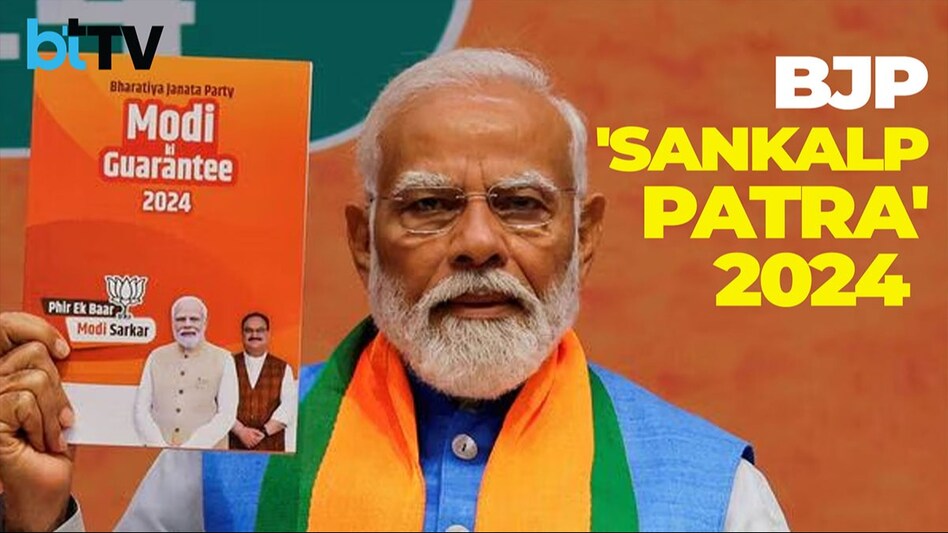
BJP's manifesto for the 2024 Lok Sabha elections skipped any reference to structural economic reforms, such as changes to labour and land laws, Citi economists said in a note on Monday.
The BJP promised to create jobs, boost infrastructure and manufacturing and expand welfare programs such as low-ticket subsidised loans to small businesses if it wins a third term. "It could be a bit of a disappointment that the "big-bang" structural (but contentious) reforms of land, labor, agriculture, privatization, opening up to foreign investment etc did not find any mention in the manifesto," Citi economists said, adding that these could be announced at a later stage.
The election starts on April 19 and will be held in seven stages until June 1, with the results expected on June 4.
Hesitancy to “Change”
"At a broad level, the manifesto is more tilted towards continuity than change," Citi said.
The manifesto includes a strong infrastructure push, including building 28 kilometers per day (17.4 miles) of national highways, three new high-speed bullet trains and expanding the metro network.
"There is a definite aspiration in the manifesto towards making India a power to reckon with in global manufacturing," the economists said.
Here's what the note says:
It could be a bit of a disappointment that the “big-bang” structural (but contentious) reforms of land, labor, agriculture, privatization, opening up to foreign investment etc. did not find any mention in the manifesto though we would hasten to add that they can always be brought in at a later stage.
Mention of “next generation” Land Records Digitization but nothing with respect to land acquisition laws.
A review of the National Floor Wages is expected but no direct mention of introduction of a “Living Wage”. In fact, the manifesto does not explicitly promise the implementation of the 4 labor laws that have been passed in the Parliament long back.
Words like “privatization/disinvestment” are also conspicuously absent in the manifesto, but this could be an indication of the government trying to strengthen the PSUs.
Although there is no direct reference to introduction of the New Direct Tax Code and rationalization of GST, the manifesto promises to “completely revamp our economic and commercial regulations”. There is an acknowledgement that simplification is required for developing India as a manufacturing hub.
Unlike the manifesto of Indian National Congress (INC) which is replete with monetary promises for different sections of the society (women/youth), the BJP has refrained from too many new populist announcements. While BJP is committed to continuing with farmer cash subsidy (PM KISAN), Minimum Support Prices (MSP), crop insurance etc., but there is no quantitative promise of increasing allocations under these schemes.
BJP is conscious that a neo-middle class is developing in India with certain aspirations and hence only poverty alleviation measures are not warranted. Extension of the free food program for 5 years is reiterated, along with the free electricity to households through the rooftop solar program PM Surya Ghar Muft Bijli Yojna.
Employment generation topic gets prominence but without any specific policy measures.
BJP's manifesto for the 2024 Lok Sabha elections skipped any reference to structural economic reforms, such as changes to labour and land laws, Citi economists said in a note on Monday.
The BJP promised to create jobs, boost infrastructure and manufacturing and expand welfare programs such as low-ticket subsidised loans to small businesses if it wins a third term. "It could be a bit of a disappointment that the "big-bang" structural (but contentious) reforms of land, labor, agriculture, privatization, opening up to foreign investment etc did not find any mention in the manifesto," Citi economists said, adding that these could be announced at a later stage.
The election starts on April 19 and will be held in seven stages until June 1, with the results expected on June 4.
Hesitancy to “Change”
"At a broad level, the manifesto is more tilted towards continuity than change," Citi said.
The manifesto includes a strong infrastructure push, including building 28 kilometers per day (17.4 miles) of national highways, three new high-speed bullet trains and expanding the metro network.
"There is a definite aspiration in the manifesto towards making India a power to reckon with in global manufacturing," the economists said.
Here's what the note says:
It could be a bit of a disappointment that the “big-bang” structural (but contentious) reforms of land, labor, agriculture, privatization, opening up to foreign investment etc. did not find any mention in the manifesto though we would hasten to add that they can always be brought in at a later stage.
Mention of “next generation” Land Records Digitization but nothing with respect to land acquisition laws.
A review of the National Floor Wages is expected but no direct mention of introduction of a “Living Wage”. In fact, the manifesto does not explicitly promise the implementation of the 4 labor laws that have been passed in the Parliament long back.
Words like “privatization/disinvestment” are also conspicuously absent in the manifesto, but this could be an indication of the government trying to strengthen the PSUs.
Although there is no direct reference to introduction of the New Direct Tax Code and rationalization of GST, the manifesto promises to “completely revamp our economic and commercial regulations”. There is an acknowledgement that simplification is required for developing India as a manufacturing hub.
Unlike the manifesto of Indian National Congress (INC) which is replete with monetary promises for different sections of the society (women/youth), the BJP has refrained from too many new populist announcements. While BJP is committed to continuing with farmer cash subsidy (PM KISAN), Minimum Support Prices (MSP), crop insurance etc., but there is no quantitative promise of increasing allocations under these schemes.
BJP is conscious that a neo-middle class is developing in India with certain aspirations and hence only poverty alleviation measures are not warranted. Extension of the free food program for 5 years is reiterated, along with the free electricity to households through the rooftop solar program PM Surya Ghar Muft Bijli Yojna.
Employment generation topic gets prominence but without any specific policy measures.