
Hidden, silent, lethal: Why the K-4 missile launch from INS Arighaat matters for India’s nuclear triad
Although the K-4 missile still requires a few more test-firings before full operational induction, the successful launch from INS Arighaat marks another decisive step in India’s journey toward a robust, credible, and survivable nuclear deterrent.
- Dec 25, 2025,
- Updated Dec 25, 2025 5:15 PM IST
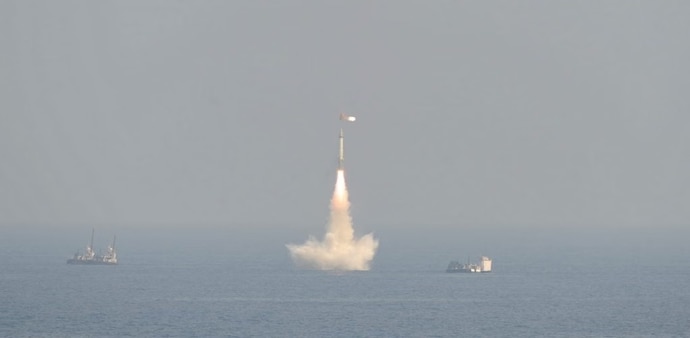
India recently demonstrated a major leap in its strategic military capability by successfully test-firing the K-4 submarine-launched ballistic missile (SLBM) from the nuclear-powered submarine INS Arighaat in the Bay of Bengal. The launch, carried out off the coast of Visakhapatnam, reinforces India’s growing strength in sea-based nuclear deterrence, the most survivable and stealthy arm of its nuclear triad.
What is the K-4 missile?
The K-4 is an intermediate-range submarine-launched ballistic missile with a strike range of up to 3,500 km, enabling India to target adversaries deep inside hostile territory while remaining safely submerged in international waters.
Derived from the Agni-III land-based ballistic missile, the K-4 has been extensively modified for underwater launch. Unlike surface-launched weapons, the missile is ejected from a submarine silo, rises through the water column, breaks the ocean surface, and only then ignites its rocket motor to blast into the atmosphere.
Capable of carrying a 2.5-tonne nuclear warhead, the K-4 is currently the longest-range sea-launched strategic weapon in India’s arsenal.
The ‘K’ in K-4 and other K-series missiles is a tribute to Dr APJ Abdul Kalam, the former President of India and architect of the Integrated Guided Missile Development Programme (IGMDP). His vision laid the foundation for India’s indigenous strategic missile capability.
Why is the K-4 strategically significant?
The K-4 forms the stealthiest leg of India’s nuclear triad, which includes land-based missiles, air-delivered nuclear weapons, and sea-based systems.
Ballistic missile submarines (SSBNs) like those of the Arihant class are designed to operate silently for long durations in unknown stretches of the ocean, conducting what are known as deterrence patrols. This makes them extremely difficult to detect and neutralise, ensuring a credible second-strike capability even if land and air assets are compromised.
With the commissioning of the K-4 into the Indian Navy on August 29, 2024, India joined a small group of nations that can launch nuclear weapons from land, air, and undersea platforms.
What is INS Arighaat?
INS Arighaat is the second nuclear-powered ballistic missile submarine (SSBN) of the Arihant class and a crucial pillar of India’s Strategic Forces Command (SFC). Its successful test-launch of the K-4 missile highlights India’s increasing operational readiness in undersea nuclear warfare.
Unlike conventional submarines, SSBNs are powered by nuclear reactors, allowing them to remain submerged for months and carry out long-duration patrols without surfacing—an essential requirement for strategic deterrence.
Why is the Arihant class important?
India’s Arihant-class submarines form the backbone of its sea-based nuclear force:
- INS Arihant, the first in class, carries K-15 (750 km range) nuclear missiles
- INS Arighaat, INS Aridhaman, and the upcoming S4 are configured to carry K-4 missiles
With the exception of INS Arihant, all submarines in this class are designed around the longer-range K-4, significantly expanding India’s maritime strike envelope.
What’s next for India’s SSBN programme?
India is set to commission INS Aridhaman, the third Arihant-class SSBN, in the first quarter of 2026. In October, Defence Minister Rajnath Singh also launched S4, the final submarine of the Arihant class, which is expected to join the Strategic Forces Command by the end of this decade.
Looking ahead, India is developing a next-generation SSBN class weighing around 10,000 tonnes. These submarines will be equipped with the K-5 missile, expected to have a range exceeding 5,000 km, further strengthening India’s long-range undersea strike capability.
Although the K-4 missile still requires a few more test-firings before full operational induction, the successful launch from INS Arighaat marks another decisive step in India’s journey toward a robust, credible, and survivable nuclear deterrent.
India recently demonstrated a major leap in its strategic military capability by successfully test-firing the K-4 submarine-launched ballistic missile (SLBM) from the nuclear-powered submarine INS Arighaat in the Bay of Bengal. The launch, carried out off the coast of Visakhapatnam, reinforces India’s growing strength in sea-based nuclear deterrence, the most survivable and stealthy arm of its nuclear triad.
What is the K-4 missile?
The K-4 is an intermediate-range submarine-launched ballistic missile with a strike range of up to 3,500 km, enabling India to target adversaries deep inside hostile territory while remaining safely submerged in international waters.
Derived from the Agni-III land-based ballistic missile, the K-4 has been extensively modified for underwater launch. Unlike surface-launched weapons, the missile is ejected from a submarine silo, rises through the water column, breaks the ocean surface, and only then ignites its rocket motor to blast into the atmosphere.
Capable of carrying a 2.5-tonne nuclear warhead, the K-4 is currently the longest-range sea-launched strategic weapon in India’s arsenal.
The ‘K’ in K-4 and other K-series missiles is a tribute to Dr APJ Abdul Kalam, the former President of India and architect of the Integrated Guided Missile Development Programme (IGMDP). His vision laid the foundation for India’s indigenous strategic missile capability.
Why is the K-4 strategically significant?
The K-4 forms the stealthiest leg of India’s nuclear triad, which includes land-based missiles, air-delivered nuclear weapons, and sea-based systems.
Ballistic missile submarines (SSBNs) like those of the Arihant class are designed to operate silently for long durations in unknown stretches of the ocean, conducting what are known as deterrence patrols. This makes them extremely difficult to detect and neutralise, ensuring a credible second-strike capability even if land and air assets are compromised.
With the commissioning of the K-4 into the Indian Navy on August 29, 2024, India joined a small group of nations that can launch nuclear weapons from land, air, and undersea platforms.
What is INS Arighaat?
INS Arighaat is the second nuclear-powered ballistic missile submarine (SSBN) of the Arihant class and a crucial pillar of India’s Strategic Forces Command (SFC). Its successful test-launch of the K-4 missile highlights India’s increasing operational readiness in undersea nuclear warfare.
Unlike conventional submarines, SSBNs are powered by nuclear reactors, allowing them to remain submerged for months and carry out long-duration patrols without surfacing—an essential requirement for strategic deterrence.
Why is the Arihant class important?
India’s Arihant-class submarines form the backbone of its sea-based nuclear force:
- INS Arihant, the first in class, carries K-15 (750 km range) nuclear missiles
- INS Arighaat, INS Aridhaman, and the upcoming S4 are configured to carry K-4 missiles
With the exception of INS Arihant, all submarines in this class are designed around the longer-range K-4, significantly expanding India’s maritime strike envelope.
What’s next for India’s SSBN programme?
India is set to commission INS Aridhaman, the third Arihant-class SSBN, in the first quarter of 2026. In October, Defence Minister Rajnath Singh also launched S4, the final submarine of the Arihant class, which is expected to join the Strategic Forces Command by the end of this decade.
Looking ahead, India is developing a next-generation SSBN class weighing around 10,000 tonnes. These submarines will be equipped with the K-5 missile, expected to have a range exceeding 5,000 km, further strengthening India’s long-range undersea strike capability.
Although the K-4 missile still requires a few more test-firings before full operational induction, the successful launch from INS Arighaat marks another decisive step in India’s journey toward a robust, credible, and survivable nuclear deterrent.