
'High prices, poor infrastructure': Netizens seek regulation of PG business after Satya Niketan building collapse
Social media users sought stringent regulations on PG business after the incident.
- Sep 9, 2026,
- Updated Sep 9, 2026 12:18 PM IST
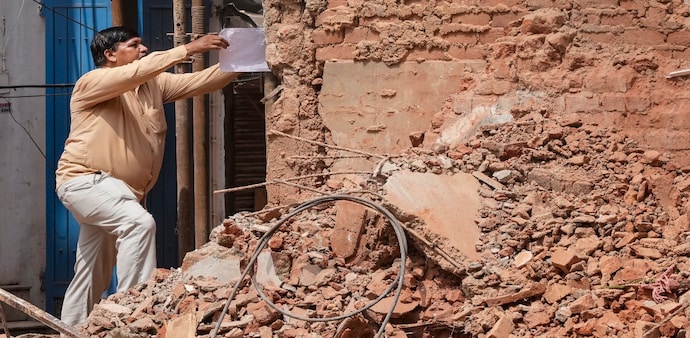
After the Satya Niketan building collapse that killed seven people and raised concerns over student housing in Delhi, netizens shared their frustrations over the poor and dilapidated state of paying guest (PG) accommodations across the national capital.
Social media users sought stringent regulations on PG business after the incident. Some users claimed that the sector, just like private coaching, is highly commercialised and largely unorganised, leading to severe exploitation of both students and parents.
A user reminisced his days in Mukherjee Nagar and GTB Nagar and wrote, "There should be regulations of this PG business! I also used to stay in PG in my study days in Mukherjee Nagar and GTB Nagar Delhi, same situation… high prices.. poor infrastructure!!!!"
DO CHECKOUT | Licencing, cap on rent, CCTV cameras: Delhi plans to regulate PGs after Satya Niketan building collapse
Another user claimed that private coaching industry and PG accommodations have largely operated as under-regulated, highly commercialised sectors.
"Due to a widespread lack of strict enforcement regarding fee caps and service standards, both students and parents face severe financial and emotional exploitation. The quality of basic amenities, infrastructure, and safety features provided by a majority of these service providers remains substandard despite the heavy fees and rents charged," the user said.
Moreover, Ashneer Grover, the former MD and co-founder of BharatPe, said that those who can afford and whose children are talented send their kids to foreign universities precisely because safety and quality of life is paramount. Grover added that at least $2 billion is required to make DU's infrastructure world class.
"Delhi University infra is crumbling. Jo afford kar sakte hai - aur jinke bachhe honhaar bhi hai - woh bhi foreign university isiliye bhejte hai apne bachho ko! Safety and quality of life first. At least $2 BN (₹20,000 crores) investment chahiye DU ko world class banane ke liye," he wrote.
He, however, was not the only one to lament the ruinous state of DU's infrastructure. Bengaluru-based developer Adarsh Patel said in a social media post that a cheap PG is not a lifestyle choice for lakhs of youngsters but the only way to stay in the city and chase the exam.
He added, "Until student housing is treated as infrastructure — not a side hustle in an old building — this will keep happening after the cameras leave."
MCD, NHRC spring into action
After the tragic incident, the Municipal Corporation of Delhi (MCD) on Tuesday began a pan-Delhi survey of paying guest (PG) accommodations on the Delhi High Court’s directions. On the first day, officials identified 1,120 PG units housing 20,481 people, including 52 buildings in a dilapidated condition. The survey will be completed by Friday.
At this stage, MCD is only identifying buildings and creating a database, with no punitive action. A senior official told Hindustan Times, “The survey has been initiated on directions of the Delhi high court and it will be completed by Friday. At this stage, no punitive action is being taken; we are just identifying buildings and creating a database.”
None of Tuesday’s surveyed buildings was classified as dangerous or ruinous. The Civil Lines zone, including Mukherjee Nagar, accounted for 450 PGs, while 245 were found in Keshavpuram. PG data was also collected from Munirka, Laxmi Nagar, Vishwas Nagar, Rajendra Nagar and Karol Bagh.
The survey comes amid scrutiny over Delhi’s student housing shortage. Moreover, the National Human Rights Commission has directed the Delhi chief secretary and UGC chairperson, in consultation with Delhi University, to submit a four-week action plan covering existing hostels, college-wise requirements and expansion timelines.
After the Satya Niketan building collapse that killed seven people and raised concerns over student housing in Delhi, netizens shared their frustrations over the poor and dilapidated state of paying guest (PG) accommodations across the national capital.
Social media users sought stringent regulations on PG business after the incident. Some users claimed that the sector, just like private coaching, is highly commercialised and largely unorganised, leading to severe exploitation of both students and parents.
A user reminisced his days in Mukherjee Nagar and GTB Nagar and wrote, "There should be regulations of this PG business! I also used to stay in PG in my study days in Mukherjee Nagar and GTB Nagar Delhi, same situation… high prices.. poor infrastructure!!!!"
DO CHECKOUT | Licencing, cap on rent, CCTV cameras: Delhi plans to regulate PGs after Satya Niketan building collapse
Another user claimed that private coaching industry and PG accommodations have largely operated as under-regulated, highly commercialised sectors.
"Due to a widespread lack of strict enforcement regarding fee caps and service standards, both students and parents face severe financial and emotional exploitation. The quality of basic amenities, infrastructure, and safety features provided by a majority of these service providers remains substandard despite the heavy fees and rents charged," the user said.
Moreover, Ashneer Grover, the former MD and co-founder of BharatPe, said that those who can afford and whose children are talented send their kids to foreign universities precisely because safety and quality of life is paramount. Grover added that at least $2 billion is required to make DU's infrastructure world class.
"Delhi University infra is crumbling. Jo afford kar sakte hai - aur jinke bachhe honhaar bhi hai - woh bhi foreign university isiliye bhejte hai apne bachho ko! Safety and quality of life first. At least $2 BN (₹20,000 crores) investment chahiye DU ko world class banane ke liye," he wrote.
He, however, was not the only one to lament the ruinous state of DU's infrastructure. Bengaluru-based developer Adarsh Patel said in a social media post that a cheap PG is not a lifestyle choice for lakhs of youngsters but the only way to stay in the city and chase the exam.
He added, "Until student housing is treated as infrastructure — not a side hustle in an old building — this will keep happening after the cameras leave."
MCD, NHRC spring into action
After the tragic incident, the Municipal Corporation of Delhi (MCD) on Tuesday began a pan-Delhi survey of paying guest (PG) accommodations on the Delhi High Court’s directions. On the first day, officials identified 1,120 PG units housing 20,481 people, including 52 buildings in a dilapidated condition. The survey will be completed by Friday.
At this stage, MCD is only identifying buildings and creating a database, with no punitive action. A senior official told Hindustan Times, “The survey has been initiated on directions of the Delhi high court and it will be completed by Friday. At this stage, no punitive action is being taken; we are just identifying buildings and creating a database.”
None of Tuesday’s surveyed buildings was classified as dangerous or ruinous. The Civil Lines zone, including Mukherjee Nagar, accounted for 450 PGs, while 245 were found in Keshavpuram. PG data was also collected from Munirka, Laxmi Nagar, Vishwas Nagar, Rajendra Nagar and Karol Bagh.
The survey comes amid scrutiny over Delhi’s student housing shortage. Moreover, the National Human Rights Commission has directed the Delhi chief secretary and UGC chairperson, in consultation with Delhi University, to submit a four-week action plan covering existing hostels, college-wise requirements and expansion timelines.