
Historic milestone: Sub Lieutenant Aastha Poonia becomes Indian Navy’s first woman fighter pilot
The Navy hailed the event as the beginning of "a new chapter in Naval aviation,"
- Jul 4, 2025,
- Updated Jul 4, 2025 6:49 PM IST
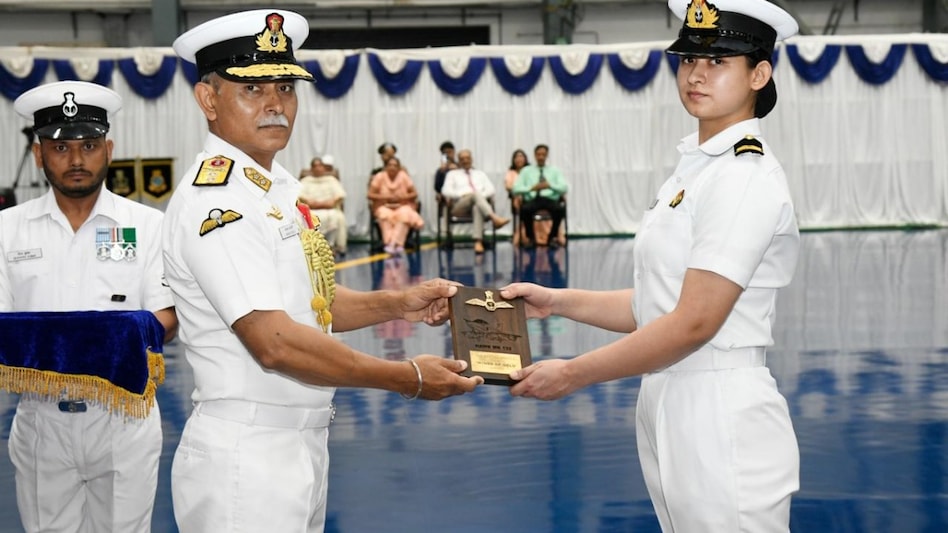
In a landmark moment for gender inclusivity in India's armed forces, Sub Lieutenant Aastha Poonia has made history by becoming the first woman fighter pilot in the Indian Navy. She was awarded the prestigious 'Wings of Gold' during a graduation ceremony at INS Dega in Visakhapatnam.
Rear Admiral Janak Bevli, Assistant Chief of Naval Staff (Air), presided over the event on July 3 and presented the honours to both Sub Lt Poonia and Lieutenant Atul Kumar Dhull, who completed the second Basic Hawk Conversion Course.
The Navy hailed the event as the beginning of "a new chapter in Naval aviation," officially inducting Sub Lt Poonia into the fighter pilot stream—a field historically dominated by men.
In a statement, the Navy said, “Sub Lt Aastha Poonia becomes the first woman in the fighter stream of naval aviation, shattering barriers and paving the way for a new era of women fighter pilots in the navy.”
India trains its military aviators on the British-origin Hawk 132 advanced jet trainer, inducted into the Indian Navy in 2013. Sub Lt Poonia's selection reflects the Navy’s ongoing commitment to ‘Nari Shakti’ (women power) and its broader drive for gender inclusivity in combat roles.
Until now, women naval officers have served primarily as pilots and air operations officers in maritime reconnaissance aircraft and helicopters. Poonia's entry into the fighter stream is being seen as a transformative milestone for the force.
₹1.05 lakh crore boost for armed forces
Meanwhile, the Defence Acquisition Council (DAC) on July 3 approved 10 key military proposals worth ₹1.05 lakh crore, underlining India’s push for self-reliance in defence.
The deals include the procurement of underwater mines, rapid naval guns, unmanned maritime vessels, and a ₹30,000 crore air defence missile system developed by DRDO, capable of intercepting aerial threats up to 30 km away.
This comes in the wake of Operation Sindoor, India's calibrated military response to the May 7 terror attack in Pahalgam, which left 26 dead. The operation targeted terror infrastructure without breaching international borders.
India also plans to upgrade and co-develop aircraft in collaboration with domestic private partners—marking a critical shift toward indigenous manufacturing and technological independence in defence.
(With agency input)
In a landmark moment for gender inclusivity in India's armed forces, Sub Lieutenant Aastha Poonia has made history by becoming the first woman fighter pilot in the Indian Navy. She was awarded the prestigious 'Wings of Gold' during a graduation ceremony at INS Dega in Visakhapatnam.
Rear Admiral Janak Bevli, Assistant Chief of Naval Staff (Air), presided over the event on July 3 and presented the honours to both Sub Lt Poonia and Lieutenant Atul Kumar Dhull, who completed the second Basic Hawk Conversion Course.
The Navy hailed the event as the beginning of "a new chapter in Naval aviation," officially inducting Sub Lt Poonia into the fighter pilot stream—a field historically dominated by men.
In a statement, the Navy said, “Sub Lt Aastha Poonia becomes the first woman in the fighter stream of naval aviation, shattering barriers and paving the way for a new era of women fighter pilots in the navy.”
India trains its military aviators on the British-origin Hawk 132 advanced jet trainer, inducted into the Indian Navy in 2013. Sub Lt Poonia's selection reflects the Navy’s ongoing commitment to ‘Nari Shakti’ (women power) and its broader drive for gender inclusivity in combat roles.
Until now, women naval officers have served primarily as pilots and air operations officers in maritime reconnaissance aircraft and helicopters. Poonia's entry into the fighter stream is being seen as a transformative milestone for the force.
₹1.05 lakh crore boost for armed forces
Meanwhile, the Defence Acquisition Council (DAC) on July 3 approved 10 key military proposals worth ₹1.05 lakh crore, underlining India’s push for self-reliance in defence.
The deals include the procurement of underwater mines, rapid naval guns, unmanned maritime vessels, and a ₹30,000 crore air defence missile system developed by DRDO, capable of intercepting aerial threats up to 30 km away.
This comes in the wake of Operation Sindoor, India's calibrated military response to the May 7 terror attack in Pahalgam, which left 26 dead. The operation targeted terror infrastructure without breaching international borders.
India also plans to upgrade and co-develop aircraft in collaboration with domestic private partners—marking a critical shift toward indigenous manufacturing and technological independence in defence.
(With agency input)