
'Hit India from Red Fort to Kashmir': Pak leader’s boast revives scrutiny of cross-border terror strategy
His remarks directly referenced two of India’s deadliest recent attacks, the November 10 Red Fort car blast that killed 14 people, and the April assault in Jammu and Kashmir’s Baisaran Valley that left 26 tourists dead
- Nov 19, 2025,
- Updated Nov 19, 2025 4:48 PM IST
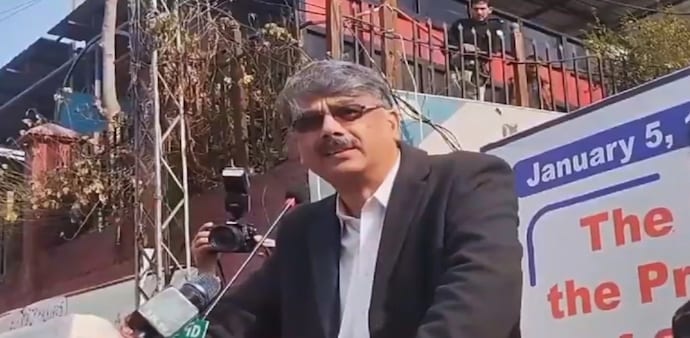
A blunt admission from Pakistani leader Chaudhry Anwarul Haq has renewed scrutiny of Islamabad’s role in cross-border terrorism, after he claimed that militant groups struck India “from the Red Fort to the forests of Kashmir.”
His remarks directly referenced two of India’s deadliest recent attacks, the November 10 Red Fort car blast that killed 14 people, and the April assault in Jammu and Kashmir’s Baisaran Valley that left 26 tourists dead.
In a video that has since gone viral, Haq said, "I earlier said that if you keep bleeding Balochistan, we'll hit India from Red Fort to the forests of Kashmir. By the grace of Allah, we've done it and they're still unable to count bodies."
He followed it with another chilling line: "Few days later, armed men entered and attacked (Delhi) and they haven't probably counted all the bodies so far."
Haq’s Red Fort reference relates to the car blast outside the monument on November 10, led by mastermind Dr Umar Un Nabi — part of a Jaish-e-Mohammed (JeM)-linked “white-collar” terror module busted in Faridabad days earlier. His Kashmir remark pointed to the April terror attack in Pahalgam’s Baisaran Valley, where militants opened fire on tourists.
Pakistan has repeatedly blamed India for unrest in Balochistan, a claim New Delhi has rejected, calling it an attempt to deflect responsibility for fostering cross-border terrorism. After the Pahalgam killings, India launched a diplomatic push against Islamabad, including suspending the Indus Waters Treaty, and said the agreement would resume only if Pakistan stopped supporting terrorism.
Haq is not the first Pakistani leader to expose Islamabad’s internal playbook. Recently, Khyber Pakhtunkhwa Chief Minister Sohail Afridi accused the Pakistan government of benefiting from “fake” terrorist attacks and “manufacturing terrorism” for political purposes, according to TOLO News.
Pak-linked module and its December 6 attack plan
Investigators earlier said the Faridabad module behind the Red Fort blast was preparing a major suicide attack on December 6, the anniversary of the Babri Masjid demolition. Agencies uncovered the plan, internally codenamed “Operation D-6,” after interrogating suspects arrested from Faridabad and Jammu and Kashmir.
According to initial findings, the group had planned a large-scale car-borne suicide strike, with preparations underway for weeks. The module allegedly had nine to 10 members, including five to six doctors from Al-Falah University who used their medical credentials to buy chemicals and explosive materials.
Interrogations revealed that Dr Shaheen Shaheed and Dr Umar, who carried out the Red Fort blast, were central to the plot. Dr Shaheen was allegedly tasked with establishing and leading JeM’s women’s wing in India under the banner of Jamaat-ul-Momineen, a new female recruitment and operations arm of the banned group.
Her arrest followed the detention of Dr Muzammil Ahmad Ganai, also linked to Al-Falah University, which remains under the scanner after the terror module’s bust and the Delhi blast.
A blunt admission from Pakistani leader Chaudhry Anwarul Haq has renewed scrutiny of Islamabad’s role in cross-border terrorism, after he claimed that militant groups struck India “from the Red Fort to the forests of Kashmir.”
His remarks directly referenced two of India’s deadliest recent attacks, the November 10 Red Fort car blast that killed 14 people, and the April assault in Jammu and Kashmir’s Baisaran Valley that left 26 tourists dead.
In a video that has since gone viral, Haq said, "I earlier said that if you keep bleeding Balochistan, we'll hit India from Red Fort to the forests of Kashmir. By the grace of Allah, we've done it and they're still unable to count bodies."
He followed it with another chilling line: "Few days later, armed men entered and attacked (Delhi) and they haven't probably counted all the bodies so far."
Haq’s Red Fort reference relates to the car blast outside the monument on November 10, led by mastermind Dr Umar Un Nabi — part of a Jaish-e-Mohammed (JeM)-linked “white-collar” terror module busted in Faridabad days earlier. His Kashmir remark pointed to the April terror attack in Pahalgam’s Baisaran Valley, where militants opened fire on tourists.
Pakistan has repeatedly blamed India for unrest in Balochistan, a claim New Delhi has rejected, calling it an attempt to deflect responsibility for fostering cross-border terrorism. After the Pahalgam killings, India launched a diplomatic push against Islamabad, including suspending the Indus Waters Treaty, and said the agreement would resume only if Pakistan stopped supporting terrorism.
Haq is not the first Pakistani leader to expose Islamabad’s internal playbook. Recently, Khyber Pakhtunkhwa Chief Minister Sohail Afridi accused the Pakistan government of benefiting from “fake” terrorist attacks and “manufacturing terrorism” for political purposes, according to TOLO News.
Pak-linked module and its December 6 attack plan
Investigators earlier said the Faridabad module behind the Red Fort blast was preparing a major suicide attack on December 6, the anniversary of the Babri Masjid demolition. Agencies uncovered the plan, internally codenamed “Operation D-6,” after interrogating suspects arrested from Faridabad and Jammu and Kashmir.
According to initial findings, the group had planned a large-scale car-borne suicide strike, with preparations underway for weeks. The module allegedly had nine to 10 members, including five to six doctors from Al-Falah University who used their medical credentials to buy chemicals and explosive materials.
Interrogations revealed that Dr Shaheen Shaheed and Dr Umar, who carried out the Red Fort blast, were central to the plot. Dr Shaheen was allegedly tasked with establishing and leading JeM’s women’s wing in India under the banner of Jamaat-ul-Momineen, a new female recruitment and operations arm of the banned group.
Her arrest followed the detention of Dr Muzammil Ahmad Ganai, also linked to Al-Falah University, which remains under the scanner after the terror module’s bust and the Delhi blast.