
How Bihar’s Pink Bus service is helping women travel more easily
Impact assessment survey reveals that 56% of women said they now feel more confident travelling on their own, most using it for education and work.
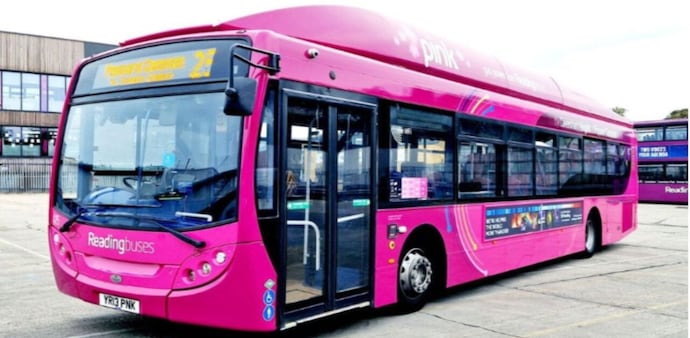
- Aug 27, 2026,
- Updated Aug 27, 2026 4:02 PM IST
While several states have rolled out schemes to enable easier public transport for women, a new study on Bihar’s dedicated bus service for women reveals that it has made travel for women safer, more accessible and cheaper.
The Pink Bus initiative was announced in the Bihar State Budget 2025-26 with two core aims – improving safe and accessible mobility for women and providing pathways to include women in the transport supply side. While it is not a free service with fares ranging from ₹6 to ₹25, depending on the distance, the study found that in just two months of its launch, the ridership reached 33,000. It also hires women conductors, providing an additional source of employment.
The study by MicroSave Consulting along with BSRTC and the State Transport Department highlighted that public transport could advance both social inclusion and economic empowerment by combining women-centric mobility with employment opportunities for women.
MUST READ | He left Bihar with ₹1,000. Six years later, he won a ₹3.5 crore Georgetown scholarship
“Transport gaps are costing women opportunities and money,” it said. Women spend about ₹18,800 more a year on commuting than men. Women also travel 37% fewer trips than men, and 82% of women’s trips are for non-work purposes.
However, women who shifted to the Pink Bus from autos and e-rickshaws report a 28 to 35% cut in daily travel costs, with 60% saying their travel spend has fallen.
Earlier state-level work cited in the report found that 27% of women in Bihar give up education or work opportunities because of transport availability, affordability and safety, against 14% of men.
The impact assessment study of Bihar's Pink Bus covered Patna, Muzaffarpur and Gaya, and is based on a survey of 109 women commuters, five focus groups with 36 women conductors, and interviews with BSRTC officials. It further revealed that 56% of women said they now feel more confident travelling on their own, and close to a third said their families have become more willing to let them travel alone, particularly students and younger women.
Young students and working women are the main users of the bus service. While young female students in the age group of 16-25 years comprise 47% of its ridership, working women are the second largest segment (35%) of users.
In fact, nearly eight in 10 Pink Bus trips support education and economic participation. “Education (42%) and work travel (36%) together account for the majority of women’s trips, indicating that Pink Buses are closely linked to women’s access to opportunities,” it noted.
The study also revealed that the Pink Bus Service is often the first entry into the formal workforce for the women running it. Bihar introduced a 33% reservation for women in transport roles in 2025, and the Pink Bus put the state's first cohort of women conductors and drivers on the road. “For 28% of conductors this is their first paid job, with others coming from Anganwadi work, retail, hospitality and parlour services,” it said.
It noted that improvements in service reliability, workforce support, and institutional systems are needed to sustain and scale its impact. But the initiative could offer a model for strengthening women’s mobility, expanding economic opportunities, and embedding gender responsiveness within Bihar’s public transport system.
While several states have rolled out schemes to enable easier public transport for women, a new study on Bihar’s dedicated bus service for women reveals that it has made travel for women safer, more accessible and cheaper.
The Pink Bus initiative was announced in the Bihar State Budget 2025-26 with two core aims – improving safe and accessible mobility for women and providing pathways to include women in the transport supply side. While it is not a free service with fares ranging from ₹6 to ₹25, depending on the distance, the study found that in just two months of its launch, the ridership reached 33,000. It also hires women conductors, providing an additional source of employment.
The study by MicroSave Consulting along with BSRTC and the State Transport Department highlighted that public transport could advance both social inclusion and economic empowerment by combining women-centric mobility with employment opportunities for women.
MUST READ | He left Bihar with ₹1,000. Six years later, he won a ₹3.5 crore Georgetown scholarship
“Transport gaps are costing women opportunities and money,” it said. Women spend about ₹18,800 more a year on commuting than men. Women also travel 37% fewer trips than men, and 82% of women’s trips are for non-work purposes.
However, women who shifted to the Pink Bus from autos and e-rickshaws report a 28 to 35% cut in daily travel costs, with 60% saying their travel spend has fallen.
Earlier state-level work cited in the report found that 27% of women in Bihar give up education or work opportunities because of transport availability, affordability and safety, against 14% of men.
The impact assessment study of Bihar's Pink Bus covered Patna, Muzaffarpur and Gaya, and is based on a survey of 109 women commuters, five focus groups with 36 women conductors, and interviews with BSRTC officials. It further revealed that 56% of women said they now feel more confident travelling on their own, and close to a third said their families have become more willing to let them travel alone, particularly students and younger women.
Young students and working women are the main users of the bus service. While young female students in the age group of 16-25 years comprise 47% of its ridership, working women are the second largest segment (35%) of users.
In fact, nearly eight in 10 Pink Bus trips support education and economic participation. “Education (42%) and work travel (36%) together account for the majority of women’s trips, indicating that Pink Buses are closely linked to women’s access to opportunities,” it noted.
The study also revealed that the Pink Bus Service is often the first entry into the formal workforce for the women running it. Bihar introduced a 33% reservation for women in transport roles in 2025, and the Pink Bus put the state's first cohort of women conductors and drivers on the road. “For 28% of conductors this is their first paid job, with others coming from Anganwadi work, retail, hospitality and parlour services,” it said.
It noted that improvements in service reliability, workforce support, and institutional systems are needed to sustain and scale its impact. But the initiative could offer a model for strengthening women’s mobility, expanding economic opportunities, and embedding gender responsiveness within Bihar’s public transport system.