
‘How is this a win?’: Chidambaram slams India-US trade framework as opaque, US-tilted
He argued that the language of the statement — particularly Paragraph 2 and its accompanying bullet points — is so convoluted that understanding the actual commitments made by the United States would require a close reading of multiple US executive orders issued between 2018 and 2025.
- Feb 7, 2026,
- Updated Feb 7, 2026 7:03 PM IST
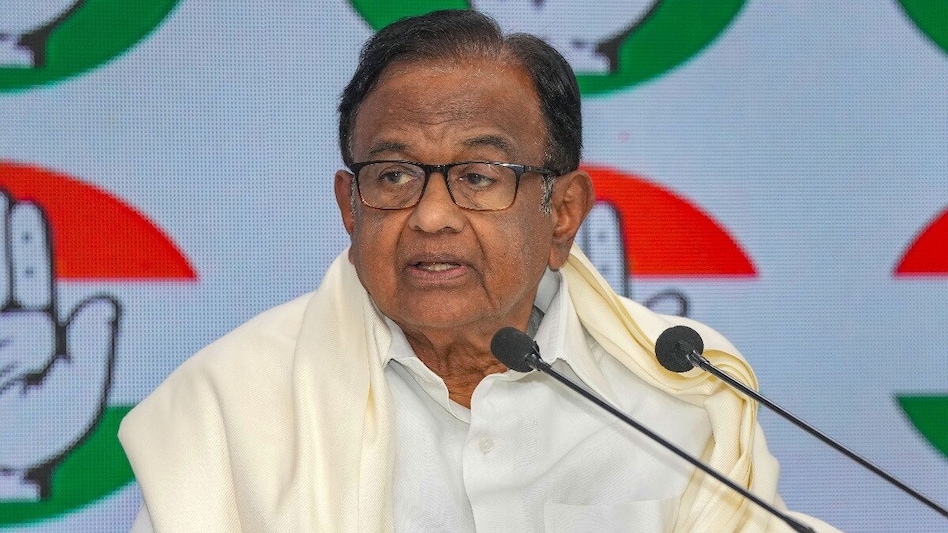
Former finance minister P Chidambaram launched a scathing attack on the India-US joint statement on the interim trade deal, arguing that what the government has projected as a diplomatic win is, in reality, an opaque and asymmetric framework tilted heavily in favour of Washington.
In a detailed post on X (formerly Twitter), Chidambaram pointed out that the joint statement issued on February 6 explicitly acknowledges that no Bilateral Trade Agreement (BTA) has been concluded. Instead, the two sides have merely agreed on a “framework for an interim agreement” to advance broader BTA negotiations initiated in February 2025.
“It is not even an Interim Agreement. It is a ‘framework for an interim agreement’,” Chidambaram wrote, questioning the government’s celebratory tone.
He argued that the language of the statement — particularly Paragraph 2 and its accompanying bullet points — is so convoluted that understanding the actual commitments made by the United States would require a close reading of multiple US executive orders issued between 2018 and 2025.
“Unless one reads and analyses the Orders of the United States dated 2-4-2025, 5-9-2025, 8-3-2018, 30-7-2025 and 17-5-2019, it is not possible to understand the exact nature of the commitments undertaken by the U.S.,” he said.
According to Chidambaram, the lack of clarity masks a deal that is clearly skewed in favour of the US. He flagged what he described as a stark asymmetry in tariff commitments: while India would eliminate or sharply reduce tariffs on all US industrial goods and a wide range of agricultural and food products, the United States would continue to impose an 18% tariff on Indian exports, including textiles, leather goods and organic chemicals.
Crucially, he noted that the US would lift these tariffs only after a “successful conclusion of the Interim Agreement”, effectively placing the burden of progress on India.
Chidambaram also highlighted that US tariffs on steel, copper and aluminium are set to continue, with exemptions limited to certain aircraft and aircraft parts. In addition, the ongoing Section 232 investigation by the US would remain in force, making the framework subject to unilateral American trade actions.
“How is this ‘framework for an Interim Agreement’ a matter of celebration?” Chidambaram asked, summing up his criticism.
Former finance minister P Chidambaram launched a scathing attack on the India-US joint statement on the interim trade deal, arguing that what the government has projected as a diplomatic win is, in reality, an opaque and asymmetric framework tilted heavily in favour of Washington.
In a detailed post on X (formerly Twitter), Chidambaram pointed out that the joint statement issued on February 6 explicitly acknowledges that no Bilateral Trade Agreement (BTA) has been concluded. Instead, the two sides have merely agreed on a “framework for an interim agreement” to advance broader BTA negotiations initiated in February 2025.
“It is not even an Interim Agreement. It is a ‘framework for an interim agreement’,” Chidambaram wrote, questioning the government’s celebratory tone.
He argued that the language of the statement — particularly Paragraph 2 and its accompanying bullet points — is so convoluted that understanding the actual commitments made by the United States would require a close reading of multiple US executive orders issued between 2018 and 2025.
“Unless one reads and analyses the Orders of the United States dated 2-4-2025, 5-9-2025, 8-3-2018, 30-7-2025 and 17-5-2019, it is not possible to understand the exact nature of the commitments undertaken by the U.S.,” he said.
According to Chidambaram, the lack of clarity masks a deal that is clearly skewed in favour of the US. He flagged what he described as a stark asymmetry in tariff commitments: while India would eliminate or sharply reduce tariffs on all US industrial goods and a wide range of agricultural and food products, the United States would continue to impose an 18% tariff on Indian exports, including textiles, leather goods and organic chemicals.
Crucially, he noted that the US would lift these tariffs only after a “successful conclusion of the Interim Agreement”, effectively placing the burden of progress on India.
Chidambaram also highlighted that US tariffs on steel, copper and aluminium are set to continue, with exemptions limited to certain aircraft and aircraft parts. In addition, the ongoing Section 232 investigation by the US would remain in force, making the framework subject to unilateral American trade actions.
“How is this ‘framework for an Interim Agreement’ a matter of celebration?” Chidambaram asked, summing up his criticism.