
'I will call Xi, I will call Modi': Brazil president turns to Brics after tariff blow, puts Donald Trump on mute
Trump had previously said Lula was free to call “anytime,” a move even welcomed by Brazil’s finance minister. But Lula has made it clear: he won’t be the one picking up the phone.
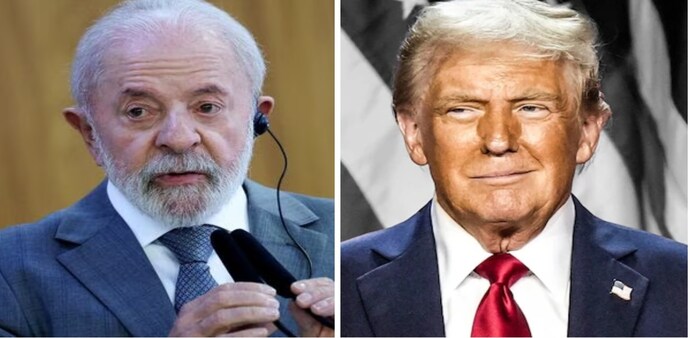
- Aug 6, 2025,
- Updated Aug 6, 2025 7:42 AM IST
Brazilian President Luiz Inacio Lula da Silva refused to call U.S. President Donald Trump after steep new tariffs rocked ties between the two nations, calling it “the most regrettable” day in their bilateral history—and choosing instead to dial Brics allies like India’s Prime Minister Narendra Modi and China’s Xi Jinping.
“I won’t call Trump. He doesn’t want to talk,” Lula told reporters Tuesday, signaling a widening rift after the U.S. imposed a 50% tariff on Brazilian imports.
Trump had previously said Lula was free to call “anytime,” a move even welcomed by Brazil’s finance minister. But Lula has made it clear: he won’t be the one picking up the phone.
The Trump administration’s decision to double tariffs, including an additional 40% hike, has prompted Brazil to prepare a formal challenge at the World Trade Organisation. Lula said the country would use “all available tools” to defend its interests.
The diplomatic freeze comes as Trump warned Brics members—India, China, Brazil, and others—that aligning too closely with policies at odds with U.S. interests could trigger another 10% tariff. Lula’s statement, naming Modi and Xi among those he plans to speak with, appeared to be a direct rebuke of that warning.
Compounding the strain is the fallout from former Brazilian President Jair Bolsonaro’s arrest. The U.S. condemned Brazil’s Supreme Court for placing Bolsonaro under house arrest, accusing Justice Alexandre de Moraes of abusing human rights and suppressing dissent. Moraes, who is sanctioned by the U.S. under the Magnitsky Act, dismissed the criticism and said he would continue his work.
Between soaring tariffs, diplomatic snubs, and courtroom clashes, relations between the hemisphere’s two largest democracies appear to be at their lowest in years.
Brazilian President Luiz Inacio Lula da Silva refused to call U.S. President Donald Trump after steep new tariffs rocked ties between the two nations, calling it “the most regrettable” day in their bilateral history—and choosing instead to dial Brics allies like India’s Prime Minister Narendra Modi and China’s Xi Jinping.
“I won’t call Trump. He doesn’t want to talk,” Lula told reporters Tuesday, signaling a widening rift after the U.S. imposed a 50% tariff on Brazilian imports.
Trump had previously said Lula was free to call “anytime,” a move even welcomed by Brazil’s finance minister. But Lula has made it clear: he won’t be the one picking up the phone.
The Trump administration’s decision to double tariffs, including an additional 40% hike, has prompted Brazil to prepare a formal challenge at the World Trade Organisation. Lula said the country would use “all available tools” to defend its interests.
The diplomatic freeze comes as Trump warned Brics members—India, China, Brazil, and others—that aligning too closely with policies at odds with U.S. interests could trigger another 10% tariff. Lula’s statement, naming Modi and Xi among those he plans to speak with, appeared to be a direct rebuke of that warning.
Compounding the strain is the fallout from former Brazilian President Jair Bolsonaro’s arrest. The U.S. condemned Brazil’s Supreme Court for placing Bolsonaro under house arrest, accusing Justice Alexandre de Moraes of abusing human rights and suppressing dissent. Moraes, who is sanctioned by the U.S. under the Magnitsky Act, dismissed the criticism and said he would continue his work.
Between soaring tariffs, diplomatic snubs, and courtroom clashes, relations between the hemisphere’s two largest democracies appear to be at their lowest in years.