
ICRA sees higher losses for aviation sector in FY26; IndiGo disruptions, weak rupee drag outlook
On the international front, ICRA also downgraded its FY2026 growth forecast for Indian carriers to 7-9% (from 13-15%), citing softening demand and global economic uncertainties. Still, the outlook for FY2027 remains “Stable,” with traffic expected to bounce back by 6-8%, though on a lower base due to this year’s disruptions.
- Dec 29, 2025,
- Updated Dec 29, 2025 7:50 PM IST
India’s aviation industry is headed for a rougher landing in FY2026, with ICRA sharply revising its net loss estimate to ₹17,000-18,000 crore — nearly double its previous forecast of ₹9,500-10,500 crore. The downward revision is driven largely by operational setbacks at market leader IndiGo, a depreciating rupee, and a slower-than-expected rebound in passenger traffic.
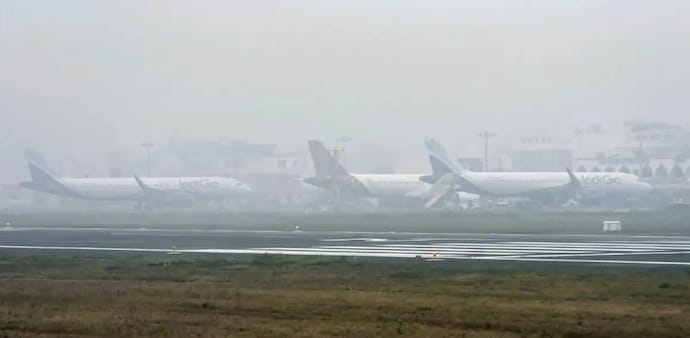
The first week of December saw one of the worst disruption episodes for the sector in recent times. IndiGo, India’s largest airline, was forced to cancel approximately 4,500 flights between December 3 and 8, peaking at nearly 1,600 cancellations in a single day — nearly 70% of its daily schedule. The airline’s high dependence on night operations left it vulnerable to newly implemented flight duty time limitations (FDTL), compounded by bad weather and technical challenges.
Although the Directorate General of Civil Aviation (DGCA) has granted IndiGo temporary relief from the new norms until February 10, 2026, ICRA believes the incident has dented consumer confidence and will weigh on December’s domestic traffic numbers. This comes on the heels of a tepid April-November period, where traffic grew just 2.2% year-on-year, leading the agency to cut its FY2026 domestic air passenger traffic growth forecast to just 0-3%, down from 4-6% earlier.
In November 2025, however, domestic traffic showed strength, rising 8.4% year-on-year to 154.5 lakh passengers, with a robust passenger load factor (PLF) of 92.7% — the highest in months. The month also saw the highest-ever single-day traffic of 5.38 lakh passengers on November 23.
Despite this, multiple structural and macroeconomic issues continue to cloud the outlook. The Indian rupee’s depreciation against the dollar has led to significant unrealised foreign exchange losses in Q2 and Q3 for several airlines. With up to 50% of operating costs including fuel and maintenance denominated in USD, the weak INR is amplifying cost pressures.
Fuel prices have added to the pain. Aviation turbine fuel (ATF) prices rose by 8.5% year-on-year and 5.3% month-on-month in December 2025. ATF accounts for 30-40% of airlines' operating costs, making it a critical component in fare and profitability structures.
Capacity constraints from engine issues also persist. IndiGo had grounded over 70 aircraft due to Pratt & Whitney engine problems earlier this year, and though the number came down to 40 by September, ICRA warns that the overall supply chain stress still affects 15-17% of the total industry fleet. Airlines continue to rely on costly wet leases and older aircraft, pushing up operating expenses and reducing efficiency.
On the international front, ICRA also downgraded its FY2026 growth forecast for Indian carriers to 7-9% (from 13-15%), citing softening demand and global economic uncertainties. Still, the outlook for FY2027 remains “Stable,” with traffic expected to bounce back by 6-8%, though on a lower base due to this year’s disruptions.
ICRA continues to rate InterGlobe Aviation Ltd (IndiGo) at [ICRA]AA (Stable) / [ICRA]A1+, while Akasa Air holds a [ICRA]BBB- (Stable)/[ICRA]A3 rating.
India’s aviation industry is headed for a rougher landing in FY2026, with ICRA sharply revising its net loss estimate to ₹17,000-18,000 crore — nearly double its previous forecast of ₹9,500-10,500 crore. The downward revision is driven largely by operational setbacks at market leader IndiGo, a depreciating rupee, and a slower-than-expected rebound in passenger traffic.
The first week of December saw one of the worst disruption episodes for the sector in recent times. IndiGo, India’s largest airline, was forced to cancel approximately 4,500 flights between December 3 and 8, peaking at nearly 1,600 cancellations in a single day — nearly 70% of its daily schedule. The airline’s high dependence on night operations left it vulnerable to newly implemented flight duty time limitations (FDTL), compounded by bad weather and technical challenges.
Although the Directorate General of Civil Aviation (DGCA) has granted IndiGo temporary relief from the new norms until February 10, 2026, ICRA believes the incident has dented consumer confidence and will weigh on December’s domestic traffic numbers. This comes on the heels of a tepid April-November period, where traffic grew just 2.2% year-on-year, leading the agency to cut its FY2026 domestic air passenger traffic growth forecast to just 0-3%, down from 4-6% earlier.
In November 2025, however, domestic traffic showed strength, rising 8.4% year-on-year to 154.5 lakh passengers, with a robust passenger load factor (PLF) of 92.7% — the highest in months. The month also saw the highest-ever single-day traffic of 5.38 lakh passengers on November 23.
Despite this, multiple structural and macroeconomic issues continue to cloud the outlook. The Indian rupee’s depreciation against the dollar has led to significant unrealised foreign exchange losses in Q2 and Q3 for several airlines. With up to 50% of operating costs including fuel and maintenance denominated in USD, the weak INR is amplifying cost pressures.
Fuel prices have added to the pain. Aviation turbine fuel (ATF) prices rose by 8.5% year-on-year and 5.3% month-on-month in December 2025. ATF accounts for 30-40% of airlines' operating costs, making it a critical component in fare and profitability structures.
Capacity constraints from engine issues also persist. IndiGo had grounded over 70 aircraft due to Pratt & Whitney engine problems earlier this year, and though the number came down to 40 by September, ICRA warns that the overall supply chain stress still affects 15-17% of the total industry fleet. Airlines continue to rely on costly wet leases and older aircraft, pushing up operating expenses and reducing efficiency.
On the international front, ICRA also downgraded its FY2026 growth forecast for Indian carriers to 7-9% (from 13-15%), citing softening demand and global economic uncertainties. Still, the outlook for FY2027 remains “Stable,” with traffic expected to bounce back by 6-8%, though on a lower base due to this year’s disruptions.
ICRA continues to rate InterGlobe Aviation Ltd (IndiGo) at [ICRA]AA (Stable) / [ICRA]A1+, while Akasa Air holds a [ICRA]BBB- (Stable)/[ICRA]A3 rating.