
'Illegal': India dismisses arbitration court under Indus Water Treaty; rejects 'ruling' on J&K dam projects
Following the Pakistan-backed terrorist attack in Pahalgam, the Indian government has placed the Indus Waters Treaty in abeyance. In a strong statement, the MEA declared that the treaty will remain suspended until Pakistan “credibly and irrevocably” ceases its support for cross-border terrorism.
- Jun 27, 2025,
- Updated Jun 27, 2025 8:26 PM IST
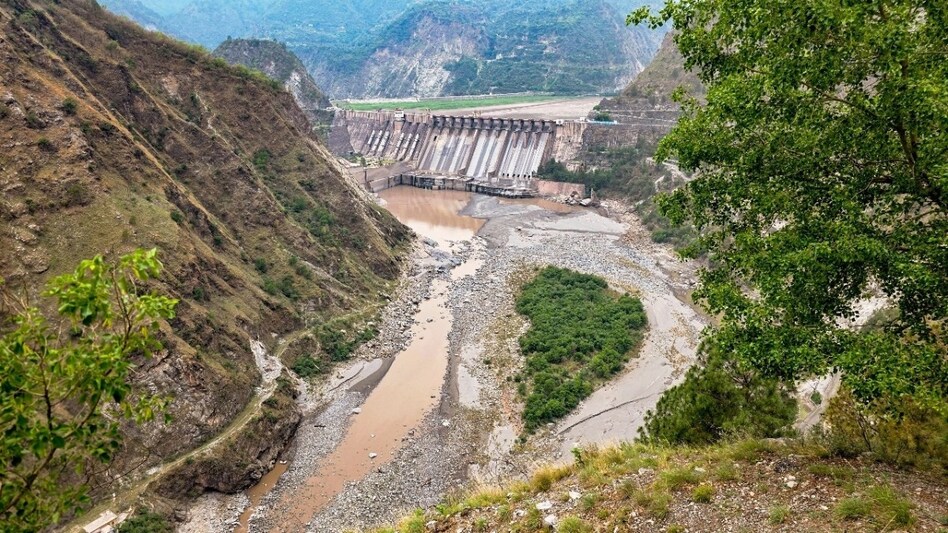
India on June 27 firmly rejected the authority of the Court of Arbitration constituted under the Indus Waters Treaty of 1960, dismissing it as illegal and denouncing its latest “supplemental award” concerning the Kishenganga and Ratle hydropower projects in Jammu and Kashmir.
The Ministry of External Affairs (MEA) asserted that the court was established in violation of the Indus Waters Treaty.
“Today, the illegal Court of Arbitration, purportedly constituted under the Indus Waters Treaty 1960, albeit in brazen violation of it, has issued what it characterizes as a ‘supplemental award’ on its competence concerning the Kishenganga and Ratle hydroelectric projects in the Indian Union Territory of Jammu and Kashmir. India has never recognised the existence in law of this so-called Court of Arbitration, and India’s position has all along been that the constitution of this so-called arbitral body is in itself a serious breach of the Indus Waters Treaty and consequently any proceedings before this forum and any award or decision taken by it are also for that reason illegal and per se void… India, therefore, categorically rejects this so-called supplemental award as it has rejected all prior pronouncements of this body…” the MEA said.
The supplemental award issued by the Court of Arbitration pertains specifically to whether the tribunal has the legal authority to adjudicate the disputes related to the Kishenganga and Ratle projects, focusing solely on the court’s jurisdiction rather than the merits of the projects themselves.
Following the Pakistan-backed terrorist attack in Pahalgam, the Indian government has placed the Indus Waters Treaty in abeyance. In a strong statement, the MEA declared that the treaty will remain suspended until Pakistan “credibly and irrevocably” ceases its support for cross-border terrorism.
Calling the move a “charade at Pakistan’s behest,” the government termed the “supplemental award” as yet another desperate attempt by Islamabad to evade accountability for its role as what it described as the “global epicentre of terrorism.”
“Pakistan's resort to this fabricated arbitration mechanism is consistent with its decades-long pattern of deception and manipulation of international forums,” the ministry added.
India on June 27 firmly rejected the authority of the Court of Arbitration constituted under the Indus Waters Treaty of 1960, dismissing it as illegal and denouncing its latest “supplemental award” concerning the Kishenganga and Ratle hydropower projects in Jammu and Kashmir.
The Ministry of External Affairs (MEA) asserted that the court was established in violation of the Indus Waters Treaty.
“Today, the illegal Court of Arbitration, purportedly constituted under the Indus Waters Treaty 1960, albeit in brazen violation of it, has issued what it characterizes as a ‘supplemental award’ on its competence concerning the Kishenganga and Ratle hydroelectric projects in the Indian Union Territory of Jammu and Kashmir. India has never recognised the existence in law of this so-called Court of Arbitration, and India’s position has all along been that the constitution of this so-called arbitral body is in itself a serious breach of the Indus Waters Treaty and consequently any proceedings before this forum and any award or decision taken by it are also for that reason illegal and per se void… India, therefore, categorically rejects this so-called supplemental award as it has rejected all prior pronouncements of this body…” the MEA said.
The supplemental award issued by the Court of Arbitration pertains specifically to whether the tribunal has the legal authority to adjudicate the disputes related to the Kishenganga and Ratle projects, focusing solely on the court’s jurisdiction rather than the merits of the projects themselves.
Following the Pakistan-backed terrorist attack in Pahalgam, the Indian government has placed the Indus Waters Treaty in abeyance. In a strong statement, the MEA declared that the treaty will remain suspended until Pakistan “credibly and irrevocably” ceases its support for cross-border terrorism.
Calling the move a “charade at Pakistan’s behest,” the government termed the “supplemental award” as yet another desperate attempt by Islamabad to evade accountability for its role as what it described as the “global epicentre of terrorism.”
“Pakistan's resort to this fabricated arbitration mechanism is consistent with its decades-long pattern of deception and manipulation of international forums,” the ministry added.