
IMD issues Orange alert as dense fog worsens Delhi air, AQI likely to turn ‘severe’ over weekend
The 24-hour average AQI for Delhi stood at 374 — still in the ‘very poor’ category and marginally higher than the 373 recorded a day earlier — signalling little relief for residents. Forecasts offer little comfort.
- Dec 19, 2025,
- Updated Dec 19, 2025 10:19 PM IST
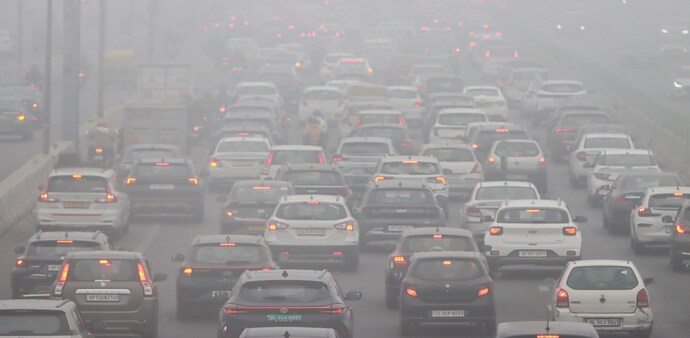
Delhi woke up to dense fog and worsening air quality on December 19, with pollution levels expected to deteriorate further over the weekend despite the rollout of stringent anti-pollution measures, officials said.
According to the India Meteorological Department (IMD), dense to very dense fog shrouded large parts of the capital early in the day, reducing visibility to as low as 50 metres at 8.30 am. Conditions improved marginally by 9.30 am, when visibility rose to around 100 metres, but the combination of fog and stagnant weather conditions continued to trap pollutants near the surface.
Air quality during the morning hours remained firmly in the ‘very poor’ category, with the Air Quality Index (AQI) settling at 382, edging dangerously close to the ‘severe’ threshold. Overall pollution levels across the city remained elevated, with 11 of Delhi’s 40 monitoring stations recording ‘severe’ air quality, while the remaining 29 stations reported ‘very poor’ readings.
Anand Vihar emerged as the most polluted hotspot, registering an AQI of 430, according to data from the Central Pollution Control Board’s (CPCB) SAMEER app. Earlier in the day, pollution levels were even more alarming, with 14 stations in the ‘severe’ category and 26 in the ‘very poor’ range. Vivek Vihar reported the worst air quality at that time, with an AQI of 434.
The 24-hour average AQI for Delhi stood at 374 — still in the ‘very poor’ category and marginally higher than the 373 recorded a day earlier — signalling little relief for residents. As per CPCB classification, AQI values between 301 and 400 fall under ‘very poor’, while readings above 401 are categorised as ‘severe’.
Forecasts offer little comfort. The Air Quality Early Warning System for Delhi has projected that air quality will remain ‘very poor’ on December 20 and is likely to slip into the ‘severe’ category on December 21 and December 22. In view of the deteriorating conditions, the IMD has issued an ‘orange’ alert for tomorrow, cautioning residents about dense to very dense fog during the morning and forenoon hours.
Data from the Decision Support System (DSS) for Air Quality Management showed that transport continues to be the single largest contributor to Delhi’s pollution load, accounting for 15.9 per cent of total emissions. Delhi and peripheral industries contributed 7.9 per cent, followed by residential sources at 3.8 per cent. Construction activities accounted for 2.1 per cent, while waste burning and road dust contributed 1.3 per cent and 1.1 per cent, respectively.
Among districts in the National Capital Region (NCR), Jhajjar recorded the highest pollution contribution at 16.6 per cent, followed by Rohtak (5.5 per cent), Bhiwani (3.6 per cent), Sonipat (2 per cent) and Gurugram (1.8 per cent).
On the weather front, the maximum temperature in the capital was recorded at 22.2 degrees Celsius, which is normal for this time of year. The minimum temperature dipped to 9 degrees Celsius, about 0.9 degrees below normal, IMD data showed. For the coming days, temperatures are expected to hover around a maximum of 22 degrees Celsius and a minimum of 8 degrees Celsius.
With foggy conditions persisting and pollution levels projected to worsen, health experts have advised vulnerable groups — including children, the elderly and those with respiratory ailments — to limit outdoor exposure, as Delhi braces for another hazardous weekend of air quality.
Delhi woke up to dense fog and worsening air quality on December 19, with pollution levels expected to deteriorate further over the weekend despite the rollout of stringent anti-pollution measures, officials said.
According to the India Meteorological Department (IMD), dense to very dense fog shrouded large parts of the capital early in the day, reducing visibility to as low as 50 metres at 8.30 am. Conditions improved marginally by 9.30 am, when visibility rose to around 100 metres, but the combination of fog and stagnant weather conditions continued to trap pollutants near the surface.
Air quality during the morning hours remained firmly in the ‘very poor’ category, with the Air Quality Index (AQI) settling at 382, edging dangerously close to the ‘severe’ threshold. Overall pollution levels across the city remained elevated, with 11 of Delhi’s 40 monitoring stations recording ‘severe’ air quality, while the remaining 29 stations reported ‘very poor’ readings.
Anand Vihar emerged as the most polluted hotspot, registering an AQI of 430, according to data from the Central Pollution Control Board’s (CPCB) SAMEER app. Earlier in the day, pollution levels were even more alarming, with 14 stations in the ‘severe’ category and 26 in the ‘very poor’ range. Vivek Vihar reported the worst air quality at that time, with an AQI of 434.
The 24-hour average AQI for Delhi stood at 374 — still in the ‘very poor’ category and marginally higher than the 373 recorded a day earlier — signalling little relief for residents. As per CPCB classification, AQI values between 301 and 400 fall under ‘very poor’, while readings above 401 are categorised as ‘severe’.
Forecasts offer little comfort. The Air Quality Early Warning System for Delhi has projected that air quality will remain ‘very poor’ on December 20 and is likely to slip into the ‘severe’ category on December 21 and December 22. In view of the deteriorating conditions, the IMD has issued an ‘orange’ alert for tomorrow, cautioning residents about dense to very dense fog during the morning and forenoon hours.
Data from the Decision Support System (DSS) for Air Quality Management showed that transport continues to be the single largest contributor to Delhi’s pollution load, accounting for 15.9 per cent of total emissions. Delhi and peripheral industries contributed 7.9 per cent, followed by residential sources at 3.8 per cent. Construction activities accounted for 2.1 per cent, while waste burning and road dust contributed 1.3 per cent and 1.1 per cent, respectively.
Among districts in the National Capital Region (NCR), Jhajjar recorded the highest pollution contribution at 16.6 per cent, followed by Rohtak (5.5 per cent), Bhiwani (3.6 per cent), Sonipat (2 per cent) and Gurugram (1.8 per cent).
On the weather front, the maximum temperature in the capital was recorded at 22.2 degrees Celsius, which is normal for this time of year. The minimum temperature dipped to 9 degrees Celsius, about 0.9 degrees below normal, IMD data showed. For the coming days, temperatures are expected to hover around a maximum of 22 degrees Celsius and a minimum of 8 degrees Celsius.
With foggy conditions persisting and pollution levels projected to worsen, health experts have advised vulnerable groups — including children, the elderly and those with respiratory ailments — to limit outdoor exposure, as Delhi braces for another hazardous weekend of air quality.