
'IMF bailout programme shouldn't be...': Kanwal Sibal as US approves supply of air-to-air missiles to Pakistan
His take comes as Islamabad is set to receive AIM-120 Advanced Medium-Range Air-to-Air Missiles (AMRAAM) from the US, signalling a reset in military ties following recent high-level meetings.
- Oct 8, 2025,
- Updated Oct 8, 2025 11:58 AM IST
Kanwal Sibal, former Foreign Secretary of India, on Wednesday said that the International Monetary Fund's (IMF) bailout programme to Pakistan should not be utilised for higher defence spending. He said that with the kind of wooing of Pakistan by US President Donald Trump, this was expected.
As of October 2025, Pakistan is under a $7 billion IMF Extended Fund Facility approved last year. In May, the IMF added 11 conditions, including budget approval, tariff reforms, and a governance plan. An IMF mission is currently reviewing progress and 2025-end targets.
"The US is back to arming Pakistan against India. Pakistan's IF bailout programme should not be compatible with higher defence expenditure. With the kind of wooing of Pakistan by Trump, this was to be expected. Raytheon is negotiating the Javelin deal with India. It should decide if supplying these advanced missiles to Pakistan after Operation Sindoor helps its projects with India," Sibal wrote on X (formerly Twitter).
His take comes as Islamabad is set to receive AIM-120 Advanced Medium-Range Air-to-Air Missiles (AMRAAM) from the US, signalling a reset in military ties following recent high-level meetings and a thaw in relations after the India-Pakistan conflict earlier this year. The US Department of War confirmed Pakistan’s inclusion in an expanded $2.51 billion missile contract, scheduled for completion by May 2030.
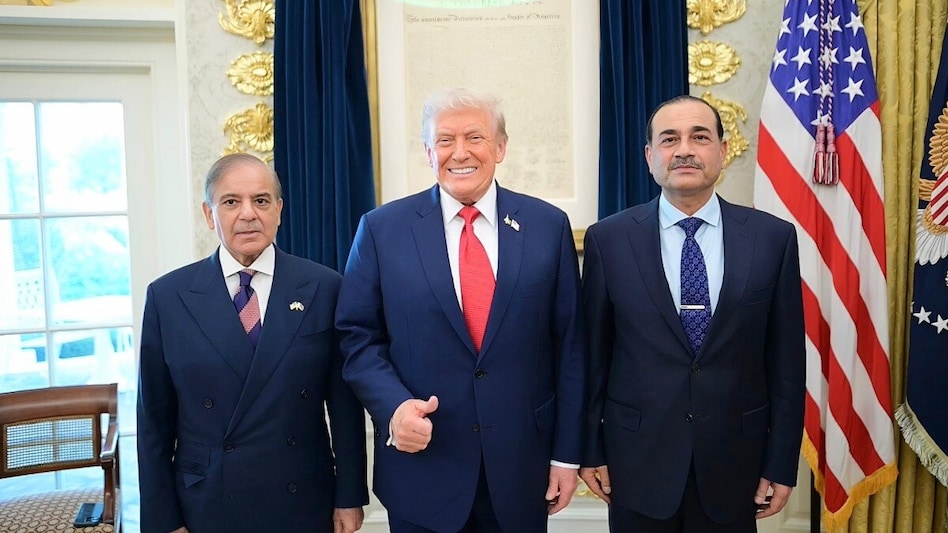
The development follows President Donald Trump’s meeting with Shehbaz Sharif and Asim Munir at the Oval Office. After the clash with India, Pakistan credited Trump for mediating a ceasefire—though India maintained it resulted from direct DGMO-level talks.
The updated US contract adds $41.6 million for production of the AMRAAM’s C8 and D3 variants, but does not specify Pakistan’s missile allotment. Alongside Pakistan, the deal covers allies like the UK, Germany, Australia, Japan, and Saudi Arabia.
Pakistan’s share focuses on AIM-120 missiles for its F-16s, previously used by the PAF in the 2019 conflict with India. The C8 and D3 variants include the export version of the AIM-120D, the most advanced AMRAAM in US service. Pakistan earlier operated the older C5 model acquired with its Block 52 F-16s in 2010.
Kanwal Sibal, former Foreign Secretary of India, on Wednesday said that the International Monetary Fund's (IMF) bailout programme to Pakistan should not be utilised for higher defence spending. He said that with the kind of wooing of Pakistan by US President Donald Trump, this was expected.
As of October 2025, Pakistan is under a $7 billion IMF Extended Fund Facility approved last year. In May, the IMF added 11 conditions, including budget approval, tariff reforms, and a governance plan. An IMF mission is currently reviewing progress and 2025-end targets.
"The US is back to arming Pakistan against India. Pakistan's IF bailout programme should not be compatible with higher defence expenditure. With the kind of wooing of Pakistan by Trump, this was to be expected. Raytheon is negotiating the Javelin deal with India. It should decide if supplying these advanced missiles to Pakistan after Operation Sindoor helps its projects with India," Sibal wrote on X (formerly Twitter).
His take comes as Islamabad is set to receive AIM-120 Advanced Medium-Range Air-to-Air Missiles (AMRAAM) from the US, signalling a reset in military ties following recent high-level meetings and a thaw in relations after the India-Pakistan conflict earlier this year. The US Department of War confirmed Pakistan’s inclusion in an expanded $2.51 billion missile contract, scheduled for completion by May 2030.
The development follows President Donald Trump’s meeting with Shehbaz Sharif and Asim Munir at the Oval Office. After the clash with India, Pakistan credited Trump for mediating a ceasefire—though India maintained it resulted from direct DGMO-level talks.
The updated US contract adds $41.6 million for production of the AMRAAM’s C8 and D3 variants, but does not specify Pakistan’s missile allotment. Alongside Pakistan, the deal covers allies like the UK, Germany, Australia, Japan, and Saudi Arabia.
Pakistan’s share focuses on AIM-120 missiles for its F-16s, previously used by the PAF in the 2019 conflict with India. The C8 and D3 variants include the export version of the AIM-120D, the most advanced AMRAAM in US service. Pakistan earlier operated the older C5 model acquired with its Block 52 F-16s in 2010.