
‘In 1947, Pak was ahead of us on...’: CDS General Anil Chauhan says India has flipped the script
Even as the two nations gained Independence at the same time, their fate couldn't have been more different than what they look like 78 years later.
- May 31, 2025,
- Updated May 31, 2025 10:51 AM IST
India and Pakistan gained Independence in 1947 at the stroke of midnight, with Pakistan gaining Independence half an hour before India. Even as the two nations gained Independence at the same time, their fate couldn't have been more different than what they look like 78 years later.
While India recently became the fourth-largest economy and is eyeing the third spot, Pakistan is marred by economic as well as political instability and is dependent on loans and bailouts.
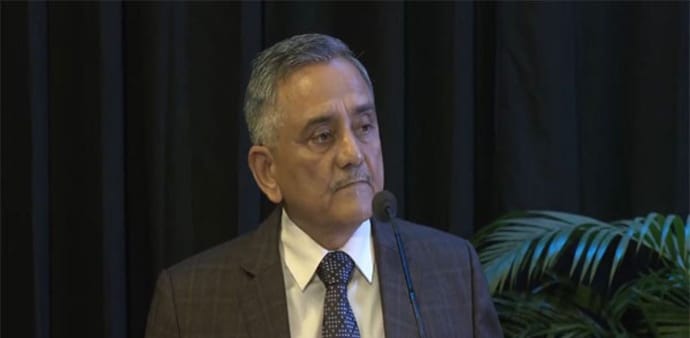
Chief of Defence Staff (CDS) General Anil Chauhan on Saturday underlined the differences in the trajectory that both nations have taken since then. While addressing the Shangri-La Dialogue in Singapore, General Chauhan said that Pakistan was ahead of India in every aspect, but today, India has flipped the script completely.
"Now, on the India-Pakistan relationship, we are not operating without a strategy. When we gained independence, Pakistan was ahead of us on every metric, social, economic, [and] GDP per capita. Today, India is ahead on all fronts, economic performance, human development, and social harmony, despite our greater diversity," he was quoted by news agency ANI.
General Chauhan explained that this did not happen by accident and was a result of a long-term strategy. "Today, India is ahead on all fronts, economic performance, human development, and social harmony, despite our greater diversity. That didn’t happen by accident; it’s a result of long-term strategy," he underlined.
Well, General Anil Chauhan's statement is rooted strongly in facts. While both countries started with nearly identical GDP figures, India's GDP roughly doubled from $2,039 billion in 2014 to $3,909 billion in 2024, logging a growth of around 92 per cent.
India's share of global GDP went up from 2.55 per cent to 3.54 per cent. India's western neighbour, on the other hand, grew from $271 billion to $373 billion in the same period, marking a growth of 37 per cent. Despite a 37 per cent growth in GDP, its share in global GDP remained unchanged at 0.34 per cent.
The global GDP rose by 38 per cent over the last decade to $110.5 trillion in 2024. Besides this, India's GDP per capita is nearly 50 per cent more than that of Pakistan's as of 2024, as per the International Monetary Fund (IMF).
India's GDP per capita went up from $1,560 in 2014 to $2,711 in 2024, logging a 74 per cent rise in 10 years. On the other hand, Pakistan's GDP per capita has increased from $1,424 in 2014 to only $1,581 in 2024, a modest 11 per cent growth in a decade.
Moreover, India maintained a relatively stable inflation over the decade, with a rate of 4.9 per cent in 2015 and 4.7 per cent in 2024, leading to a 10-year average of 4.97 per cent, slightly above the global average of 4.46 per cent.
In contrast, Pakistan experienced a huge surge in inflation from 2015 to 2024. In 2015, the inflation rate in Pakistan stood at a humble 4.5 per cent, but it galloped to 23.4 per cent by 2024, taking the country's 10-year average to 10.81 per cent, over twice the global average figure of 4.46 per cent.
India and Pakistan gained Independence in 1947 at the stroke of midnight, with Pakistan gaining Independence half an hour before India. Even as the two nations gained Independence at the same time, their fate couldn't have been more different than what they look like 78 years later.
While India recently became the fourth-largest economy and is eyeing the third spot, Pakistan is marred by economic as well as political instability and is dependent on loans and bailouts.
Chief of Defence Staff (CDS) General Anil Chauhan on Saturday underlined the differences in the trajectory that both nations have taken since then. While addressing the Shangri-La Dialogue in Singapore, General Chauhan said that Pakistan was ahead of India in every aspect, but today, India has flipped the script completely.
"Now, on the India-Pakistan relationship, we are not operating without a strategy. When we gained independence, Pakistan was ahead of us on every metric, social, economic, [and] GDP per capita. Today, India is ahead on all fronts, economic performance, human development, and social harmony, despite our greater diversity," he was quoted by news agency ANI.
General Chauhan explained that this did not happen by accident and was a result of a long-term strategy. "Today, India is ahead on all fronts, economic performance, human development, and social harmony, despite our greater diversity. That didn’t happen by accident; it’s a result of long-term strategy," he underlined.
Well, General Anil Chauhan's statement is rooted strongly in facts. While both countries started with nearly identical GDP figures, India's GDP roughly doubled from $2,039 billion in 2014 to $3,909 billion in 2024, logging a growth of around 92 per cent.
India's share of global GDP went up from 2.55 per cent to 3.54 per cent. India's western neighbour, on the other hand, grew from $271 billion to $373 billion in the same period, marking a growth of 37 per cent. Despite a 37 per cent growth in GDP, its share in global GDP remained unchanged at 0.34 per cent.
The global GDP rose by 38 per cent over the last decade to $110.5 trillion in 2024. Besides this, India's GDP per capita is nearly 50 per cent more than that of Pakistan's as of 2024, as per the International Monetary Fund (IMF).
India's GDP per capita went up from $1,560 in 2014 to $2,711 in 2024, logging a 74 per cent rise in 10 years. On the other hand, Pakistan's GDP per capita has increased from $1,424 in 2014 to only $1,581 in 2024, a modest 11 per cent growth in a decade.
Moreover, India maintained a relatively stable inflation over the decade, with a rate of 4.9 per cent in 2015 and 4.7 per cent in 2024, leading to a 10-year average of 4.97 per cent, slightly above the global average of 4.46 per cent.
In contrast, Pakistan experienced a huge surge in inflation from 2015 to 2024. In 2015, the inflation rate in Pakistan stood at a humble 4.5 per cent, but it galloped to 23.4 per cent by 2024, taking the country's 10-year average to 10.81 per cent, over twice the global average figure of 4.46 per cent.