
'In 36 hours, at least 80 drones': Pakistan admits impact of India’s strikes on Nur Khan airbase
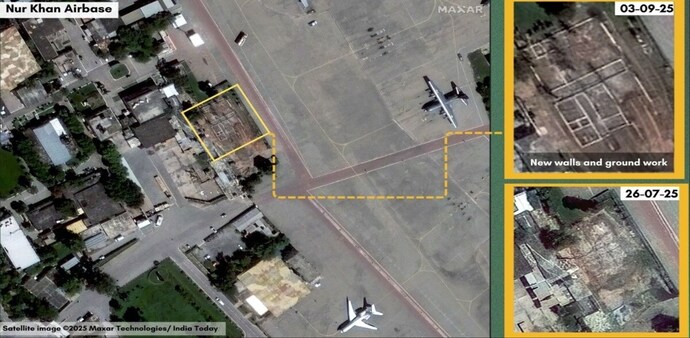
The admission came during a year-end press briefing on December 27, when Pakistan’s Deputy Prime Minister and Foreign Minister Ishaq Dar confirmed that Indian drones struck the Nur Khan Air Base in Rawalpindi’s Chaklala area, injuring personnel and damaging a key military installation.
- Dec 28, 2025,
- Updated Dec 28, 2025 5:19 PM IST
Pakistan has publicly acknowledged, for the first time in detail, the impact of India’s precision strikes carried out during Operation Sindoor in May, months after initially seeking to downplay the damage caused to its military infrastructure.
The admission came during a year-end press briefing on December 27, when Pakistan’s Deputy Prime Minister and Foreign Minister Ishaq Dar confirmed that Indian drones struck the Nur Khan Air Base in Rawalpindi’s Chaklala area, injuring personnel and damaging a key military installation. The base is one of the most strategic facilities of the Pakistan Air Force, located close to the country’s military headquarters and the capital.
“They (India) sent drones towards Pakistan. In 36 hours, at least 80 drones were sent. We were able to intercept 79 drones out of 80, and only one drone damaged a military installation and personnel were also injured,” Dar said, seeking to frame the episode as a largely contained incident.
However, his remarks marked a significant shift from Pakistan’s earlier position, which had largely denied or minimised the scale of damage inflicted during the operation. Dar also revealed that Pakistan’s civil and military leadership, led by Prime Minister Shehbaz Sharif, convened an emergency meeting on the night of May 9 to assess the situation and authorise response measures. He described India’s strike on Nur Khan in the early hours of May 10 as a “mistake,” underscoring the sensitivity of the target.
Operation Sindoor was launched by India in the early hours of May 7 in response to the April 22 terror attack in Jammu and Kashmir’s Pahalgam, which left 26 civilians dead. The operation began with coordinated strikes on nine terror camps in Pakistan and Pakistan-occupied Kashmir, before expanding to target military installations. In total, 11 Pakistani air bases were hit, including facilities in Sargodha, Rafiqui, Jacobabad and Muridke.
Reacting to Dar’s statement, Indian Army veteran Lt Gen (Retd) KJS Dhillon rejected Pakistan’s claim of limited damage, accusing its leadership of suppressing casualty figures. He pointed to reports from Pakistan’s own media to challenge the official narrative.
“Their own Samaa TV website, on August 14, 2025, published the names of 138 gallantry awardees who were killed in Operation Sindoor and were awarded posthumously. If 138 were awarded posthumously, that means at least 400 to 500 people had died during the operation. For him to say that there were only minor injuries does not add up,” Dhillon said, adding that videos shot by Pakistani civilians showed the Nur Khan base in flames.
India’s strike on Nur Khan had earlier been acknowledged by Prime Minister Shehbaz Sharif himself, who said Army Chief General Asim Munir personally informed him of the attack during the intervening night of May 9 and 10. In July, Sharif’s adviser Rana Sanaullah further disclosed that Pakistan had only 30 to 45 seconds to assess whether a missile fired towards Nur Khan was carrying a nuclear warhead — a revelation that highlighted the risks of rapid escalation during the crisis.
Satellite imagery from May showed extensive damage to multiple Pakistani air bases, including Nur Khan, Mushaf in Sargodha, Bholari and Shahbaz in Jacobabad. On May 10, Pakistan had admitted that Indian missiles and drones targeted three of its air bases — Nur Khan, Muridke and Rafiqui — though it continued to insist at the time that the damage was minimal.
Dar’s latest comments now represent the most explicit official acknowledgment yet of the impact of India’s strikes. For observers, the statement underscores both the scale of Operation Sindoor and the fragile, high-stakes nature of India-Pakistan military confrontations, where narratives often evolve long after the guns fall silent.
Pakistan has publicly acknowledged, for the first time in detail, the impact of India’s precision strikes carried out during Operation Sindoor in May, months after initially seeking to downplay the damage caused to its military infrastructure.
The admission came during a year-end press briefing on December 27, when Pakistan’s Deputy Prime Minister and Foreign Minister Ishaq Dar confirmed that Indian drones struck the Nur Khan Air Base in Rawalpindi’s Chaklala area, injuring personnel and damaging a key military installation. The base is one of the most strategic facilities of the Pakistan Air Force, located close to the country’s military headquarters and the capital.
“They (India) sent drones towards Pakistan. In 36 hours, at least 80 drones were sent. We were able to intercept 79 drones out of 80, and only one drone damaged a military installation and personnel were also injured,” Dar said, seeking to frame the episode as a largely contained incident.
However, his remarks marked a significant shift from Pakistan’s earlier position, which had largely denied or minimised the scale of damage inflicted during the operation. Dar also revealed that Pakistan’s civil and military leadership, led by Prime Minister Shehbaz Sharif, convened an emergency meeting on the night of May 9 to assess the situation and authorise response measures. He described India’s strike on Nur Khan in the early hours of May 10 as a “mistake,” underscoring the sensitivity of the target.
Operation Sindoor was launched by India in the early hours of May 7 in response to the April 22 terror attack in Jammu and Kashmir’s Pahalgam, which left 26 civilians dead. The operation began with coordinated strikes on nine terror camps in Pakistan and Pakistan-occupied Kashmir, before expanding to target military installations. In total, 11 Pakistani air bases were hit, including facilities in Sargodha, Rafiqui, Jacobabad and Muridke.
Reacting to Dar’s statement, Indian Army veteran Lt Gen (Retd) KJS Dhillon rejected Pakistan’s claim of limited damage, accusing its leadership of suppressing casualty figures. He pointed to reports from Pakistan’s own media to challenge the official narrative.
“Their own Samaa TV website, on August 14, 2025, published the names of 138 gallantry awardees who were killed in Operation Sindoor and were awarded posthumously. If 138 were awarded posthumously, that means at least 400 to 500 people had died during the operation. For him to say that there were only minor injuries does not add up,” Dhillon said, adding that videos shot by Pakistani civilians showed the Nur Khan base in flames.
India’s strike on Nur Khan had earlier been acknowledged by Prime Minister Shehbaz Sharif himself, who said Army Chief General Asim Munir personally informed him of the attack during the intervening night of May 9 and 10. In July, Sharif’s adviser Rana Sanaullah further disclosed that Pakistan had only 30 to 45 seconds to assess whether a missile fired towards Nur Khan was carrying a nuclear warhead — a revelation that highlighted the risks of rapid escalation during the crisis.
Satellite imagery from May showed extensive damage to multiple Pakistani air bases, including Nur Khan, Mushaf in Sargodha, Bholari and Shahbaz in Jacobabad. On May 10, Pakistan had admitted that Indian missiles and drones targeted three of its air bases — Nur Khan, Muridke and Rafiqui — though it continued to insist at the time that the damage was minimal.
Dar’s latest comments now represent the most explicit official acknowledgment yet of the impact of India’s strikes. For observers, the statement underscores both the scale of Operation Sindoor and the fragile, high-stakes nature of India-Pakistan military confrontations, where narratives often evolve long after the guns fall silent.