
'In this hour of danger...': Jaishankar quotes Indira Gandhi's letter to Nixon to hit back at Congress; Here's what she wrote
'I will not talk about 1962 - what were the letters written…because even today it hurts me what Pandit Nehru wrote to Kennedy during 1962,' says Jaishankar
- Jul 30, 2025,
- Updated Jul 30, 2025 1:08 PM IST
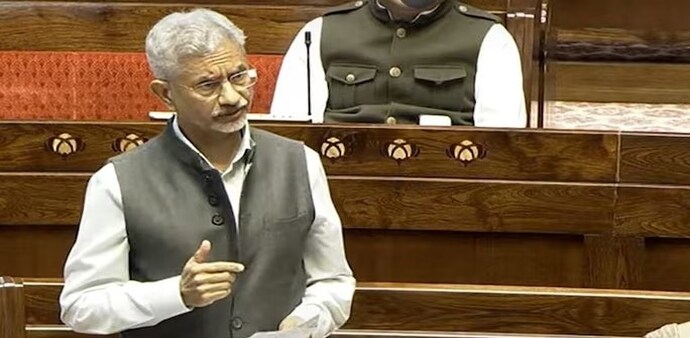
A day after Congress leader Rahul Gandhi challenged Prime Minister Narendra Modi to show "even 50 per cent of Indira Gandhi’s courage", External Affairs Minister S Jaishankar hit back in Rajya Sabha by reading from a wartime letter written by the former Prime Minister to US President Richard Nixon in 1971.
Jaishankar said no world leader had asked India to stop Operation Sindoor, contrary to suggestions made in the opposition’s attack. "No leader anywhere in the world asked India to stop its operations. There was no linkage of trade in any of those conversations. And there was no call between the Prime Minister and Trump during the conflict," Jaishankar said.
"On the 10th of May, we got calls from the US, from Saudi Arabia, and from a few other countries. To everybody, the answer was the same - if Pakistanis want to stop fighting, Pakistanis have to request us through the DGMO channel," he said.
He dismissed the charge that engaging in backchannel talks with the US was problematic. "It is somehow being implied that talking to the United States is itself a problem. The fact is, if you look at our history and world history, countries contact each other at such times. Look at ourselves. I will not talk about 1962 - what were the letters written…because even today it hurts me what Pandit Nehru wrote to Kennedy during 1962," Jaishankar said.
He added, "But let me refer to 1971, when the fighting started, Prime Minister Indira Gandhi writes to Nixon…"
Full Text: Letter From Indian Prime Minister Indira Gandhi to U.S. President Richard Nixon
The Government of India has kept your Government and people informed of the tragic and intolerable ramifications of the events inside East Bengal or India since March 25 last. From time to time, we have been explaining the developing situation to you through our diplomatic representatives. The repressive, brutal and colonial policy followed by the Government of Pakistan in East Bengal culminated in genocide and massive violence since March 25, 1971. This, as you know, has resulted in an exodus of 10 million East Bengali nationals into India whose number is still increasing.
We have borne the burden of these events and have withstood the greatest pressure that any country could face in such circumstances. We have also acted with great restraint in face of continuous provocations from Pakistan.
Our informing the international community of the realities of the situation, our attempts in this regard at the U.N. and the visits undertaken by my colleagues and me have not produced any results. Our hope that counsels of reason from the statesmen of the world might persuade President Yahya Khan to deal with the elected leaders of the people of East Bengal directly to achieve a political solution of the problem has been belied.
We have now received incontrovertible evidence of Pakistanʼs war-like intentions. On the afternoon of 3rd December 1971, the Government of Pakistan led by President Yahya Khan ordered a massive attack on India across its western frontiers. This has been followed by a gazette extraordinary published by the Government of Pakistan on the forenoon of the 4th December 1971, declaring that it is a state of war against India.
I regret to inform Your Excellency that around 1730 hours (Indian Standard Time) on the 3rd of December, Pakistan launched a massive air and ground attack on our country all along the western border. Their aircraft bombed Srinagar, Amritsar, Pathankot, Uttarali, Ambala, Agra, Jodhpur and Avantipur. There has also been heavy shelling of the border cities and townships of Ambala, Ferozepur, Sulaimanki, Khemkaran, Poonch, Mehdipur and Jaiselmere. The attack against India was carefully organized and premeditated as is proved by the fact that the Pakistan army struck across the western borders of India stretching from Jaiselmere to Kashmir between 1500 hours and 1800 (I.S.T.).
That this aggression is premeditated and planned is evident from the fact that President Yahya Khan had declared on November 25 that he would be “off to fighting in ten daysʼ time”. Pakistan chose to launch the attack when I myself was away at Calcutta, addressing a public meeting and most senior colleagues in the Cabinet were in different parts of the country. It is also significant that within minutes of the launching of the attack the Pakistani publicity media launched a malicious propaganda offensive accusing India of having attacked West Pakistan earlier in the afternoon.
I should like to emphasize that this is the fourth time since India and Pakistan achieved independence that Pakistan has attacked India. Our bitter experiences of 1947 and 1948 and 1965 have taught us that Pakistan is determined to threaten our territorial integrity and security by all means available—this time specially to divert attention from its colonial and repressive policies inside East Bengal and to internationalise the issue.
I am writing to you at a moment of grave peril and danger to my country and my people. The success of the freedom movement in Bangla Desh has now become a war on India due to the adventurism of the Pakistan military machine. It has imposed upon my people and my Government the imperative responsibility of safeguarding our security and territorial integrity. We are left with no other option but to put our country on a war footing. We have therefore declared an emergency for the defence of India. The grave consequences that should follow Pakistanʼs unprovoked attack on us all shall be the sole responsibility of the Government of Pakistan. We are a peace-loving people but we know that peace cannot last if we do not guard our democracy and our way of life. We are not fighting merely for our territorial integrity but for the basic ideals which have given strength to my country and on which Indiaʼs entire future depends. I should stress to Your Excellency that the people and the Government of India are determined that this wanton and unprovoked aggression should be decisively and finally repelled once and for all; the whole of India stands united in this resolve and expects that the international community will appreciate our predicament and acknowledge the righteousness of our cause.
In this hour of danger the Government and the people of India seek your understanding and urge you to persuade Pakistan to desist forthwith from the policy of wanton aggression and military adventurism which it has unfortunately embarked upon. May I request Your Excellency to exercise your undoubted influence with the Government of Pakistan to stop their aggressive activities against India and to deal immediately with the genesis of the problem of East Bengal which has caused so much trial and tribulations to the people not only of Pakistan but of the entire sub-continent.
Accept, Excellency, the assurances of my highest consideration.
A day after Congress leader Rahul Gandhi challenged Prime Minister Narendra Modi to show "even 50 per cent of Indira Gandhi’s courage", External Affairs Minister S Jaishankar hit back in Rajya Sabha by reading from a wartime letter written by the former Prime Minister to US President Richard Nixon in 1971.
Jaishankar said no world leader had asked India to stop Operation Sindoor, contrary to suggestions made in the opposition’s attack. "No leader anywhere in the world asked India to stop its operations. There was no linkage of trade in any of those conversations. And there was no call between the Prime Minister and Trump during the conflict," Jaishankar said.
"On the 10th of May, we got calls from the US, from Saudi Arabia, and from a few other countries. To everybody, the answer was the same - if Pakistanis want to stop fighting, Pakistanis have to request us through the DGMO channel," he said.
He dismissed the charge that engaging in backchannel talks with the US was problematic. "It is somehow being implied that talking to the United States is itself a problem. The fact is, if you look at our history and world history, countries contact each other at such times. Look at ourselves. I will not talk about 1962 - what were the letters written…because even today it hurts me what Pandit Nehru wrote to Kennedy during 1962," Jaishankar said.
He added, "But let me refer to 1971, when the fighting started, Prime Minister Indira Gandhi writes to Nixon…"
Full Text: Letter From Indian Prime Minister Indira Gandhi to U.S. President Richard Nixon
The Government of India has kept your Government and people informed of the tragic and intolerable ramifications of the events inside East Bengal or India since March 25 last. From time to time, we have been explaining the developing situation to you through our diplomatic representatives. The repressive, brutal and colonial policy followed by the Government of Pakistan in East Bengal culminated in genocide and massive violence since March 25, 1971. This, as you know, has resulted in an exodus of 10 million East Bengali nationals into India whose number is still increasing.
We have borne the burden of these events and have withstood the greatest pressure that any country could face in such circumstances. We have also acted with great restraint in face of continuous provocations from Pakistan.
Our informing the international community of the realities of the situation, our attempts in this regard at the U.N. and the visits undertaken by my colleagues and me have not produced any results. Our hope that counsels of reason from the statesmen of the world might persuade President Yahya Khan to deal with the elected leaders of the people of East Bengal directly to achieve a political solution of the problem has been belied.
We have now received incontrovertible evidence of Pakistanʼs war-like intentions. On the afternoon of 3rd December 1971, the Government of Pakistan led by President Yahya Khan ordered a massive attack on India across its western frontiers. This has been followed by a gazette extraordinary published by the Government of Pakistan on the forenoon of the 4th December 1971, declaring that it is a state of war against India.
I regret to inform Your Excellency that around 1730 hours (Indian Standard Time) on the 3rd of December, Pakistan launched a massive air and ground attack on our country all along the western border. Their aircraft bombed Srinagar, Amritsar, Pathankot, Uttarali, Ambala, Agra, Jodhpur and Avantipur. There has also been heavy shelling of the border cities and townships of Ambala, Ferozepur, Sulaimanki, Khemkaran, Poonch, Mehdipur and Jaiselmere. The attack against India was carefully organized and premeditated as is proved by the fact that the Pakistan army struck across the western borders of India stretching from Jaiselmere to Kashmir between 1500 hours and 1800 (I.S.T.).
That this aggression is premeditated and planned is evident from the fact that President Yahya Khan had declared on November 25 that he would be “off to fighting in ten daysʼ time”. Pakistan chose to launch the attack when I myself was away at Calcutta, addressing a public meeting and most senior colleagues in the Cabinet were in different parts of the country. It is also significant that within minutes of the launching of the attack the Pakistani publicity media launched a malicious propaganda offensive accusing India of having attacked West Pakistan earlier in the afternoon.
I should like to emphasize that this is the fourth time since India and Pakistan achieved independence that Pakistan has attacked India. Our bitter experiences of 1947 and 1948 and 1965 have taught us that Pakistan is determined to threaten our territorial integrity and security by all means available—this time specially to divert attention from its colonial and repressive policies inside East Bengal and to internationalise the issue.
I am writing to you at a moment of grave peril and danger to my country and my people. The success of the freedom movement in Bangla Desh has now become a war on India due to the adventurism of the Pakistan military machine. It has imposed upon my people and my Government the imperative responsibility of safeguarding our security and territorial integrity. We are left with no other option but to put our country on a war footing. We have therefore declared an emergency for the defence of India. The grave consequences that should follow Pakistanʼs unprovoked attack on us all shall be the sole responsibility of the Government of Pakistan. We are a peace-loving people but we know that peace cannot last if we do not guard our democracy and our way of life. We are not fighting merely for our territorial integrity but for the basic ideals which have given strength to my country and on which Indiaʼs entire future depends. I should stress to Your Excellency that the people and the Government of India are determined that this wanton and unprovoked aggression should be decisively and finally repelled once and for all; the whole of India stands united in this resolve and expects that the international community will appreciate our predicament and acknowledge the righteousness of our cause.
In this hour of danger the Government and the people of India seek your understanding and urge you to persuade Pakistan to desist forthwith from the policy of wanton aggression and military adventurism which it has unfortunately embarked upon. May I request Your Excellency to exercise your undoubted influence with the Government of Pakistan to stop their aggressive activities against India and to deal immediately with the genesis of the problem of East Bengal which has caused so much trial and tribulations to the people not only of Pakistan but of the entire sub-continent.
Accept, Excellency, the assurances of my highest consideration.