
Independence Day 2026: DMRC issues advisory against kite-flying ahead of August 15, warns to avoid these areas
Parents should also make children aware of the risks, particularly during the days leading up to and around Independence Day, when kite-flying activity increases sharply
- Aug 12, 2026,
- Updated Aug 12, 2026 3:14 PM IST
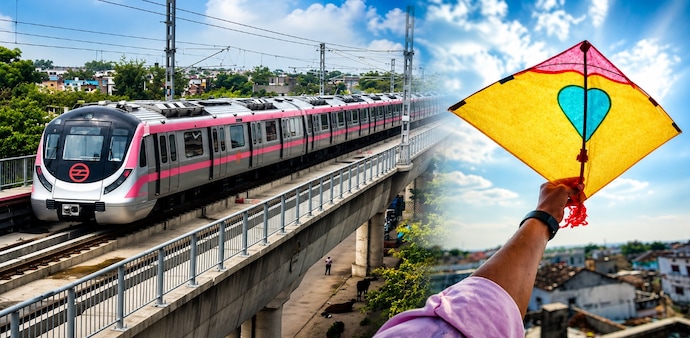
With Independence Day just around the corner, kite flying is once again set to fill the skies across Delhi-NCR. But Delhi Metro Rail Corporation (DMRC) has issued an important safety advisory for residents living near elevated Metro corridors: do not fly kites close to Metro lines, especially around August 15.
The warning is not just about avoiding delays; it is about preventing potentially fatal accidents.
Why is DMRC asking people to be careful?
Delhi Metro currently operates across a network of around 416 km in Delhi-NCR, with a large portion of the network running on elevated tracks. Metro trains receive electricity through overhead equipment (OHE) carrying 25,000 volts.
A kite string can get caught in these overhead wires or become entangled with the pantograph, the equipment on top of a Metro train that draws electricity from the OHE.
Even coming into direct or indirect contact with the high-voltage equipment can be extremely dangerous and potentially fatal.
Metallic manjha can make kite flying even more dangerous
DMRC has specifically warned against flying kites with metallic manjha near Metro infrastructure. Such strings can conduct electricity and pose a serious risk to anyone handling them. Apart from the danger to kite flyers, a string caught in the OHE or pantograph can also cause electrical tripping, damage the equipment or disrupt Metro operations.
What should Delhi residents do?
DMRC is asking people to enjoy kite flying only in open spaces located well away from elevated Metro lines. If you live in a neighbourhood through which an elevated Metro corridor passes, avoid flying kites from rooftops, balconies or open areas close to the tracks.
Parents should also make children aware of the risks, particularly during the days leading up to and around Independence Day, when kite-flying activity increases sharply.
ALSO READ: Historic move: Vande Mataram to echo from Red Fort before PM Modi's Independence Day speech
DMRC teams to keep watch
DMRC said it has a dedicated mechanism to deal with kite-string-related disruptions during the kite-flying season. Teams will be deployed near stations and areas where kite-flying incidents are more common. These teams will remove kite strings whenever they are spotted, while train operators and station staff have also been advised to remain particularly alert.
The aim is to prevent a kite string from turning into a safety hazard or causing disruption to thousands of Metro passengers.
With Independence Day just around the corner, kite flying is once again set to fill the skies across Delhi-NCR. But Delhi Metro Rail Corporation (DMRC) has issued an important safety advisory for residents living near elevated Metro corridors: do not fly kites close to Metro lines, especially around August 15.
The warning is not just about avoiding delays; it is about preventing potentially fatal accidents.
Why is DMRC asking people to be careful?
Delhi Metro currently operates across a network of around 416 km in Delhi-NCR, with a large portion of the network running on elevated tracks. Metro trains receive electricity through overhead equipment (OHE) carrying 25,000 volts.
A kite string can get caught in these overhead wires or become entangled with the pantograph, the equipment on top of a Metro train that draws electricity from the OHE.
Even coming into direct or indirect contact with the high-voltage equipment can be extremely dangerous and potentially fatal.
Metallic manjha can make kite flying even more dangerous
DMRC has specifically warned against flying kites with metallic manjha near Metro infrastructure. Such strings can conduct electricity and pose a serious risk to anyone handling them. Apart from the danger to kite flyers, a string caught in the OHE or pantograph can also cause electrical tripping, damage the equipment or disrupt Metro operations.
What should Delhi residents do?
DMRC is asking people to enjoy kite flying only in open spaces located well away from elevated Metro lines. If you live in a neighbourhood through which an elevated Metro corridor passes, avoid flying kites from rooftops, balconies or open areas close to the tracks.
Parents should also make children aware of the risks, particularly during the days leading up to and around Independence Day, when kite-flying activity increases sharply.
ALSO READ: Historic move: Vande Mataram to echo from Red Fort before PM Modi's Independence Day speech
DMRC teams to keep watch
DMRC said it has a dedicated mechanism to deal with kite-string-related disruptions during the kite-flying season. Teams will be deployed near stations and areas where kite-flying incidents are more common. These teams will remove kite strings whenever they are spotted, while train operators and station staff have also been advised to remain particularly alert.
The aim is to prevent a kite string from turning into a safety hazard or causing disruption to thousands of Metro passengers.