
Independence Day celebrations 2026: 'Vande Mataram' played for first time at Red Fort. Here’s why it matters
An Army band played the tune of ‘Vande Mataram’, with guests joining in the singing. The performance was followed by the hoisting of the national flag and the recitation of the national anthem
- Aug 15, 2026,
- Updated Aug 15, 2026 8:31 AM IST
For the first time in the history of Independence Day celebrations at the Red Fort, ‘Vande Mataram’ was rendered before the national anthem, giving the national song a prominent place in the country’s biggest annual patriotic ceremony. The moment came on August 15 as India marked its Independence Day and commemorated 150 years of ‘Vande Mataram’, the song that became one of the defining symbols of the freedom struggle.
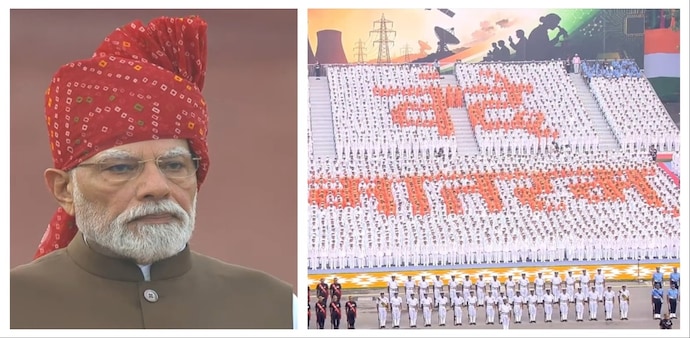
Prime Minister Narendra Modi led the Independence Day celebrations at the Red Fort amid patriotic fervour and tight security. An Army band played the tune of ‘Vande Mataram’, with guests joining in the singing. The performance was followed by the hoisting of the national flag and the recitation of the national anthem.
READ THIS: From Vande Mataram to lake-named stands: Six historic firsts to mark Independence Day 2026
The sequence gave the national song a special significance this year, as the government is observing a year-long commemoration marking 150 years since ‘Vande Mataram’ was first published.
Why is ‘Vande Mataram’ significant?
Written by Bankim Chandra Chatterjee in 1875, ‘Vande Mataram’ evolved from a literary composition into a powerful expression of Indian nationalism during the freedom movement. It was later incorporated into Chatterjee’s novel ‘Anandamath’, published in 1882.
The song was first sung publicly by Rabindranath Tagore at the 1896 session of the Indian National Congress in Calcutta, now Kolkata. Over the following decades, its opening words became a rallying cry for Indians opposing British rule. According to a government note on the 150-year journey of ‘Vande Mataram’, the phrase was first used as a political slogan during the Swadeshi Movement on August 7, 1905, adding to its association with the nationalist struggle.
The song was formally adopted as India's national song by the Constituent Assembly in 1950.
DON'T MISS: 80th Independence Day: President Murmu charts Viksit Bharat roadmap, outlines inclusive development vision
A song that became a movement
The importance of ‘Vande Mataram’ lies not merely in its literary or musical legacy but in the role it played in India's struggle for independence. Its words came to represent the idea of the motherland and were repeatedly used during political meetings, protests and nationalist campaigns.
‘Vande Mataram’ at Red Fort
The 2026 Independence Day ceremony further highlighted this legacy. Floral decorations on the Red Fort ramparts depicted the national flag at the centre, flanked by ‘Vande Mataram’ written in Hindi.
Following the flag hoisting, the Tricolour received a ‘Rashtriya Salute’. The ceremony also featured an aerial tribute, with two Indian Air Force Mi-17 helicopters showering flower petals. One helicopter carried the national flag, while the other carried a flag depicting ‘Vande Mataram’.
ALSO READ: Nehru, Mountbatten & astrology: Why India got freedom on August 15 midnight
The decision to place ‘Vande Mataram’ before the national anthem at the ceremony therefore carried symbolism beyond the performance itself. It linked a song born in the late 19th century, which became a rallying cry during the freedom struggle, with the modern Republic's annual celebration of independence.
For the first time in the history of Independence Day celebrations at the Red Fort, ‘Vande Mataram’ was rendered before the national anthem, giving the national song a prominent place in the country’s biggest annual patriotic ceremony. The moment came on August 15 as India marked its Independence Day and commemorated 150 years of ‘Vande Mataram’, the song that became one of the defining symbols of the freedom struggle.
Prime Minister Narendra Modi led the Independence Day celebrations at the Red Fort amid patriotic fervour and tight security. An Army band played the tune of ‘Vande Mataram’, with guests joining in the singing. The performance was followed by the hoisting of the national flag and the recitation of the national anthem.
READ THIS: From Vande Mataram to lake-named stands: Six historic firsts to mark Independence Day 2026
The sequence gave the national song a special significance this year, as the government is observing a year-long commemoration marking 150 years since ‘Vande Mataram’ was first published.
Why is ‘Vande Mataram’ significant?
Written by Bankim Chandra Chatterjee in 1875, ‘Vande Mataram’ evolved from a literary composition into a powerful expression of Indian nationalism during the freedom movement. It was later incorporated into Chatterjee’s novel ‘Anandamath’, published in 1882.
The song was first sung publicly by Rabindranath Tagore at the 1896 session of the Indian National Congress in Calcutta, now Kolkata. Over the following decades, its opening words became a rallying cry for Indians opposing British rule. According to a government note on the 150-year journey of ‘Vande Mataram’, the phrase was first used as a political slogan during the Swadeshi Movement on August 7, 1905, adding to its association with the nationalist struggle.
The song was formally adopted as India's national song by the Constituent Assembly in 1950.
DON'T MISS: 80th Independence Day: President Murmu charts Viksit Bharat roadmap, outlines inclusive development vision
A song that became a movement
The importance of ‘Vande Mataram’ lies not merely in its literary or musical legacy but in the role it played in India's struggle for independence. Its words came to represent the idea of the motherland and were repeatedly used during political meetings, protests and nationalist campaigns.
‘Vande Mataram’ at Red Fort
The 2026 Independence Day ceremony further highlighted this legacy. Floral decorations on the Red Fort ramparts depicted the national flag at the centre, flanked by ‘Vande Mataram’ written in Hindi.
Following the flag hoisting, the Tricolour received a ‘Rashtriya Salute’. The ceremony also featured an aerial tribute, with two Indian Air Force Mi-17 helicopters showering flower petals. One helicopter carried the national flag, while the other carried a flag depicting ‘Vande Mataram’.
ALSO READ: Nehru, Mountbatten & astrology: Why India got freedom on August 15 midnight
The decision to place ‘Vande Mataram’ before the national anthem at the ceremony therefore carried symbolism beyond the performance itself. It linked a song born in the late 19th century, which became a rallying cry during the freedom struggle, with the modern Republic's annual celebration of independence.