
India dismisses ex-Japanese minister's criticism on bullet train delay, says project on track for 2027 launch
India dismisses ex-Japanese minister's criticism on bullet train delay, says project on track for 2027 launch
Addressing a media briefing on Friday, Ministry of External Affairs (MEA) spokesperson Randhir Jaiswal said India and Japan continue to work closely on the country's first bullet train project.
Business Today Desk
- Jul 17, 2026,
- Updated Jul 17, 2026 7:23 PM IST
The Centre on Friday rejected allegations made by former Japanese Justice Minister Hideki Makihara regarding delays in the Mumbai-Ahmedabad Bullet Train project, describing them as an "individual opinion" that does not reflect the facts. The government maintained that discussions with Japan remain on track and highlighted significant progress in construction, with the first section of the high-speed rail corridor scheduled to open in 2027.
Advertisement
Addressing a media briefing, Ministry of External Affairs (MEA) spokesperson Randhir Jaiswal said India and Japan continue to work closely on the country's first bullet train project.
"We have seen the post. It is an individual opinion and at considerable variance with facts. India-Japan discussion on Ahmedabad-Mumbai high-speed rail is in fact progressing well," Jaiswal said.
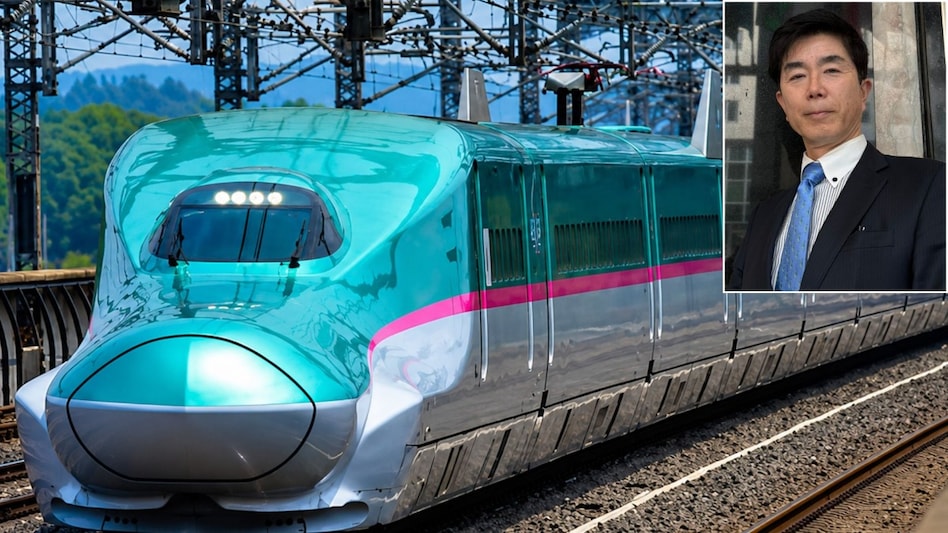
He added that Japan would supply the next-generation E10 (also referred to as E20 in some reports) Shinkansen train series only in the early 2030s, as the train is still under development. Until then, both countries have agreed to begin operations using an Indian high-speed train.
What sparked the controversy?
The remarks came after Makihara posted on X in response to an opinion article written by Isao Tsujimura, a Japanese railway engineer and Delhi-based metro consultant, who argued that India's flagship high-speed rail project had drifted away from the original Japanese Shinkansen model.
Advertisement
Makihara alleged that Indian officials repeatedly failed to honour commitments during negotiations and pursued "self-interest" throughout the project. He claimed the lack of progress was "entirely on the Indian side" and criticised the conduct of officials involved in discussions.
The former Japanese minister also suggested that even Japanese Prime Minister Sanae Takaichi's visit to India earlier this month had failed to revive momentum on the project.
However, Indian government officials rejected those assertions, saying bilateral cooperation remains strong and execution is proceeding according to mutually agreed timelines.
Construction gathers pace
Advertisement
Despite years of delays caused by land acquisition issues and changes in the political landscape, the Mumbai-Ahmedabad High-Speed Rail project has accelerated considerably over the past two years.
The 508-km corridor, being built with Japanese Shinkansen technology and financial assistance from the Japan International Cooperation Agency (JICA), will connect Mumbai's Bandra Kurla Complex with Ahmedabad through 12 stations across Maharashtra, Gujarat and Dadra and Nagar Haveli.
Designed for an operational speed of 320 kmph, the corridor is expected to reduce travel time between Mumbai and Ahmedabad from nearly eight hours to about two hours.
According to the government, the first operational stretch is expected to begin phased passenger services in 2027, likely between Surat and Bilimora, while the remaining sections will be opened in stages.
India-Japan partnership remains intact
The bullet train project is one of the largest infrastructure collaborations between India and Japan. Besides financing, Japan is providing expertise in signalling systems, ballastless tracks, operational safety standards and high-speed rail technology.
Officials also indicated that India is preparing for domestic manufacturing of future trainsets through the Integral Coach Factory and BEML, complementing Japanese technology transfer.
The Centre on Friday rejected allegations made by former Japanese Justice Minister Hideki Makihara regarding delays in the Mumbai-Ahmedabad Bullet Train project, describing them as an "individual opinion" that does not reflect the facts. The government maintained that discussions with Japan remain on track and highlighted significant progress in construction, with the first section of the high-speed rail corridor scheduled to open in 2027.
Advertisement
Addressing a media briefing, Ministry of External Affairs (MEA) spokesperson Randhir Jaiswal said India and Japan continue to work closely on the country's first bullet train project.
"We have seen the post. It is an individual opinion and at considerable variance with facts. India-Japan discussion on Ahmedabad-Mumbai high-speed rail is in fact progressing well," Jaiswal said.
He added that Japan would supply the next-generation E10 (also referred to as E20 in some reports) Shinkansen train series only in the early 2030s, as the train is still under development. Until then, both countries have agreed to begin operations using an Indian high-speed train.
What sparked the controversy?
The remarks came after Makihara posted on X in response to an opinion article written by Isao Tsujimura, a Japanese railway engineer and Delhi-based metro consultant, who argued that India's flagship high-speed rail project had drifted away from the original Japanese Shinkansen model.
Advertisement
Makihara alleged that Indian officials repeatedly failed to honour commitments during negotiations and pursued "self-interest" throughout the project. He claimed the lack of progress was "entirely on the Indian side" and criticised the conduct of officials involved in discussions.
The former Japanese minister also suggested that even Japanese Prime Minister Sanae Takaichi's visit to India earlier this month had failed to revive momentum on the project.
However, Indian government officials rejected those assertions, saying bilateral cooperation remains strong and execution is proceeding according to mutually agreed timelines.
Construction gathers pace
Advertisement
Despite years of delays caused by land acquisition issues and changes in the political landscape, the Mumbai-Ahmedabad High-Speed Rail project has accelerated considerably over the past two years.
The 508-km corridor, being built with Japanese Shinkansen technology and financial assistance from the Japan International Cooperation Agency (JICA), will connect Mumbai's Bandra Kurla Complex with Ahmedabad through 12 stations across Maharashtra, Gujarat and Dadra and Nagar Haveli.
Designed for an operational speed of 320 kmph, the corridor is expected to reduce travel time between Mumbai and Ahmedabad from nearly eight hours to about two hours.
According to the government, the first operational stretch is expected to begin phased passenger services in 2027, likely between Surat and Bilimora, while the remaining sections will be opened in stages.
India-Japan partnership remains intact
The bullet train project is one of the largest infrastructure collaborations between India and Japan. Besides financing, Japan is providing expertise in signalling systems, ballastless tracks, operational safety standards and high-speed rail technology.
Officials also indicated that India is preparing for domestic manufacturing of future trainsets through the Integral Coach Factory and BEML, complementing Japanese technology transfer.
Read more!