
India hasn’t stopped the water flow, so why is Pakistan sounding the alarm?
The remarks come more than a year after India suspended the 1960 Indus Waters Treaty following the April 2025 Pahalgam terror attack that killed 26 civilians.
- Jun 27, 2026,
- Updated Jun 27, 2026 9:00 AM IST
India’s suspension of the Indus Waters Treaty after the Pahalgam terror attack continues to trigger sharp reactions from Pakistan, with Defence Minister Khawaja Asif warning that Islamabad could go to war if its water security is threatened.
Speaking to ARY News, Asif said last week, “The moment we feel that our national security, and water is part of our national security, is being threatened, we will go to war against India. Definitely.”
The remarks come more than a year after India suspended the 1960 Indus Waters Treaty following the April 2025 Pahalgam terror attack that killed 26 civilians. New Delhi has maintained that the treaty will remain suspended until Pakistan takes credible action against cross-border terrorism.
Why experts see the threat as unlikely
Despite the strong rhetoric, analysts believe a military conflict over water remains unlikely. Pakistan is still dealing with the aftermath of Operation Sindoor, a major India-Pakistan military confrontation that exposed weaknesses in its defence infrastructure and left parts of its military network under repair.
Pakistan is also facing economic challenges, including large debt repayments and continued dependence on international financial support, making the prospect of another conflict difficult to sustain.
Adding to the debate, Asif reportedly acknowledged in the same interview that Pakistan lacks complete information about India’s current river management activities, despite raising concerns over water flows.
What has changed since India suspended the treaty?
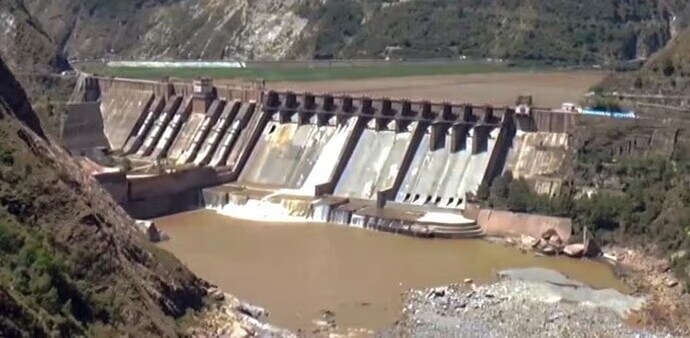
Contrary to claims that India has “turned off” river flows, experts note that India currently lacks the infrastructure to completely stop water from reaching Pakistan.
However, the suspension has halted several data-sharing arrangements that existed under the treaty. India is no longer required to provide advance information on river flows, dam releases and flood warnings.
Pakistan has reportedly written to India multiple times over what it described as unusual fluctuations in the Chenab River's water flow. The absence of warnings can create uncertainty for farmers and water managers who rely on predictable irrigation schedules.
Why the issue matters
The Indus Basin is critical to Pakistan’s economy. A large share of the country’s population, agriculture and hydropower infrastructure depends on water from the river system.
Experts say that while a complete water blockade is not currently feasible, reduced information-sharing can still create significant challenges for irrigation planning, crop management and flood preparedness, making water a growing point of tension between the two neighbours.
India’s suspension of the Indus Waters Treaty after the Pahalgam terror attack continues to trigger sharp reactions from Pakistan, with Defence Minister Khawaja Asif warning that Islamabad could go to war if its water security is threatened.
Speaking to ARY News, Asif said last week, “The moment we feel that our national security, and water is part of our national security, is being threatened, we will go to war against India. Definitely.”
The remarks come more than a year after India suspended the 1960 Indus Waters Treaty following the April 2025 Pahalgam terror attack that killed 26 civilians. New Delhi has maintained that the treaty will remain suspended until Pakistan takes credible action against cross-border terrorism.
Why experts see the threat as unlikely
Despite the strong rhetoric, analysts believe a military conflict over water remains unlikely. Pakistan is still dealing with the aftermath of Operation Sindoor, a major India-Pakistan military confrontation that exposed weaknesses in its defence infrastructure and left parts of its military network under repair.
Pakistan is also facing economic challenges, including large debt repayments and continued dependence on international financial support, making the prospect of another conflict difficult to sustain.
Adding to the debate, Asif reportedly acknowledged in the same interview that Pakistan lacks complete information about India’s current river management activities, despite raising concerns over water flows.
What has changed since India suspended the treaty?
Contrary to claims that India has “turned off” river flows, experts note that India currently lacks the infrastructure to completely stop water from reaching Pakistan.
However, the suspension has halted several data-sharing arrangements that existed under the treaty. India is no longer required to provide advance information on river flows, dam releases and flood warnings.
Pakistan has reportedly written to India multiple times over what it described as unusual fluctuations in the Chenab River's water flow. The absence of warnings can create uncertainty for farmers and water managers who rely on predictable irrigation schedules.
Why the issue matters
The Indus Basin is critical to Pakistan’s economy. A large share of the country’s population, agriculture and hydropower infrastructure depends on water from the river system.
Experts say that while a complete water blockade is not currently feasible, reduced information-sharing can still create significant challenges for irrigation planning, crop management and flood preparedness, making water a growing point of tension between the two neighbours.