
India must move from assembly-led growth to end-to-end manufacturing capability: N Chandrasekaran
Chandrasekaran pointed to several indicators of economic strength, saying auto sales, credit growth, power demand and cement demand are witnessing double-digit growth.
- Oct 5, 2026,
- Updated Oct 5, 2026 10:19 AM IST
India must move beyond assembly-led manufacturing and build end-to-end domestic capabilities across products, equipment, technology and intellectual property to sustain its long-term growth, Tata Sons Chairman N Chandrasekaran said.
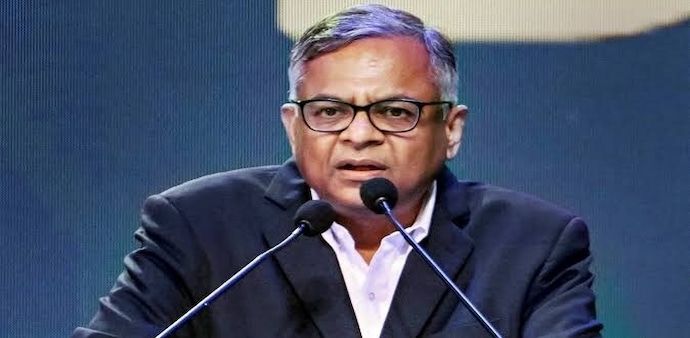
Speaking at Indian Foundation for Quality Management symposium, Chandrasekaran said India’s economy remains in a robust position, with growth consistently exceeding expectations despite an uncertain and difficult global environment.
“Strong domestic demand, services exports and a benign domestic policy environment” are driving growth, he said.
Chandrasekaran pointed to several indicators of economic strength, saying auto sales, credit growth, power demand and cement demand are witnessing double-digit growth. He also highlighted that India’s current account deficit has consistently remained below 1% of GDP, while services exports are about $418 billion, roughly 11% of GDP. Forex reserves, he said, are strong at about $785 billion, while bank NPAs remain low.
However, sustaining growth over the long term will require progress on several fronts, he said, identifying energy security, manufacturing jobs and human capital as key priorities.
“Energy security must be ensured because that’s going to be fundamental for growth,” Chandrasekaran said.
He also stressed the need to create advanced and precision manufacturing jobs and shift workers from low-productivity agriculture towards highly productive manufacturing and modern services. Investment in education, skill development and technical skills will be critical, he added.
From assembly to end-to-end manufacturing
Chandrasekaran said India now needs to ask how it can move from its current assembly-led growth model to building end-to-end domestic manufacturing capabilities.
“It’s very important to build the assembly-led growth. And that’s going to lead to creating strong SME sector. But from there to move to end-to-end full product range of capabilities is going to require investments in R&D, creation of intellectual property,” he said.
He said India would need to remain close to the market and build not only products but also the equipment required to manufacture them.
The Tata Sons chairman also stressed the importance of developing the right skill sets, particularly through vocational and technical training.
Quality as a competitive advantage
Chandrasekaran said India could learn from global manufacturing success stories, particularly the way companies and countries have used quality to build competitiveness.
Citing Toyota, he said the Japanese automaker did not treat quality merely as a motto or a means of ensuring product outcomes. Instead, quality became a driver of innovation, productivity and competitiveness.
He also cited Germany as an example of how a focus on quality, engineering, standards and precision helped transform national competitive advantage while building a strong supplier and SME ecosystem.
India, he said, must similarly use quality as a mechanism for innovation, productivity and competitiveness and ultimately develop the capability to manufacture products at global scale.
Infrastructure as growth multiplier
Chandrasekaran said infrastructure would remain a critical growth multiplier for India as the country works towards the Prime Minister’s 2047 vision.
He identified infrastructure, institutions and intellectual property as three critical pillars for India’s long-term development.
He pointed to initiatives including PM Gati Shakti, railway modernisation, dedicated corridors and urban mobility and metro expansion as important components of India’s infrastructure push.
He also highlighted the need to build capabilities in sectors including automobiles, aerospace, semiconductors and batteries, noting that the Tata Group is making investments across several of these areas.
For India’s 2047 vision to be realised, Chandrasekaran said growth would have to be inclusive and sustainable and supported by world-class infrastructure, stronger industrial capabilities and investment in human capital.
India must move beyond assembly-led manufacturing and build end-to-end domestic capabilities across products, equipment, technology and intellectual property to sustain its long-term growth, Tata Sons Chairman N Chandrasekaran said.
Speaking at Indian Foundation for Quality Management symposium, Chandrasekaran said India’s economy remains in a robust position, with growth consistently exceeding expectations despite an uncertain and difficult global environment.
“Strong domestic demand, services exports and a benign domestic policy environment” are driving growth, he said.
Chandrasekaran pointed to several indicators of economic strength, saying auto sales, credit growth, power demand and cement demand are witnessing double-digit growth. He also highlighted that India’s current account deficit has consistently remained below 1% of GDP, while services exports are about $418 billion, roughly 11% of GDP. Forex reserves, he said, are strong at about $785 billion, while bank NPAs remain low.
However, sustaining growth over the long term will require progress on several fronts, he said, identifying energy security, manufacturing jobs and human capital as key priorities.
“Energy security must be ensured because that’s going to be fundamental for growth,” Chandrasekaran said.
He also stressed the need to create advanced and precision manufacturing jobs and shift workers from low-productivity agriculture towards highly productive manufacturing and modern services. Investment in education, skill development and technical skills will be critical, he added.
From assembly to end-to-end manufacturing
Chandrasekaran said India now needs to ask how it can move from its current assembly-led growth model to building end-to-end domestic manufacturing capabilities.
“It’s very important to build the assembly-led growth. And that’s going to lead to creating strong SME sector. But from there to move to end-to-end full product range of capabilities is going to require investments in R&D, creation of intellectual property,” he said.
He said India would need to remain close to the market and build not only products but also the equipment required to manufacture them.
The Tata Sons chairman also stressed the importance of developing the right skill sets, particularly through vocational and technical training.
Quality as a competitive advantage
Chandrasekaran said India could learn from global manufacturing success stories, particularly the way companies and countries have used quality to build competitiveness.
Citing Toyota, he said the Japanese automaker did not treat quality merely as a motto or a means of ensuring product outcomes. Instead, quality became a driver of innovation, productivity and competitiveness.
He also cited Germany as an example of how a focus on quality, engineering, standards and precision helped transform national competitive advantage while building a strong supplier and SME ecosystem.
India, he said, must similarly use quality as a mechanism for innovation, productivity and competitiveness and ultimately develop the capability to manufacture products at global scale.
Infrastructure as growth multiplier
Chandrasekaran said infrastructure would remain a critical growth multiplier for India as the country works towards the Prime Minister’s 2047 vision.
He identified infrastructure, institutions and intellectual property as three critical pillars for India’s long-term development.
He pointed to initiatives including PM Gati Shakti, railway modernisation, dedicated corridors and urban mobility and metro expansion as important components of India’s infrastructure push.
He also highlighted the need to build capabilities in sectors including automobiles, aerospace, semiconductors and batteries, noting that the Tata Group is making investments across several of these areas.
For India’s 2047 vision to be realised, Chandrasekaran said growth would have to be inclusive and sustainable and supported by world-class infrastructure, stronger industrial capabilities and investment in human capital.