
India–New Zealand FTA to be signed tomorrow: What the deal means for trade, jobs, and students
One of the most significant aspects of the agreement is New Zealand’s commitment to invest $20 billion in India over the next 15 years to support infrastructure, agriculture, and technology partnerships, while also strengthening supply chains.
- Apr 26, 2026,
- Updated Apr 26, 2026 9:33 PM IST
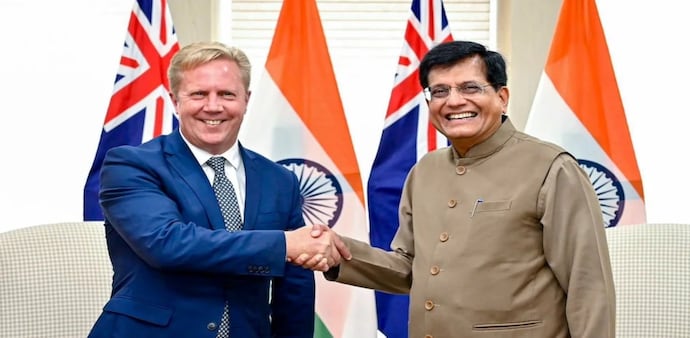
India and New Zealand are set to sign their long-awaited Free Trade Agreement (FTA) on April 27, marking a decisive step in India’s push to expand its trade footprint beyond traditional partners and deeper into the Oceania region.
The agreement, concluded in December 2025 after negotiations that began in March the same year, is being described as one of India’s fastest trade deals to move from negotiation to signing.
While the formal signing will take place now, the agreement will still need to go through domestic ratification processes in both countries before it comes into force — likely sometime in 2026.
Strategic pivot beyond trade
At its core, the India-New Zealand FTA is not just about tariffs — it is about positioning. For India, New Zealand offers a relatively small but high-income market, and more importantly, a gateway into the wider Pacific and Oceania region.
The deal builds on steadily improving trade ties. Bilateral merchandise trade has already climbed to about $1.3 billion in 2024-25, while services trade — particularly in IT and travel — continues to grow.
There is also a strong human link underpinning the relationship, with around 300,000 people of Indian origin living in New Zealand, helping drive demand for Indian goods, services, and cultural exchanges.
What changes once the deal is implemented?
The headline outcome is striking: India will get zero-duty access on 100% of its exports to New Zealand.
This effectively removes tariffs across thousands of product categories, making Indian goods significantly more competitive. Sectors expected to benefit the most include textiles, leather, engineering goods, pharmaceuticals, and processed foods — many of which are labour-intensive and export-driven.
At the same time, India has been careful not to fully open its own market across the board. Roughly 30% of tariff lines have been kept out of the agreement, particularly in sensitive areas like dairy and key agricultural products.
In effect, the deal tries to strike a balance: aggressive export push abroad, cautious protection at home.
Investment and jobs angle
One of the most significant aspects of the agreement is New Zealand’s commitment to invest $20 billion in India over the next 15 years.
This long-term capital flow is expected to support infrastructure, agriculture, and technology partnerships, while also strengthening supply chains.
For India’s domestic economy, the biggest gains are expected in employment-heavy sectors. Zero-duty access for industries such as textiles, footwear, and gems and jewellery could translate into higher export volumes and job creation, especially for MSMEs.
Mobility, students and professionals
Beyond goods, the agreement stands out for its strong focus on people mobility — an area where India has consistently pushed for gains in trade negotiations.
Indian students in New Zealand will be allowed to work up to 20 hours a week during their studies, with generous post-study work visa provisions that can extend up to four years depending on qualifications.
There is also a dedicated pathway for skilled professionals, including a quota of 5,000 visas covering sectors such as IT, healthcare, engineering, and even culturally linked professions like yoga instructors and Indian chefs.
A separate working holiday visa scheme will allow 1,000 young Indians each year to live and work in New Zealand for up to a year.
Taken together, these provisions make the FTA as much about mobility and opportunity as it is about trade.
Traditional medicine
In a first for New Zealand, the agreement includes a dedicated annex on health and traditional medicine, opening the door for services linked to Ayurveda, yoga, and other Indian wellness systems.
This is significant because it goes beyond commerce into cultural and soft-power territory — positioning India not just as a manufacturing or services hub, but also as a global centre for wellness and traditional knowledge systems.
Agriculture: Cooperation with caution
Agriculture has often been the most sensitive area in trade negotiations, and this deal reflects that complexity.
While India has protected key segments like dairy, the agreement also creates structured cooperation in areas such as kiwifruit, apples, and honey. This includes technology transfer, better planting material, and improved supply chains.
Imports of certain products from New Zealand will be allowed, but under tightly managed quota systems to ensure domestic farmers are not adversely affected.
With full tariff elimination on exports, a $20 billion investment pipeline, and expanded global opportunities for Indian students and professionals, the agreement is poised to deliver gains across sectors.
India and New Zealand are set to sign their long-awaited Free Trade Agreement (FTA) on April 27, marking a decisive step in India’s push to expand its trade footprint beyond traditional partners and deeper into the Oceania region.
The agreement, concluded in December 2025 after negotiations that began in March the same year, is being described as one of India’s fastest trade deals to move from negotiation to signing.
While the formal signing will take place now, the agreement will still need to go through domestic ratification processes in both countries before it comes into force — likely sometime in 2026.
Strategic pivot beyond trade
At its core, the India-New Zealand FTA is not just about tariffs — it is about positioning. For India, New Zealand offers a relatively small but high-income market, and more importantly, a gateway into the wider Pacific and Oceania region.
The deal builds on steadily improving trade ties. Bilateral merchandise trade has already climbed to about $1.3 billion in 2024-25, while services trade — particularly in IT and travel — continues to grow.
There is also a strong human link underpinning the relationship, with around 300,000 people of Indian origin living in New Zealand, helping drive demand for Indian goods, services, and cultural exchanges.
What changes once the deal is implemented?
The headline outcome is striking: India will get zero-duty access on 100% of its exports to New Zealand.
This effectively removes tariffs across thousands of product categories, making Indian goods significantly more competitive. Sectors expected to benefit the most include textiles, leather, engineering goods, pharmaceuticals, and processed foods — many of which are labour-intensive and export-driven.
At the same time, India has been careful not to fully open its own market across the board. Roughly 30% of tariff lines have been kept out of the agreement, particularly in sensitive areas like dairy and key agricultural products.
In effect, the deal tries to strike a balance: aggressive export push abroad, cautious protection at home.
Investment and jobs angle
One of the most significant aspects of the agreement is New Zealand’s commitment to invest $20 billion in India over the next 15 years.
This long-term capital flow is expected to support infrastructure, agriculture, and technology partnerships, while also strengthening supply chains.
For India’s domestic economy, the biggest gains are expected in employment-heavy sectors. Zero-duty access for industries such as textiles, footwear, and gems and jewellery could translate into higher export volumes and job creation, especially for MSMEs.
Mobility, students and professionals
Beyond goods, the agreement stands out for its strong focus on people mobility — an area where India has consistently pushed for gains in trade negotiations.
Indian students in New Zealand will be allowed to work up to 20 hours a week during their studies, with generous post-study work visa provisions that can extend up to four years depending on qualifications.
There is also a dedicated pathway for skilled professionals, including a quota of 5,000 visas covering sectors such as IT, healthcare, engineering, and even culturally linked professions like yoga instructors and Indian chefs.
A separate working holiday visa scheme will allow 1,000 young Indians each year to live and work in New Zealand for up to a year.
Taken together, these provisions make the FTA as much about mobility and opportunity as it is about trade.
Traditional medicine
In a first for New Zealand, the agreement includes a dedicated annex on health and traditional medicine, opening the door for services linked to Ayurveda, yoga, and other Indian wellness systems.
This is significant because it goes beyond commerce into cultural and soft-power territory — positioning India not just as a manufacturing or services hub, but also as a global centre for wellness and traditional knowledge systems.
Agriculture: Cooperation with caution
Agriculture has often been the most sensitive area in trade negotiations, and this deal reflects that complexity.
While India has protected key segments like dairy, the agreement also creates structured cooperation in areas such as kiwifruit, apples, and honey. This includes technology transfer, better planting material, and improved supply chains.
Imports of certain products from New Zealand will be allowed, but under tightly managed quota systems to ensure domestic farmers are not adversely affected.
With full tariff elimination on exports, a $20 billion investment pipeline, and expanded global opportunities for Indian students and professionals, the agreement is poised to deliver gains across sectors.