
India sees China as primary adversary, Pakistan as 'ancillary security problem': US intel report
Prime Minister Narendra Modi's defense priorities are likely to remain centered on demonstrating global leadership, countering China, and enhancing India’s military power, according to the report.
- May 25, 2025,
- Updated May 25, 2025 3:15 PM IST
The US Defense Intelligence Agency (DIA), in its 2025 worldwide threat assessment, has stated that India views China as its primary adversary, while treating Pakistan more as an ancillary security problem to be managed, despite the recent escalation of cross-border hostilities.
Prepared by Lieutenant General Jeffrey Kruse, Director of the DIA, the report provides a comprehensive overview of India's current defense posture. It notes that Prime Minister Narendra Modi's defense priorities are likely to remain centered on demonstrating global leadership, countering China, and enhancing India’s military power.
The assessment outlines how cross-border attacks in mid-May, following a late April terrorist strike in Jammu and Kashmir, triggered a major military exchange between India and Pakistan. New Delhi responded with missile strikes on terror infrastructure in Pakistan, prompting rounds of retaliation involving missiles, drones, loitering munitions, and artillery fire between May 7 and May 10.
To counter Chinese influence, the report says India is prioritising defense partnerships in the Indian Ocean Region through joint exercises, arms sales, training programs, and information sharing. It has also increased trilateral engagements in the Indo-Pacific, while remaining actively involved in forums such as the Quad, BRICS, SCO, and ASEAN.
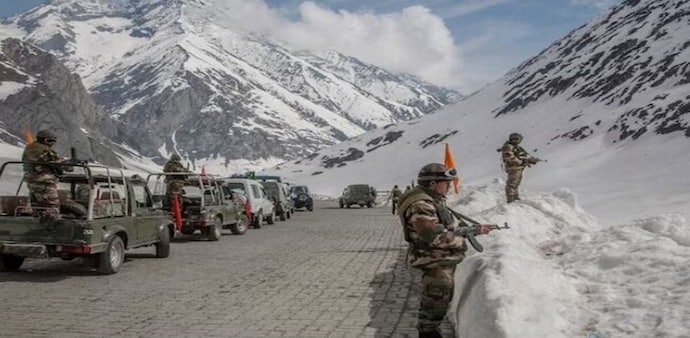
The report also references the October 2024 disengagement agreement between India and China, where both sides agreed to pull back troops from two remaining friction points along the Line of Actual Control in eastern Ladakh. While the disengagement did not resolve the border dispute, it helped reduce tensions stemming from the deadly 2020 clash.
The DIA notes that India is expected to continue pushing its "Made in India" initiative in 2025 to modernize its military, strengthen its domestic defense industry, and reduce dependence on foreign supply chains. Key developments include tests of the Agni-I Prime and Agni-V MIRV nuclear-capable missiles, and the commissioning of a second nuclear-powered submarine to reinforce India's nuclear triad and deterrence capabilities.
"India continued to modernise its military in 2024, conducting a test of the nuclear-capable developmental Agni-I Prime MRBM and the Agni-V multiple independently targetable reentry vehicle while also commissioning its second nuclear-powered submarine to strengthen its nuclear triad and bolster its ability to deter adversaries," the report noted.
On India's relationship with Russia, the report says that while India has reduced fresh procurement of Russian-origin military systems, it continues to rely on Russian spare parts to support its inventory of tanks and fighter jets. These remain vital for India's military preparedness against perceived threats from both China and Pakistan. The report also notes that India sees value in the Russia relationship as a balancing factor against deepening Russia-China ties.
The US Defense Intelligence Agency (DIA), in its 2025 worldwide threat assessment, has stated that India views China as its primary adversary, while treating Pakistan more as an ancillary security problem to be managed, despite the recent escalation of cross-border hostilities.
Prepared by Lieutenant General Jeffrey Kruse, Director of the DIA, the report provides a comprehensive overview of India's current defense posture. It notes that Prime Minister Narendra Modi's defense priorities are likely to remain centered on demonstrating global leadership, countering China, and enhancing India’s military power.
The assessment outlines how cross-border attacks in mid-May, following a late April terrorist strike in Jammu and Kashmir, triggered a major military exchange between India and Pakistan. New Delhi responded with missile strikes on terror infrastructure in Pakistan, prompting rounds of retaliation involving missiles, drones, loitering munitions, and artillery fire between May 7 and May 10.
To counter Chinese influence, the report says India is prioritising defense partnerships in the Indian Ocean Region through joint exercises, arms sales, training programs, and information sharing. It has also increased trilateral engagements in the Indo-Pacific, while remaining actively involved in forums such as the Quad, BRICS, SCO, and ASEAN.
The report also references the October 2024 disengagement agreement between India and China, where both sides agreed to pull back troops from two remaining friction points along the Line of Actual Control in eastern Ladakh. While the disengagement did not resolve the border dispute, it helped reduce tensions stemming from the deadly 2020 clash.
The DIA notes that India is expected to continue pushing its "Made in India" initiative in 2025 to modernize its military, strengthen its domestic defense industry, and reduce dependence on foreign supply chains. Key developments include tests of the Agni-I Prime and Agni-V MIRV nuclear-capable missiles, and the commissioning of a second nuclear-powered submarine to reinforce India's nuclear triad and deterrence capabilities.
"India continued to modernise its military in 2024, conducting a test of the nuclear-capable developmental Agni-I Prime MRBM and the Agni-V multiple independently targetable reentry vehicle while also commissioning its second nuclear-powered submarine to strengthen its nuclear triad and bolster its ability to deter adversaries," the report noted.
On India's relationship with Russia, the report says that while India has reduced fresh procurement of Russian-origin military systems, it continues to rely on Russian spare parts to support its inventory of tanks and fighter jets. These remain vital for India's military preparedness against perceived threats from both China and Pakistan. The report also notes that India sees value in the Russia relationship as a balancing factor against deepening Russia-China ties.