
India set to shut Ravi’s excess flow to Pakistan
The announcement was made on Monday by Jammu and Kashmir minister Javed Ahmed Rana.
- Feb 17, 2026,
- Updated Feb 17, 2026 9:38 PM IST
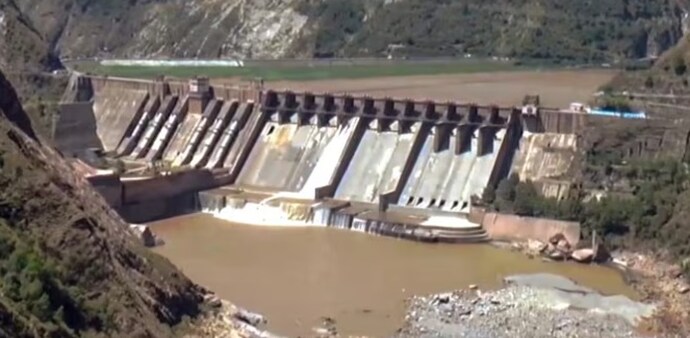
As Pakistan braces for a harsh summer, its water concerns could intensify further. India is set to stop the flow of surplus water from the Ravi river into Pakistan once the long-delayed Shahpur Kandi barrage is completed by March 31, as per reports by India Today.
For years, excess water from the Ravi flowed into Pakistan due to the lack of adequate storage and diversion infrastructure on the Indian side. That situation is now set to change.
The announcement was made on Monday by Jammu and Kashmir minister Javed Ahmed Rana, who said the project is aimed at irrigating the drought-prone Kathua and Samba districts.
“Excess water to Pakistan will be stopped. It has to be stopped,” Rana told reporters.
When asked about the impact on Pakistan, Rana responded sharply: “Why are you bothered about Pakistan? They are a marginal presence. Let them stew in the problems of their own making.”
Currently, surplus Ravi waters pass through Madhopur and enter Pakistan, the lower riparian country. Rana said the Shahpur Kandi barrage, delayed for decades due to political neglect and disputes between Punjab and Jammu and Kashmir, would put an end to what he described as such “wastage”.
The move comes a week after Union Water Resources Minister C.R. Patil said that Indus river waters flowing towards Pakistan would be stopped and used in India’s interest.
Under the 1960 Indus Waters Treaty (IWT), brokered by the World Bank, India has unrestricted rights over the eastern rivers — Sutlej, Beas and Ravi — while Pakistan has rights over the western rivers — Indus, Jhelum and Chenab. Despite this, surplus water from the eastern rivers has continued to flow into Pakistan over the decades.
The broader shift follows last year’s Pahalgam terror attack, which killed 25 tourists. After the attack, India suspended the treaty and fast-tracked hydropower and dam projects to improve the utilisation and regulation of river waters.
For Pakistan, the implications could be significant. Nearly 80% of its agricultural land depends on the Indus river system, which also contributes about 25% to the country’s GDP. Major cities such as Lahore and Multan rely heavily on the river system for water supply.
The Shahpur Kandi project itself has a long history. First envisaged in 1979, it involved an agreement between Punjab and Jammu and Kashmir to build the Ranjit Sagar dam and the downstream Shahpur Kandi barrage to prevent water from flowing into Pakistan.
The foundation stone was laid by former Prime Minister Indira Gandhi in 1982, with a completion deadline of 1988. While the Ranjit Sagar dam was completed in 2001, work on the Shahpur Kandi barrage stalled repeatedly.
In 2008, the project was declared a national project. Construction began in 2013 but halted again in 2014 due to fresh disputes between Punjab and Jammu and Kashmir.
A breakthrough came in December 2018, when the Narendra Modi government brokered an agreement between the two states and announced a financial grant of ₹485 crore. Work resumed in full swing and is now set to be completed by March 31, 2026.
From April, the project is expected to irrigate over 32,000 hectares of land, with more than 5,000 hectares in Punjab benefiting once it becomes fully operational.
In parallel, India has accelerated hydropower projects on the Chenab river in Jammu and Kashmir, expected to be completed by 2027–28. It is also set to resume work on the stalled Wular barrage to regulate storage from the Jhelum river. Work on the Wular barrage was halted in 2012 after Pakistan-backed terrorists targeted the project.
Pakistan has approached the Court of Arbitration in The Hague, calling India’s actions a “weaponisation of water”, but India has rejected the legitimacy of the proceedings.
Taken together, these developments signal a clear shift in New Delhi’s water strategy — one that prioritises full utilisation of India’s share of the eastern rivers.
As Pakistan braces for a harsh summer, its water concerns could intensify further. India is set to stop the flow of surplus water from the Ravi river into Pakistan once the long-delayed Shahpur Kandi barrage is completed by March 31, as per reports by India Today.
For years, excess water from the Ravi flowed into Pakistan due to the lack of adequate storage and diversion infrastructure on the Indian side. That situation is now set to change.
The announcement was made on Monday by Jammu and Kashmir minister Javed Ahmed Rana, who said the project is aimed at irrigating the drought-prone Kathua and Samba districts.
“Excess water to Pakistan will be stopped. It has to be stopped,” Rana told reporters.
When asked about the impact on Pakistan, Rana responded sharply: “Why are you bothered about Pakistan? They are a marginal presence. Let them stew in the problems of their own making.”
Currently, surplus Ravi waters pass through Madhopur and enter Pakistan, the lower riparian country. Rana said the Shahpur Kandi barrage, delayed for decades due to political neglect and disputes between Punjab and Jammu and Kashmir, would put an end to what he described as such “wastage”.
The move comes a week after Union Water Resources Minister C.R. Patil said that Indus river waters flowing towards Pakistan would be stopped and used in India’s interest.
Under the 1960 Indus Waters Treaty (IWT), brokered by the World Bank, India has unrestricted rights over the eastern rivers — Sutlej, Beas and Ravi — while Pakistan has rights over the western rivers — Indus, Jhelum and Chenab. Despite this, surplus water from the eastern rivers has continued to flow into Pakistan over the decades.
The broader shift follows last year’s Pahalgam terror attack, which killed 25 tourists. After the attack, India suspended the treaty and fast-tracked hydropower and dam projects to improve the utilisation and regulation of river waters.
For Pakistan, the implications could be significant. Nearly 80% of its agricultural land depends on the Indus river system, which also contributes about 25% to the country’s GDP. Major cities such as Lahore and Multan rely heavily on the river system for water supply.
The Shahpur Kandi project itself has a long history. First envisaged in 1979, it involved an agreement between Punjab and Jammu and Kashmir to build the Ranjit Sagar dam and the downstream Shahpur Kandi barrage to prevent water from flowing into Pakistan.
The foundation stone was laid by former Prime Minister Indira Gandhi in 1982, with a completion deadline of 1988. While the Ranjit Sagar dam was completed in 2001, work on the Shahpur Kandi barrage stalled repeatedly.
In 2008, the project was declared a national project. Construction began in 2013 but halted again in 2014 due to fresh disputes between Punjab and Jammu and Kashmir.
A breakthrough came in December 2018, when the Narendra Modi government brokered an agreement between the two states and announced a financial grant of ₹485 crore. Work resumed in full swing and is now set to be completed by March 31, 2026.
From April, the project is expected to irrigate over 32,000 hectares of land, with more than 5,000 hectares in Punjab benefiting once it becomes fully operational.
In parallel, India has accelerated hydropower projects on the Chenab river in Jammu and Kashmir, expected to be completed by 2027–28. It is also set to resume work on the stalled Wular barrage to regulate storage from the Jhelum river. Work on the Wular barrage was halted in 2012 after Pakistan-backed terrorists targeted the project.
Pakistan has approached the Court of Arbitration in The Hague, calling India’s actions a “weaponisation of water”, but India has rejected the legitimacy of the proceedings.
Taken together, these developments signal a clear shift in New Delhi’s water strategy — one that prioritises full utilisation of India’s share of the eastern rivers.