
India’s tit-for-tat move: Delhi dismantles security barriers around Pakistan High Commission after Islamabad’s action
The move is being read as a direct counter to Pakistan’s recent dismantling of external security barriers outside India’s mission in Islamabad, maintaining the long-standing pattern of tit-for-tat signalling between the two capitals.
- Aug 20, 2026,
- Updated Aug 20, 2026 11:53 AM IST
In a calibrated diplomatic response, Indian authorities on Thursday dismantled unauthorised structures and outer security perimeters outside the Pakistan High Commission in New Delhi, mirroring Islamabad’s removal of barricades around the Indian High Commission in Pakistan three days earlier.
READ ALSO: Shared sentiment: How Indians and Pakistanis view each other, the nations
Tit-for-tat move at Diplomatic Enclave
Civic workers and heavy machinery were deployed on Shantipath to clear traffic bollards, concrete blocks, queue-management barriers and temporary fencing, particularly near the visa section entrance, which officials said lay beyond the mission’s approved boundary.
Visuals from the site showed debris, bent metal frames and broken railings after the demolition, underscoring the physical nature of the measure.
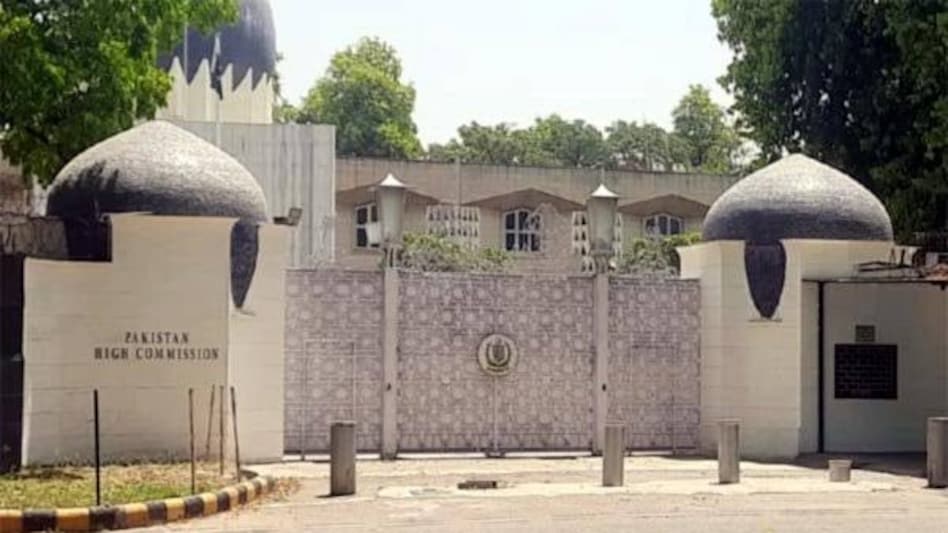
The Pakistan High Commission's main entrance, with its white walls, domed features and large metal gates bearing the Pakistani emblem, remained intact. Barbed-wire fencing was also visible along portions of the compound's perimeter.
ALSO READ: 'His first question to me was...': Ajit Doval recalls PM Modi's first meeting after Pahalgam attack
The move is a direct counter to Pakistan’s recent dismantling of external security barriers outside India’s mission in Islamabad, maintaining the long-standing pattern of tit-for-tat signalling between the two capitals.
Calibrated pressure, not closure
According to reports, tweaking peripheral physical layers allows both governments to apply reversible, controlled pressure without shutting down mission operations. By targeting external perimeters and clearing unauthorised encroachments, New Delhi projects administrative firmness while preserving structural parity with Islamabad.
Such adjustments—ranging from staff reductions and access restrictions to tighter utility and vehicular checks—have historically served as non-verbal pressure tactics in India-Pakistan relations.
On Wednesday, Pakistan raised an objection with the US over remarks made by the Indian ambassador on Kashmir. During his visit to Srinagar, US Ambassador to India Sergio Gor described Jammu and Kashmir as "an important part of India" and also praised the security situation in the Valley.
The remarks angered Pakistan, prompting it to summon US Charge d'Affaires Natalie Baker in Islamabad to formally lodge a protest. However, there is no official word yet on whether the action at the Pakistan High Commission was connected to Islamabad's response to Gor's comments.
In a calibrated diplomatic response, Indian authorities on Thursday dismantled unauthorised structures and outer security perimeters outside the Pakistan High Commission in New Delhi, mirroring Islamabad’s removal of barricades around the Indian High Commission in Pakistan three days earlier.
READ ALSO: Shared sentiment: How Indians and Pakistanis view each other, the nations
Tit-for-tat move at Diplomatic Enclave
Civic workers and heavy machinery were deployed on Shantipath to clear traffic bollards, concrete blocks, queue-management barriers and temporary fencing, particularly near the visa section entrance, which officials said lay beyond the mission’s approved boundary.
Visuals from the site showed debris, bent metal frames and broken railings after the demolition, underscoring the physical nature of the measure.
The Pakistan High Commission's main entrance, with its white walls, domed features and large metal gates bearing the Pakistani emblem, remained intact. Barbed-wire fencing was also visible along portions of the compound's perimeter.
ALSO READ: 'His first question to me was...': Ajit Doval recalls PM Modi's first meeting after Pahalgam attack
The move is a direct counter to Pakistan’s recent dismantling of external security barriers outside India’s mission in Islamabad, maintaining the long-standing pattern of tit-for-tat signalling between the two capitals.
Calibrated pressure, not closure
According to reports, tweaking peripheral physical layers allows both governments to apply reversible, controlled pressure without shutting down mission operations. By targeting external perimeters and clearing unauthorised encroachments, New Delhi projects administrative firmness while preserving structural parity with Islamabad.
Such adjustments—ranging from staff reductions and access restrictions to tighter utility and vehicular checks—have historically served as non-verbal pressure tactics in India-Pakistan relations.
On Wednesday, Pakistan raised an objection with the US over remarks made by the Indian ambassador on Kashmir. During his visit to Srinagar, US Ambassador to India Sergio Gor described Jammu and Kashmir as "an important part of India" and also praised the security situation in the Valley.
The remarks angered Pakistan, prompting it to summon US Charge d'Affaires Natalie Baker in Islamabad to formally lodge a protest. However, there is no official word yet on whether the action at the Pakistan High Commission was connected to Islamabad's response to Gor's comments.