
'India's Silicon Valley is drowning': Congress faces flak as Bengaluru's largest office hub goes under water
JDS leader and Union Minister HD Kumaraswamy blamed the Karnataka government for the collapse of infrastructure in Bengaluru.
- Oct 16, 2024,
- Updated Oct 16, 2024 8:10 PM IST
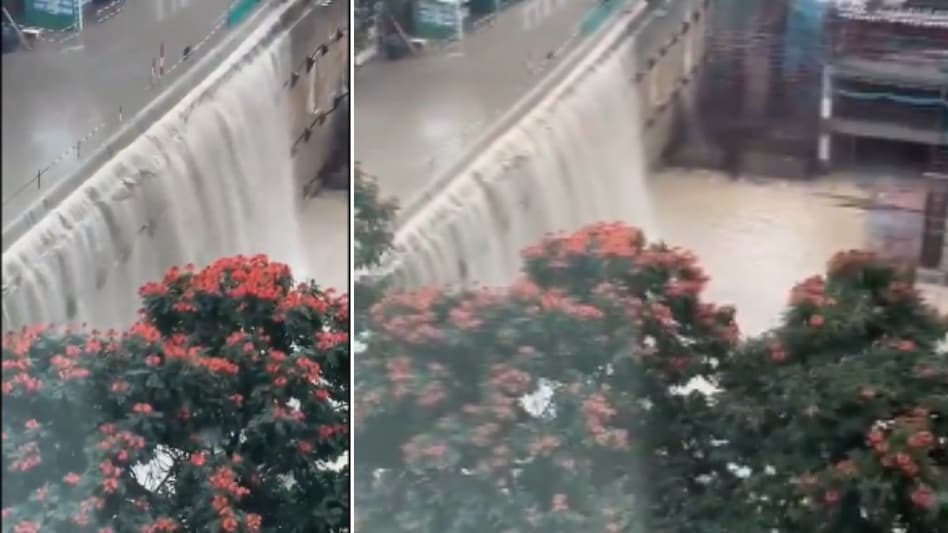
The massive flood at Bengaluru’s Manyata Tech Park, one of India's largest office hubs, has reignited concerns over rampant construction on lake sites and wetlands in the city. Social media is abuzz with videos showing submerged roads, stranded vehicles, and employees struggling to navigate waterlogged areas.
JDS leader and union minister HD Kumaraswamy blamed the Karnataka government for the collapse of infrastructure in Bengaluru. In a tweet, he said: "The Silicon Valley of India is now drowning in @INCKarnataka's negligence. The IT corridor is flooded, roads are impassable, and the city is sinking."
"This isn't just rain, it's the failure of governance. Congress' weak policies have ruined Brand Bengaluru. Potential investors are backing off, questioning how a 'global tech hub' can't handle basic urban management. Wake up! The city's future is at stake."
The flooding occurred on Monday following heavy rainfall. Employees working in the sprawling 300-acre tech village were advised to remain indoors as both internal roads and nearby areas were inundated.
Bengaluru's Manyata Tech Park reflects the growing issue of construction on riverbanks, said a social media user on X. Another person said that the government should strictly enforce regulations to prevent construction on riverbanks and reduce flood risks.
Karthik Reddy, another social media user, pointed out that the Manyata Tech Park was built on storm water drain of Hebbal Valley. To be more precise, he said, it's built on the banks of Nagavara Lake.
Ravi Karkara, author and investor, also suggested that the site where the tech park stood today was supposed to be a lake. "NATURE WILL RECLAIM ITSELF. Manyata Tech Park, Bengaluru which was supposed to be a LAKE turned into a lake today post heavy rains. Manyata Tech Park in Bengaluru has transformed dramatically into a lake following heavy rains, highlighting the city’s ongoing infrastructure issues."
Karkara said that the flood situation underscores a pressing need for effective climate action and urban planning to mitigate future flooding risks in the area.
Jeevan Rajput, another social media user, said stopping construction on river banks in Indian cities is crucial for environmental protection and urban planning. "It helps prevent flooding, protects ecosystems, and maintains water quality. In places like Manyata Tech Park in Bengaluru, responsible development is essential to ensure sustainable growth while preserving natural resources."
Bengaluru's recurring floods have been linked to a mix of urban planning failures and infrastructure bottlenecks. Knight Frank, a property consultancy firm, in its 2023 report, said that due to population influx and the real estate development to accommodate the same, the share of built-up area of the city increased from 37.4% in 2002 to 93.3% in 2020.
As a result of rapid and unplanned development, the infrastructure supporting the natural ecosystem of Bengaluru, especially the stormwater drainage system, has come under severe stress, it said. "Primarily, the interconnection between the waterbodies such as lakes and stormwater drains are severely affected causing recurrent floods in the event of heavy rainfall."
Also, Over the years, urban expansion has led to the disappearance of lakes and green cover, which once acted as natural buffers for rainwater. As per reports, approximately 88% of vegetation and 79% of water bodies in Bengaluru have vanished between 1973 and 2017 due to increased concretisation.
The chnaces of flooding also increases during rainfall as the city's old drainage network is insufficient to manage the growing volume of rainwater and sewage. Many lakes, which could serve as reservoirs to prevent floods, are heavily silted or bypassed altogether, limiting their utility.
The massive flood at Bengaluru’s Manyata Tech Park, one of India's largest office hubs, has reignited concerns over rampant construction on lake sites and wetlands in the city. Social media is abuzz with videos showing submerged roads, stranded vehicles, and employees struggling to navigate waterlogged areas.
JDS leader and union minister HD Kumaraswamy blamed the Karnataka government for the collapse of infrastructure in Bengaluru. In a tweet, he said: "The Silicon Valley of India is now drowning in @INCKarnataka's negligence. The IT corridor is flooded, roads are impassable, and the city is sinking."
"This isn't just rain, it's the failure of governance. Congress' weak policies have ruined Brand Bengaluru. Potential investors are backing off, questioning how a 'global tech hub' can't handle basic urban management. Wake up! The city's future is at stake."
The flooding occurred on Monday following heavy rainfall. Employees working in the sprawling 300-acre tech village were advised to remain indoors as both internal roads and nearby areas were inundated.
Bengaluru's Manyata Tech Park reflects the growing issue of construction on riverbanks, said a social media user on X. Another person said that the government should strictly enforce regulations to prevent construction on riverbanks and reduce flood risks.
Karthik Reddy, another social media user, pointed out that the Manyata Tech Park was built on storm water drain of Hebbal Valley. To be more precise, he said, it's built on the banks of Nagavara Lake.
Ravi Karkara, author and investor, also suggested that the site where the tech park stood today was supposed to be a lake. "NATURE WILL RECLAIM ITSELF. Manyata Tech Park, Bengaluru which was supposed to be a LAKE turned into a lake today post heavy rains. Manyata Tech Park in Bengaluru has transformed dramatically into a lake following heavy rains, highlighting the city’s ongoing infrastructure issues."
Karkara said that the flood situation underscores a pressing need for effective climate action and urban planning to mitigate future flooding risks in the area.
Jeevan Rajput, another social media user, said stopping construction on river banks in Indian cities is crucial for environmental protection and urban planning. "It helps prevent flooding, protects ecosystems, and maintains water quality. In places like Manyata Tech Park in Bengaluru, responsible development is essential to ensure sustainable growth while preserving natural resources."
Bengaluru's recurring floods have been linked to a mix of urban planning failures and infrastructure bottlenecks. Knight Frank, a property consultancy firm, in its 2023 report, said that due to population influx and the real estate development to accommodate the same, the share of built-up area of the city increased from 37.4% in 2002 to 93.3% in 2020.
As a result of rapid and unplanned development, the infrastructure supporting the natural ecosystem of Bengaluru, especially the stormwater drainage system, has come under severe stress, it said. "Primarily, the interconnection between the waterbodies such as lakes and stormwater drains are severely affected causing recurrent floods in the event of heavy rainfall."
Also, Over the years, urban expansion has led to the disappearance of lakes and green cover, which once acted as natural buffers for rainwater. As per reports, approximately 88% of vegetation and 79% of water bodies in Bengaluru have vanished between 1973 and 2017 due to increased concretisation.
The chnaces of flooding also increases during rainfall as the city's old drainage network is insufficient to manage the growing volume of rainwater and sewage. Many lakes, which could serve as reservoirs to prevent floods, are heavily silted or bypassed altogether, limiting their utility.