
India's yields lag China by half: Economist blames subsidy mindset for low growth in agriculture
Even now, in a number of major crops, India's yields lag China and in some cases, by half - and that's been very puzzling, says economist Devesh Kapur
- Oct 27, 2025,
- Updated Oct 27, 2025 3:48 PM IST
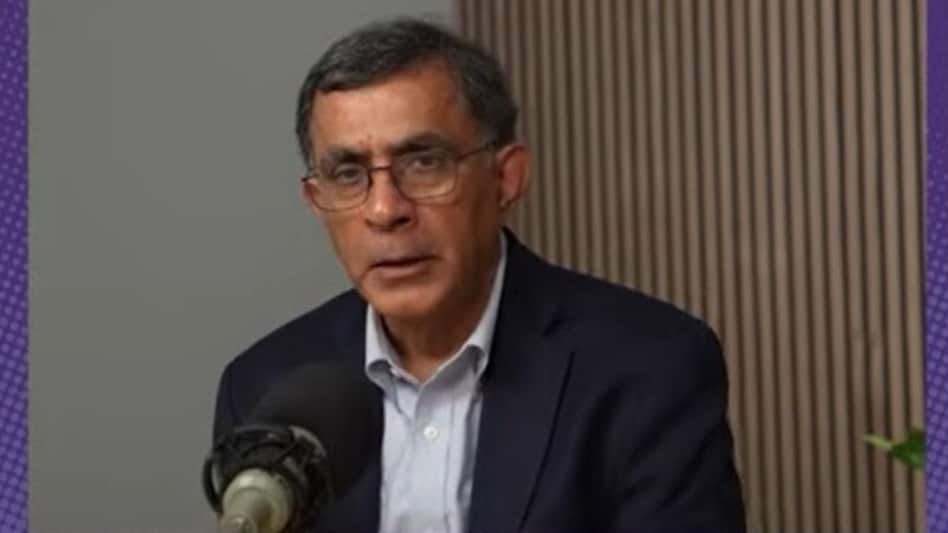
India's agricultural yields continue to lag China's by nearly half, a gap that economist Devesh Kapur calls 'very puzzling', given the country's political evolution and decades of reforms. Speaking on a Carnegie podcast during a discussion on his new book - A Sixth of Humanity: Independent India's Development Odyssey, co-authored with former chief economic adviser Arvind Subramanian, Kapur said India's failure to raise productivity in agriculture remains one of its most enduring development paradoxes.
"India was overwhelmingly a rural society, and for most Indians-agriculture was the key part of the economy. No large country has ever developed without first having a robust agricultural sector," Kapur said. "Now, in India's case, there were two challenges in agriculture. One, of course, was about feudal inheritance. Land reforms were a major challenge. Land reform has only occurred in the world under authoritarian regimes. Democracies have always found it very hard, and with the Congress in power, the state-level Congress leadership was very much part of the upper class that owned much of the land and were obviously trying to sabotage land reform."
He said the country's federal structure added to the inertia. "The second part came from India's federal structure. Essentially, agriculture is a state subject. In the early decades, the Center had a much greater role. What is interesting is that even when India changed its agricultural policies with the Green Revolution and especially in the last 30-odd years, the instruments of improving agriculture have essentially been around subsidies rather than what was there early on in the Green Revolution, which is to raise yields."
"Even now, in a number of major crops, India's yields lag China and in some cases, by half - and that's been very puzzling. Because from the 1970s onwards, when the regional parties came to power, their social base was much more in rural India. But again, you see almost no interest at all in the key area of trying to raise yields," he said.
Kapur, professor of South Asia Studies at Johns Hopkins University, added that the areas of growth within Indian agriculture have been largely outside the state's control. "In fact, in the last quarter century, Indian agriculture has been doing reasonably well, but it's driven by horticulture, animal husbandry-milk, eggs, meat, fruits, and vegetables, the areas where the state is hardly involved. Whereas the area where the state piles with subsidies and price control and procurement, which is basically cereals - that growth is really really poor. In the states, the representatives are largely coming from rural parts of the state, and agriculture is a state subject. They could have done much more in this area, but it came down to a complete lack of imagination and a very limited number of instruments," he said.
Arvind Subramanian, who co-authored the book, said India's neglect of agriculture was also ideological, rooted in the early years of economic planning. "This is correct that many of the choices reflected the zeitgeist of the time. And this whole heavy industrialisation growth was a big part of that. I think if you're going to emphasise one sector, you're going to neglect another sector, especially in terms of resources," he said.
Subramanian added that India's economic gaze was shaped by the wrong models. "There was a kind of ideological component to this as well-that we looked to Russia, China, the West as the models to follow, and there's also the kind of the Lewis model we were all enthralled to. As you know, Mahalanobis was besotted with Russia and the Russian model-it's in fact called the Feldman-Mahalanobis model. So ideologically, we looked to the West, Russia, China, and we never looked east to Japan, Korea, or Taiwan, where in fact they'd really emphasised land reform, agricultural productivity, and so on. That also partly explains the neglect or not putting enough emphasis on agriculture that politics otherwise should have forced," he said.
India's agricultural yields continue to lag China's by nearly half, a gap that economist Devesh Kapur calls 'very puzzling', given the country's political evolution and decades of reforms. Speaking on a Carnegie podcast during a discussion on his new book - A Sixth of Humanity: Independent India's Development Odyssey, co-authored with former chief economic adviser Arvind Subramanian, Kapur said India's failure to raise productivity in agriculture remains one of its most enduring development paradoxes.
"India was overwhelmingly a rural society, and for most Indians-agriculture was the key part of the economy. No large country has ever developed without first having a robust agricultural sector," Kapur said. "Now, in India's case, there were two challenges in agriculture. One, of course, was about feudal inheritance. Land reforms were a major challenge. Land reform has only occurred in the world under authoritarian regimes. Democracies have always found it very hard, and with the Congress in power, the state-level Congress leadership was very much part of the upper class that owned much of the land and were obviously trying to sabotage land reform."
He said the country's federal structure added to the inertia. "The second part came from India's federal structure. Essentially, agriculture is a state subject. In the early decades, the Center had a much greater role. What is interesting is that even when India changed its agricultural policies with the Green Revolution and especially in the last 30-odd years, the instruments of improving agriculture have essentially been around subsidies rather than what was there early on in the Green Revolution, which is to raise yields."
"Even now, in a number of major crops, India's yields lag China and in some cases, by half - and that's been very puzzling. Because from the 1970s onwards, when the regional parties came to power, their social base was much more in rural India. But again, you see almost no interest at all in the key area of trying to raise yields," he said.
Kapur, professor of South Asia Studies at Johns Hopkins University, added that the areas of growth within Indian agriculture have been largely outside the state's control. "In fact, in the last quarter century, Indian agriculture has been doing reasonably well, but it's driven by horticulture, animal husbandry-milk, eggs, meat, fruits, and vegetables, the areas where the state is hardly involved. Whereas the area where the state piles with subsidies and price control and procurement, which is basically cereals - that growth is really really poor. In the states, the representatives are largely coming from rural parts of the state, and agriculture is a state subject. They could have done much more in this area, but it came down to a complete lack of imagination and a very limited number of instruments," he said.
Arvind Subramanian, who co-authored the book, said India's neglect of agriculture was also ideological, rooted in the early years of economic planning. "This is correct that many of the choices reflected the zeitgeist of the time. And this whole heavy industrialisation growth was a big part of that. I think if you're going to emphasise one sector, you're going to neglect another sector, especially in terms of resources," he said.
Subramanian added that India's economic gaze was shaped by the wrong models. "There was a kind of ideological component to this as well-that we looked to Russia, China, the West as the models to follow, and there's also the kind of the Lewis model we were all enthralled to. As you know, Mahalanobis was besotted with Russia and the Russian model-it's in fact called the Feldman-Mahalanobis model. So ideologically, we looked to the West, Russia, China, and we never looked east to Japan, Korea, or Taiwan, where in fact they'd really emphasised land reform, agricultural productivity, and so on. That also partly explains the neglect or not putting enough emphasis on agriculture that politics otherwise should have forced," he said.