
IndiGo crisis puts spotlight on its powerful board as questions mount over governance lapse
For IndiGo, the immediate challenge is operational — restoring public confidence and stabilising services. But the bigger question looms over the boardroom: How will the Board protect the airline’s reputation, reassure investors, and demonstrate accountability in a crisis of this magnitude?
- Dec 6, 2025,
- Updated Dec 6, 2025 7:35 PM IST
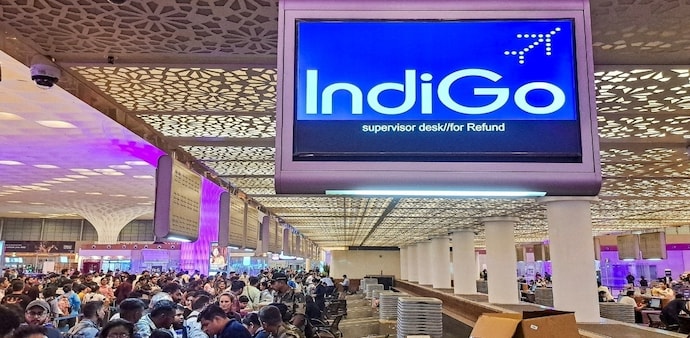
As IndiGo reels under one of the most damaging crises in its history, scrutiny is no longer confined to the airline’s professional management led by CEO Pieter Elbers. Attention is now shifting to its Board of Directors — an assembly of some of India’s most distinguished leaders from aviation, corporate governance, and public policy — raising a critical question: what is the Board doing to arrest the airline’s spiralling brand and operational crisis?
Board of Directors now under fire
IndiGo’s board is often cited as one of the most formidable among Indian corporates. Founder and group MD Rahul Bhatia sits at the core of the governance structure, but the board is led by Chairman Vikram Singh Mehta, a respected voice in the global energy and policy space.
Other members include:
- ACM (Retd.) Birender Singh Dhanoa, former Air Chief Marshal
- Amitabh Kant, veteran civil servant and former G20 Sherpa
- Pallavi Shardul Shroff, Independent Director and leading corporate lawyer
- Michael Gordon Whitaker, Independent Director
- Meleveetil Damodaran, Independent Director and former SEBI Chairman
- Anil Parashar, Non-Independent Director
For a board stacked with such calibre, questions are now emerging about how they are interpreting the ongoing fiasco — and whether they have stepped in to take stock of the spiralling public sentiment and value erosion.
Operational meltdown raises alarms
The airline, which until recently carried almost seven out of every 10 domestic flyers, has been found wanting in fulfilling its most fundamental obligation: transporting passengers safely and reliably from point A to point B.
The crisis has exposed deep-rooted structural issues in India’s aviation ecosystem — ranging from lax regulatory oversight and shortages of trained pilots to the pressures of an increasingly duopolistic market. While these problems have long been flagged, the current meltdown has brought them into sharp, urgent focus.
Industry watchers argue that the scale of operational disarray, passenger distress, and reputational damage amounts to a governance failure — one that a board of this stature cannot ignore.
Government may intervene
Adding to the airline’s troubles, unconfirmed reports indicate that the government may consider financial penalties, withdrawal of routes, and even a review of the CEO’s security clearance. Any such move would mark one of the most severe regulatory actions taken against a major Indian carrier.
Despite the growing public concern and multiple media reports, IndiGo has yet to issue a formal response addressing the crisis or the speculation around regulatory action. This story will be updated when the airline provides an official comment.
For IndiGo, the immediate challenge is operational — restoring public confidence and stabilising services. But the bigger question looms over the boardroom: How will the Board protect the airline’s reputation, reassure investors, and demonstrate accountability in a crisis of this magnitude?
With its credibility on the line, the board’s next steps may well determine IndiGo’s trajectory in the months ahead — and whether the country’s largest airline can regain the trust of the millions who rely on it.
As IndiGo reels under one of the most damaging crises in its history, scrutiny is no longer confined to the airline’s professional management led by CEO Pieter Elbers. Attention is now shifting to its Board of Directors — an assembly of some of India’s most distinguished leaders from aviation, corporate governance, and public policy — raising a critical question: what is the Board doing to arrest the airline’s spiralling brand and operational crisis?
Board of Directors now under fire
IndiGo’s board is often cited as one of the most formidable among Indian corporates. Founder and group MD Rahul Bhatia sits at the core of the governance structure, but the board is led by Chairman Vikram Singh Mehta, a respected voice in the global energy and policy space.
Other members include:
- ACM (Retd.) Birender Singh Dhanoa, former Air Chief Marshal
- Amitabh Kant, veteran civil servant and former G20 Sherpa
- Pallavi Shardul Shroff, Independent Director and leading corporate lawyer
- Michael Gordon Whitaker, Independent Director
- Meleveetil Damodaran, Independent Director and former SEBI Chairman
- Anil Parashar, Non-Independent Director
For a board stacked with such calibre, questions are now emerging about how they are interpreting the ongoing fiasco — and whether they have stepped in to take stock of the spiralling public sentiment and value erosion.
Operational meltdown raises alarms
The airline, which until recently carried almost seven out of every 10 domestic flyers, has been found wanting in fulfilling its most fundamental obligation: transporting passengers safely and reliably from point A to point B.
The crisis has exposed deep-rooted structural issues in India’s aviation ecosystem — ranging from lax regulatory oversight and shortages of trained pilots to the pressures of an increasingly duopolistic market. While these problems have long been flagged, the current meltdown has brought them into sharp, urgent focus.
Industry watchers argue that the scale of operational disarray, passenger distress, and reputational damage amounts to a governance failure — one that a board of this stature cannot ignore.
Government may intervene
Adding to the airline’s troubles, unconfirmed reports indicate that the government may consider financial penalties, withdrawal of routes, and even a review of the CEO’s security clearance. Any such move would mark one of the most severe regulatory actions taken against a major Indian carrier.
Despite the growing public concern and multiple media reports, IndiGo has yet to issue a formal response addressing the crisis or the speculation around regulatory action. This story will be updated when the airline provides an official comment.
For IndiGo, the immediate challenge is operational — restoring public confidence and stabilising services. But the bigger question looms over the boardroom: How will the Board protect the airline’s reputation, reassure investors, and demonstrate accountability in a crisis of this magnitude?
With its credibility on the line, the board’s next steps may well determine IndiGo’s trajectory in the months ahead — and whether the country’s largest airline can regain the trust of the millions who rely on it.