
IndiGo fiasco: Govt mulls deeper review of aviation sector amid monopoly concerns
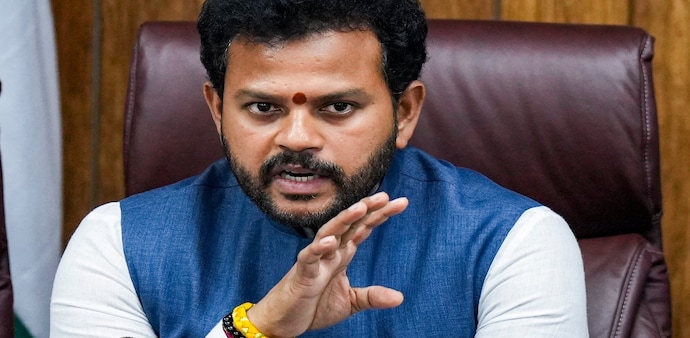
“We have envisioned the demand at such a rate that we want to have more airlines in the picture. India today has the capacity for five big airlines, and the Ministry encourages more efforts to bring new players,” Civil Aviation Minister Ram Mohan Naidu said.
- Dec 8, 2025,
- Updated Dec 8, 2025 1:41 PM IST
Raising concerns over growing dominance in India’s aviation sector, Shiv Sena MP Milind Deora on Friday urged the civil aviation ministry to initiate a comprehensive review to boost competition and protect consumers.
“Today, people are concerned about the monopoly of IndiGo,” Deora said in Parliament. “My suggestion is that the Ministry of Civil Aviation, through DGCA in partnership with CCI, should do a thorough review of the Indian aviation sector to ensure more competition. The more competition we bring, the more prices will come down and customer safety will improve.”
Responding to Deora, Civil Aviation Minister Ram Mohan Naidu said the government is aware of the issue and is actively working to broaden the base.
“We have envisioned the demand at such a rate that we want to have more airlines in the picture. India today has the capacity for five big airlines, and the Ministry encourages more efforts to bring new players,” he said.
Naidu also pointed to policy measures supporting airline expansion. “We are encouraging the leasing policy. IndiGo or Air India today — 80 percent of their aircraft are leased,” he said, indicating the Ministry’s efforts to ease entry barriers and promote fleet growth.
According to CAPA (Centre for Aviation) data, IndiGo alone controls 60% of the domestic market. Add the Tata-owned Air India group — which now commands 26% after merging Vistara and AirAsia — and the two players control 86% of Indian skies. If either faces disruption, there are few alternatives available to absorb the impact.
Smaller carriers are struggling. SpiceJet holds just 3.2% of the market, while Akasa Air accounts for 4.7%. Other regional airlines like Star Air, Fly91, Flybig, and IndiaOne have minimal presence. Alliance Air, the only government-owned airline, operates at 0.6%. The result is a duopoly where two airlines drive growth, while others compete for a shrinking share.
This imbalance gives the dominant players pricing power. During recent flight cancellations, fares on routes such as Delhi-Mumbai and Bengaluru-Kolkata reportedly doubled or tripled due to the lack of alternatives. Moreover, the market remains highly sensitive to disruptions — a mass cancellation at IndiGo, for instance, can throw travel plans across the country into chaos.
Raising concerns over growing dominance in India’s aviation sector, Shiv Sena MP Milind Deora on Friday urged the civil aviation ministry to initiate a comprehensive review to boost competition and protect consumers.
“Today, people are concerned about the monopoly of IndiGo,” Deora said in Parliament. “My suggestion is that the Ministry of Civil Aviation, through DGCA in partnership with CCI, should do a thorough review of the Indian aviation sector to ensure more competition. The more competition we bring, the more prices will come down and customer safety will improve.”
Responding to Deora, Civil Aviation Minister Ram Mohan Naidu said the government is aware of the issue and is actively working to broaden the base.
“We have envisioned the demand at such a rate that we want to have more airlines in the picture. India today has the capacity for five big airlines, and the Ministry encourages more efforts to bring new players,” he said.
Naidu also pointed to policy measures supporting airline expansion. “We are encouraging the leasing policy. IndiGo or Air India today — 80 percent of their aircraft are leased,” he said, indicating the Ministry’s efforts to ease entry barriers and promote fleet growth.
According to CAPA (Centre for Aviation) data, IndiGo alone controls 60% of the domestic market. Add the Tata-owned Air India group — which now commands 26% after merging Vistara and AirAsia — and the two players control 86% of Indian skies. If either faces disruption, there are few alternatives available to absorb the impact.
Smaller carriers are struggling. SpiceJet holds just 3.2% of the market, while Akasa Air accounts for 4.7%. Other regional airlines like Star Air, Fly91, Flybig, and IndiaOne have minimal presence. Alliance Air, the only government-owned airline, operates at 0.6%. The result is a duopoly where two airlines drive growth, while others compete for a shrinking share.
This imbalance gives the dominant players pricing power. During recent flight cancellations, fares on routes such as Delhi-Mumbai and Bengaluru-Kolkata reportedly doubled or tripled due to the lack of alternatives. Moreover, the market remains highly sensitive to disruptions — a mass cancellation at IndiGo, for instance, can throw travel plans across the country into chaos.