
'Intellectual cousins will continue to poison young minds': Sanjeev Sanyal after Maoist pause
'Intellectual cousins will continue to poison young minds': Sanjeev Sanyal after Maoist pause
West Bengal has never fully recovered from the mayhem they unleashed in the 1960s and 1970s, says Sanyal
Business Today Desk
- Sep 17, 2025,
- Updated Sep 17, 2025 12:16 PM IST
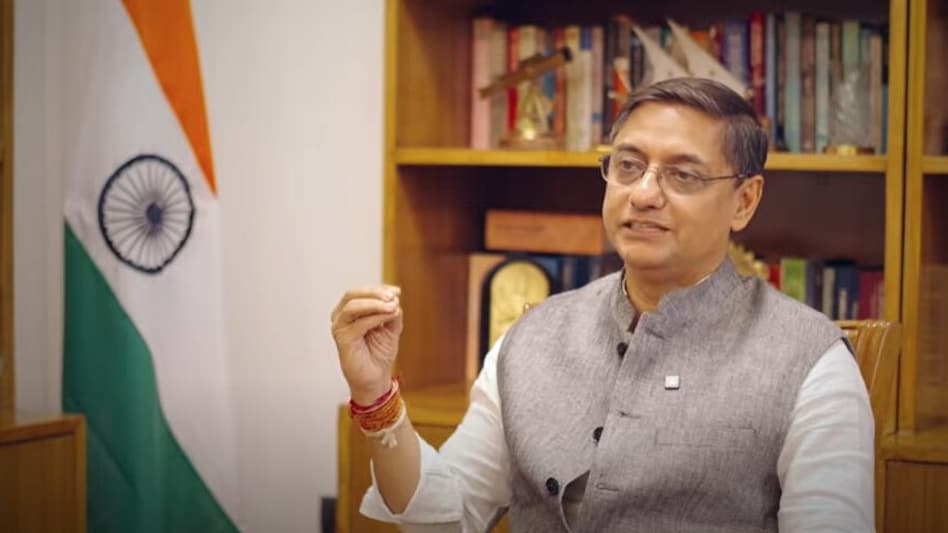
Economist Sanjeev Sanyal on Wednesday warned that the suspension of armed struggle by Maoists will not end their influence, arguing that their "intellectual cousins" will keep targeting India's youth.
"As recently as 2010, some 160 districts were under the sway of Naxalites who ran extortion rackets and parallel governments," Sanyal said. "West Bengal has never fully recovered from the mayhem they unleashed in the 1960s and 1970s. The organized violence may now recede, but their ‘intellectual’ cousins will continue to poison young minds in new ways unless they are constantly exposed. There will always be foreign NGOs and think tanks willing to finance such useful idiots."
Advertisement
His comments came a day after the outlawed CPI (Maoist) issued a purported statement announcing a temporary suspension of its armed struggle to facilitate peace talks. The rebels asked the government to declare a one-month "ceasefire" and halt security operations to move forward with dialogue.
The two-page statement, dated August 15, was issued in the name of Abhay, spokesperson of the CPI (Maoist) central committee, and circulated on social media. It came four months after Nambala Keshav Rao alias Basavaraju, the group’s general secretary, was killed in an encounter with security forces in Chhattisgarh’s Bastar region.
Advertisement
"To take forward the process of peace talks that was started on the initiative of the party's general secretary (late Basavaraju), we are making it clear that in view of the changed global and national circumstances, as well as the continuous requests being made by the country's Prime Minister, Home Minister and senior police officers to give up arms and join the mainstream, we have decided to shun arms," the statement said.
"We have decided to declare a temporary halt to the armed struggle. We are making it clear that in the future, we will fight shoulder to shoulder with all political parties and organisations fighting for the public cause as far as possible," it added.
The Maoists said they were ready to talk directly with the Union Home Minister or his appointees. "We are also ready to exchange views with the government on this subject, primarily through video call. Therefore, we are making it clear once again that (the government should) immediately declare a formal ceasefire for a month, stop search operations and take forward the peace process," the statement said.
Advertisement
Deputy Chief Minister of Chhattisgarh Vijay Sharma said the authenticity of the release was being verified. "The best way for Maoists is to surrender and avail rehabilitation benefits. The term 'ceasefire' is highly objectionable as there is no war-like situation that requires one. In a democracy, talks cannot be conditional, yet once again, they have set preconditions. However, after verifying the statement, discussions will be held within the government," he said.
Inspector General of Police, Bastar Range, Sundarraj P, told PTI that the police had taken note of the Maoist statement and were carefully examining its contents. "It is reiterated that any decision on engagement or dialogue with the CPI (Maoist) lies solely with the government, which will take an appropriate call after due consideration and assessment of the situation and circumstances," he said.
Economist Sanjeev Sanyal on Wednesday warned that the suspension of armed struggle by Maoists will not end their influence, arguing that their "intellectual cousins" will keep targeting India's youth.
"As recently as 2010, some 160 districts were under the sway of Naxalites who ran extortion rackets and parallel governments," Sanyal said. "West Bengal has never fully recovered from the mayhem they unleashed in the 1960s and 1970s. The organized violence may now recede, but their ‘intellectual’ cousins will continue to poison young minds in new ways unless they are constantly exposed. There will always be foreign NGOs and think tanks willing to finance such useful idiots."
Advertisement
His comments came a day after the outlawed CPI (Maoist) issued a purported statement announcing a temporary suspension of its armed struggle to facilitate peace talks. The rebels asked the government to declare a one-month "ceasefire" and halt security operations to move forward with dialogue.
The two-page statement, dated August 15, was issued in the name of Abhay, spokesperson of the CPI (Maoist) central committee, and circulated on social media. It came four months after Nambala Keshav Rao alias Basavaraju, the group’s general secretary, was killed in an encounter with security forces in Chhattisgarh’s Bastar region.
Advertisement
"To take forward the process of peace talks that was started on the initiative of the party's general secretary (late Basavaraju), we are making it clear that in view of the changed global and national circumstances, as well as the continuous requests being made by the country's Prime Minister, Home Minister and senior police officers to give up arms and join the mainstream, we have decided to shun arms," the statement said.
"We have decided to declare a temporary halt to the armed struggle. We are making it clear that in the future, we will fight shoulder to shoulder with all political parties and organisations fighting for the public cause as far as possible," it added.
The Maoists said they were ready to talk directly with the Union Home Minister or his appointees. "We are also ready to exchange views with the government on this subject, primarily through video call. Therefore, we are making it clear once again that (the government should) immediately declare a formal ceasefire for a month, stop search operations and take forward the peace process," the statement said.
Advertisement
Deputy Chief Minister of Chhattisgarh Vijay Sharma said the authenticity of the release was being verified. "The best way for Maoists is to surrender and avail rehabilitation benefits. The term 'ceasefire' is highly objectionable as there is no war-like situation that requires one. In a democracy, talks cannot be conditional, yet once again, they have set preconditions. However, after verifying the statement, discussions will be held within the government," he said.
Inspector General of Police, Bastar Range, Sundarraj P, told PTI that the police had taken note of the Maoist statement and were carefully examining its contents. "It is reiterated that any decision on engagement or dialogue with the CPI (Maoist) lies solely with the government, which will take an appropriate call after due consideration and assessment of the situation and circumstances," he said.
Read more!