
Is India fuelling Russia's war machine? Here's what the West won't tell you
If India were to stop buying Russian oil today, it would trigger a global fuel shock. Oil prices could soar past $200 per barrel
- Aug 5, 2025,
- Updated Aug 5, 2025 11:22 PM IST
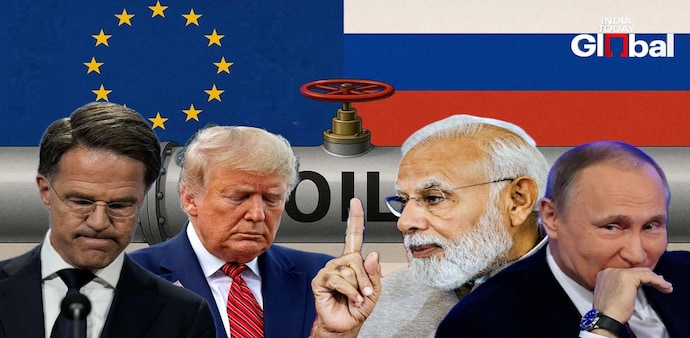
US President Donald Trump has accused India of fueling Russia's war machine by purchasing Russian oil. In a recent interview with CNBC Squawk Box, Trump declared, "India has not been a good trading partner...they have the highest tariff of anybody." He added, "India settled on 25% (tariff), but I think I’m going to raise that very substantially over the next 24 hours, because they're buying Russian oil. They're fuelling the war machine. And if they're going to do that, then I'm not going to be happy."
However, this accusation doesn't hold up under scrutiny. Here's the reality that's not being discussed.
Is Russian oil even sanctioned by the West?
No. Russian oil is not sanctioned like Iranian or Venezuelan oil. Instead, it is under a price cap set by the G7/EU, which limits Russia's revenue while still keeping it in the global market. India, like other countries, follows that price cap. This means that India is legally allowed to buy Russian oil, and it does so within the parameters set by international agreements.
So why the drama when India buys it?
The answer might surprise you. While India is being singled out, other countries continue to buy Russian oil without facing the same scrutiny. Many nations quietly continue their purchases, leaving India to bear the brunt of the blame. The drama is less about India's actions and more about political posturing.
Who are the real top buyers of Russian energy?
Between December 2022 and July 2025, the real top buyers of Russian crude oil were: China (47% of Russia's crude exports), India (38%), and the European Union & Turkey (6% each). As these numbers show, India is not alone in purchasing Russian oil. It is far from the largest buyer, and yet it is being singled out for its role in this trade.
Is India the biggest buyer of Russian gas?
No. In fact, the European Union, which is one of India's harshest critics, is the largest buyer of Russian gas. In June 2025 alone, the EU spent over €1.2 billion on Russian gas, with France, Hungary, the Netherlands, and Slovakia being among the top buyers.
What about petroleum products?
India does not buy refined Russian fuel. However, other major buyers include Turkey, China, and Brazil. Turkey, a NATO member, purchased 26% of Russia's refined oil. Meanwhile, India has not purchased any.
Is India violating global rules?
Not at all. India's purchases are fully legal. It buys through international traders and not directly from Russian state entities, ensuring that it remains compliant with global norms. India's actions are completely in line with the G7 price cap and involve legitimate shipping and insurance practices.
What happens if India stops buying today?
If India were to stop buying Russian oil today, it would trigger a global fuel shock. Oil prices could soar past $200 per barrel, which would cause widespread economic instability not just for India, but for the entire world.
Is India doing this just for itself?
India's role in the global energy market goes beyond national interests. By continuing to buy Russian oil, India has helped stabilize global oil prices. This has been acknowledged by US officials, who have recognised India's contribution to maintaining market stability.
In November 2022, US Treasury Secretary stated, "We're happy for India to keep buying oil." In 2024, a US Energy Advisor acknowledged India's role, saying, "India helped stabilize global markets.” Furthermore, in May 2024, US Ambassador Eric Garcetti remarked, "India delivered. Prices didn't spike."
These statements highlight the positive impact of India's oil purchases on global energy stability.
And what about the West's double standards?
The West, particularly the European Union, has its own inconsistencies in dealing with Russian energy. While the EU criticizes India, it continues to import Russian crude through pipelines to Hungary, Slovakia, and the Czech Republic. Japan received an exemption for oil imports until 2026. Furthermore, the EU’s 18th sanctions package made exceptions for countries like the UK, Canada, Norway, Switzerland, and the US.
So, who's really funding whom?
When it comes to the reality of who is buying Russian oil, the facts don't go with the accusations being thrown at India. As the numbers show, India is playing by the rules and contributing to global energy stability, all while other major players are doing the same without the same level of scrutiny.
US President Donald Trump has accused India of fueling Russia's war machine by purchasing Russian oil. In a recent interview with CNBC Squawk Box, Trump declared, "India has not been a good trading partner...they have the highest tariff of anybody." He added, "India settled on 25% (tariff), but I think I’m going to raise that very substantially over the next 24 hours, because they're buying Russian oil. They're fuelling the war machine. And if they're going to do that, then I'm not going to be happy."
However, this accusation doesn't hold up under scrutiny. Here's the reality that's not being discussed.
Is Russian oil even sanctioned by the West?
No. Russian oil is not sanctioned like Iranian or Venezuelan oil. Instead, it is under a price cap set by the G7/EU, which limits Russia's revenue while still keeping it in the global market. India, like other countries, follows that price cap. This means that India is legally allowed to buy Russian oil, and it does so within the parameters set by international agreements.
So why the drama when India buys it?
The answer might surprise you. While India is being singled out, other countries continue to buy Russian oil without facing the same scrutiny. Many nations quietly continue their purchases, leaving India to bear the brunt of the blame. The drama is less about India's actions and more about political posturing.
Who are the real top buyers of Russian energy?
Between December 2022 and July 2025, the real top buyers of Russian crude oil were: China (47% of Russia's crude exports), India (38%), and the European Union & Turkey (6% each). As these numbers show, India is not alone in purchasing Russian oil. It is far from the largest buyer, and yet it is being singled out for its role in this trade.
Is India the biggest buyer of Russian gas?
No. In fact, the European Union, which is one of India's harshest critics, is the largest buyer of Russian gas. In June 2025 alone, the EU spent over €1.2 billion on Russian gas, with France, Hungary, the Netherlands, and Slovakia being among the top buyers.
What about petroleum products?
India does not buy refined Russian fuel. However, other major buyers include Turkey, China, and Brazil. Turkey, a NATO member, purchased 26% of Russia's refined oil. Meanwhile, India has not purchased any.
Is India violating global rules?
Not at all. India's purchases are fully legal. It buys through international traders and not directly from Russian state entities, ensuring that it remains compliant with global norms. India's actions are completely in line with the G7 price cap and involve legitimate shipping and insurance practices.
What happens if India stops buying today?
If India were to stop buying Russian oil today, it would trigger a global fuel shock. Oil prices could soar past $200 per barrel, which would cause widespread economic instability not just for India, but for the entire world.
Is India doing this just for itself?
India's role in the global energy market goes beyond national interests. By continuing to buy Russian oil, India has helped stabilize global oil prices. This has been acknowledged by US officials, who have recognised India's contribution to maintaining market stability.
In November 2022, US Treasury Secretary stated, "We're happy for India to keep buying oil." In 2024, a US Energy Advisor acknowledged India's role, saying, "India helped stabilize global markets.” Furthermore, in May 2024, US Ambassador Eric Garcetti remarked, "India delivered. Prices didn't spike."
These statements highlight the positive impact of India's oil purchases on global energy stability.
And what about the West's double standards?
The West, particularly the European Union, has its own inconsistencies in dealing with Russian energy. While the EU criticizes India, it continues to import Russian crude through pipelines to Hungary, Slovakia, and the Czech Republic. Japan received an exemption for oil imports until 2026. Furthermore, the EU’s 18th sanctions package made exceptions for countries like the UK, Canada, Norway, Switzerland, and the US.
So, who's really funding whom?
When it comes to the reality of who is buying Russian oil, the facts don't go with the accusations being thrown at India. As the numbers show, India is playing by the rules and contributing to global energy stability, all while other major players are doing the same without the same level of scrutiny.