
New Year targets: ISRO plans seven launches by March 2026, Gaganyaan among key launches
One of the key technology missions in the lineup will be the PSLV63 launch of the TDS-01 satellite. The satellite will demonstrate advanced systems such as a high thrust electric propulsion system, quantum key distribution technology, and an indigenous travelling wave tube amplifier.
- Dec 14, 2025,
- Updated Dec 14, 2025 6:27 PM IST
India’s space agency ISRO is preparing for a packed New Year, with seven launch missions planned by March next year. These missions will include important technology demonstrations, commercial satellite launches, and the first uncrewed flight of the Gaganyaan human spaceflight programme, as reported by PTI.
India’s heaviest rocket, the LVM3, will launch the Bluebird-6 communication satellite for US-based AST Spacemobile. The mission is being carried out under a commercial agreement through ISRO’s commercial arm, New Space India Limited (NSIL). Union minister Jitendra Singh recently shared details of the mission in Parliament.
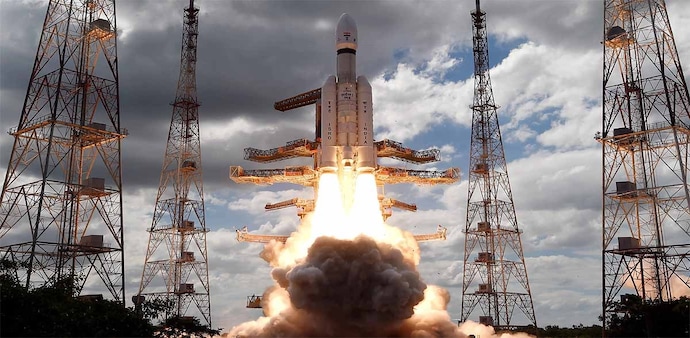
Early next year, the human-rated LVM3 will undertake a major milestone by carrying the first uncrewed Gaganyaan mission. The crew module will carry Vyommitra, a humanoid robot. One more uncrewed mission is planned later next year before Indian astronauts are sent to low Earth orbit in 2027.
“First uncrewed mission of Gaganyaan to demonstrate end-to-end mission, including aerodynamics characterization of human rated launch vehicle, mission operations of Orbital Module, re-entry and recovery of Crew Module,” Singh said.
The year ahead will also mark a first for Indian industry. India’s first industry-built Polar Satellite Launch Vehicle will place the Oceansat satellite into orbit. The PSLV will also carry two co-passenger satellites, the Indo-Mauritius Joint Satellite and LEAP-2 developed by Dhruva Space.
To boost commercial satellite launches, NSIL has awarded a contract to a HAL-L&T consortium to manufacture five PSLV rockets. The agreement was signed under a technology transfer arrangement in September this year.
In another mission, an ISRO-built PSLV will launch the EOS-N1 earth observation satellite for a strategic user. The rocket will also carry 18 smaller satellites belonging to Indian and international customers.
The GSLV-Mk II rocket is expected to launch the EOS-5 satellite, also known as GISAT-1A. This mission will replace GISAT-1, which failed to reach its intended orbit in 2021.
One of the key technology missions in the lineup will be the PSLV63 launch of the TDS-01 satellite. The satellite will demonstrate advanced systems such as a high thrust electric propulsion system, quantum key distribution technology, and an indigenous travelling wave tube amplifier.
The high thrust electric propulsion system could play a crucial role in future satellite missions by reducing dependence on chemical fuel.
“The technologies and components, once proved in TDS-01, will be employed in navigation and communication missions in the near-future,” Singh said.
Currently, a four-tonne communication satellite carries more than two tonnes of liquid fuel to operate thrusters in space. With electric propulsion, the fuel requirement is reduced to around 200 kg, an official said. As a result, an electric propulsion-based satellite would weigh less than two tonnes while still delivering the same power as a four-tonne satellite.
The indigenous travelling wave tube amplifier will also help India achieve self-reliance in critical satellite transponder technologies. ISRO’s Small Satellite Launch Vehicle is also expected to launch a dedicated satellite before March 2026.
India’s space agency ISRO is preparing for a packed New Year, with seven launch missions planned by March next year. These missions will include important technology demonstrations, commercial satellite launches, and the first uncrewed flight of the Gaganyaan human spaceflight programme, as reported by PTI.
India’s heaviest rocket, the LVM3, will launch the Bluebird-6 communication satellite for US-based AST Spacemobile. The mission is being carried out under a commercial agreement through ISRO’s commercial arm, New Space India Limited (NSIL). Union minister Jitendra Singh recently shared details of the mission in Parliament.
Early next year, the human-rated LVM3 will undertake a major milestone by carrying the first uncrewed Gaganyaan mission. The crew module will carry Vyommitra, a humanoid robot. One more uncrewed mission is planned later next year before Indian astronauts are sent to low Earth orbit in 2027.
“First uncrewed mission of Gaganyaan to demonstrate end-to-end mission, including aerodynamics characterization of human rated launch vehicle, mission operations of Orbital Module, re-entry and recovery of Crew Module,” Singh said.
The year ahead will also mark a first for Indian industry. India’s first industry-built Polar Satellite Launch Vehicle will place the Oceansat satellite into orbit. The PSLV will also carry two co-passenger satellites, the Indo-Mauritius Joint Satellite and LEAP-2 developed by Dhruva Space.
To boost commercial satellite launches, NSIL has awarded a contract to a HAL-L&T consortium to manufacture five PSLV rockets. The agreement was signed under a technology transfer arrangement in September this year.
In another mission, an ISRO-built PSLV will launch the EOS-N1 earth observation satellite for a strategic user. The rocket will also carry 18 smaller satellites belonging to Indian and international customers.
The GSLV-Mk II rocket is expected to launch the EOS-5 satellite, also known as GISAT-1A. This mission will replace GISAT-1, which failed to reach its intended orbit in 2021.
One of the key technology missions in the lineup will be the PSLV63 launch of the TDS-01 satellite. The satellite will demonstrate advanced systems such as a high thrust electric propulsion system, quantum key distribution technology, and an indigenous travelling wave tube amplifier.
The high thrust electric propulsion system could play a crucial role in future satellite missions by reducing dependence on chemical fuel.
“The technologies and components, once proved in TDS-01, will be employed in navigation and communication missions in the near-future,” Singh said.
Currently, a four-tonne communication satellite carries more than two tonnes of liquid fuel to operate thrusters in space. With electric propulsion, the fuel requirement is reduced to around 200 kg, an official said. As a result, an electric propulsion-based satellite would weigh less than two tonnes while still delivering the same power as a four-tonne satellite.
The indigenous travelling wave tube amplifier will also help India achieve self-reliance in critical satellite transponder technologies. ISRO’s Small Satellite Launch Vehicle is also expected to launch a dedicated satellite before March 2026.