
'It would have been nuclear': Donald Trump repeats India–Pakistan ceasefire claim
Trump has credited himself with stopping the India–Pakistan conflict more than 80 times since May 10 last year
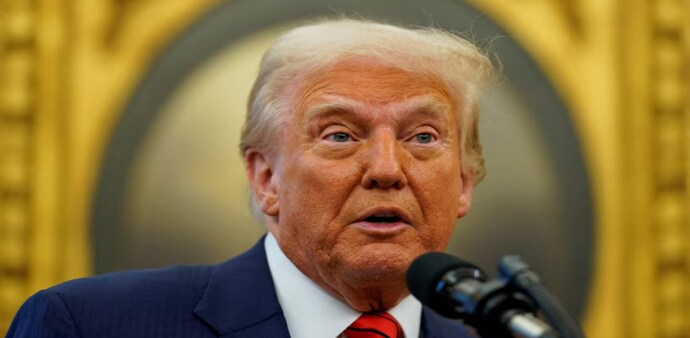
- Feb 11, 2026,
- Updated Feb 11, 2026 9:52 AM IST
US President Donald Trump has once again asserted that he halted a potential nuclear conflict between India and Pakistan last year by threatening tariffs, reiterating a claim he has made repeatedly since May.
In an interview with Fox Business on Tuesday, Trump said he used trade pressure to bring multiple conflicts to an end.
"I settled eight wars. Of the eight wars, at least six were settled because of tariffs. In other words, I said, ‘if you don't settle this war, I'm going to charge you tariffs, because I don't want to see people getting killed,” Trump said.
Referring specifically to India and Pakistan, he added: "And they said, ‘Well, what does this have to do?’ I said, ‘you're going to be charged’. Like India and Pakistan. It would have been a nuclear war, in my opinion. They were really going at it, 10 planes were shot down. They were going at it,” Trump said.
He further claimed that Pakistan’s prime minister told him, “‘President Trump saved at least 10 million lives when he got us to stop fighting’. Because they were going to go nuclear, (in) my opinion. Without tariffs, that wouldn't happen,” Trump said.
Trump has credited himself with stopping the India–Pakistan conflict more than 80 times since May 10 last year, when he announced on social media that the two countries had agreed to a “full and immediate” ceasefire after talks mediated by Washington.
India has consistently denied any third-party intervention in the ceasefire.
The military tensions followed India’s launch of Operation Sindoor on May 7 last year, targeting terror infrastructure in Pakistan and Pakistan-occupied Kashmir. The operation was carried out in retaliation for the April 22 Pahalgam attack that killed 26 civilians.
(With inputs from PTI)
US President Donald Trump has once again asserted that he halted a potential nuclear conflict between India and Pakistan last year by threatening tariffs, reiterating a claim he has made repeatedly since May.
In an interview with Fox Business on Tuesday, Trump said he used trade pressure to bring multiple conflicts to an end.
"I settled eight wars. Of the eight wars, at least six were settled because of tariffs. In other words, I said, ‘if you don't settle this war, I'm going to charge you tariffs, because I don't want to see people getting killed,” Trump said.
Referring specifically to India and Pakistan, he added: "And they said, ‘Well, what does this have to do?’ I said, ‘you're going to be charged’. Like India and Pakistan. It would have been a nuclear war, in my opinion. They were really going at it, 10 planes were shot down. They were going at it,” Trump said.
He further claimed that Pakistan’s prime minister told him, “‘President Trump saved at least 10 million lives when he got us to stop fighting’. Because they were going to go nuclear, (in) my opinion. Without tariffs, that wouldn't happen,” Trump said.
Trump has credited himself with stopping the India–Pakistan conflict more than 80 times since May 10 last year, when he announced on social media that the two countries had agreed to a “full and immediate” ceasefire after talks mediated by Washington.
India has consistently denied any third-party intervention in the ceasefire.
The military tensions followed India’s launch of Operation Sindoor on May 7 last year, targeting terror infrastructure in Pakistan and Pakistan-occupied Kashmir. The operation was carried out in retaliation for the April 22 Pahalgam attack that killed 26 civilians.
(With inputs from PTI)