
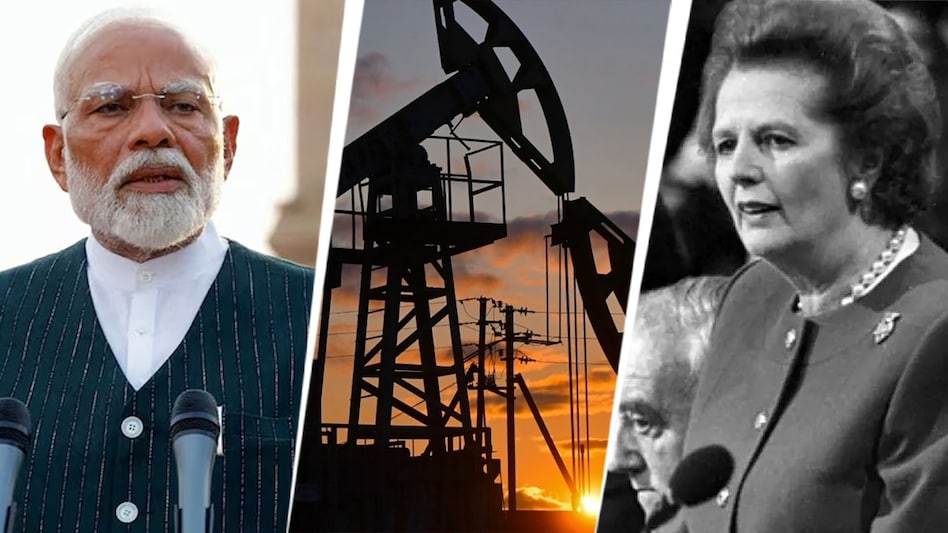
'It's the energy, stupid': Thatcher then, Modi now - How US power games keep burning its allies
The plot looks eerily similar to what Reagan tried to do when he discovered that Moscow was about to send more gas to Europe.
- Sep 2, 2025,
- Updated Sep 2, 2025 2:16 PM IST
What Donald Trump is doing with India, Ronald Reagan once tried with Europe. Reagan failed, and Trump, too, is heading for the same fate. For decades, Washington has been in a direct power play with Moscow. But what happens in the process is that a third country pays the price for its misadventures. The same goes with Ukraine, ask American economist Richard Wolff. He would tell you how the US pushed NATO to Russia's frontier. Encouraging Kyiv to look for NATO membership was part of this design. Forget the Orange Revolution that sowed the seed of distrust against Washington in the minds of Vladimir Putin.
It was all Washington's doing, but Trump has decided to punish New Delhi. He has imposed 50% tariffs on India, of which 25% is for buying Russian oil and defence equipment. His advisors have accused India of indirectly funding Russia's war in Ukraine.
The plot looks eerily similar to what Reagan tried to do when he discovered that Moscow was about to send more gas to Europe. The adversary was the same - Moscow. The fear was the same - increased funding. The issue was the same - energy. Only the commodity differed: gas then, oil now. But it's the energy, stupid.
The story, documented by American author Daniel Yergin, goes back to the 1980s.
By the early 1980s, major discoveries in West Siberia had propelled the Soviets ahead of the United States as the world's largest gas producer. Those big new supplies provided impetus to sell more gas into Western Europe. The Soviets and the Europeans began to plan a new 3,700-mile pipeline from the great Urengoy field in West Siberia.
"But before it was ever built, the proposed pipeline created a bitter rupture in the Western alliance, prefiguring the controversies over the geopolitics of European natural gas that continue to the present," writes Yergin in his book - 'The Quest: Energy, Security, and the Remaking of the Modern World'.
The Reagan administration became alarmed at the prospect of a much larger gas trade between East and West. "It had launched a major arms buildup to counter Soviet military expansion; the last thing the administration wanted was additional hard currency earnings from natural gas financing the Soviet military-industrial complex."
The US, according to Yergin, also feared that greater reliance on Soviet gas would create vulnerable dependence that the Soviets could exploit to pry apart the Western alliance and that-in a time of crisis-would give the Soviets crucial leverage. The American administration then warned that the Soviet Union could "blackmail" the Europeans by threatening to turn off the heat and stoves in Munich.
Washington struck back at the proposed pipeline and imposed a unilateral embargo that prohibited companies from exporting the billions of dollars of equipment that was essential to the construction and the operations of the pipeline, writes Yergin. The embargo applied not only to US companies, but also to European ones whose equipment was based on US technology.
The Europeans, however, were determined to go ahead. They wanted both the diversification away from the Middle East and the environmental benefits from reduced coal use. "They also wanted the revenues and the jobs, as well as the opportunity to expand their export markets in the Soviet bloc."
British Prime Minister Margaret Thatcher, looking at 20% job loss in an area of Scotland, defied the embargo. Given her relationship with Reagan, she took the embargo very personally. "We feel particularly wounded by a friend," she said.
London ordered the British companies that had contracts with Moscow to ignore the embargo and ship their goods. It was also anticipated that the Soviets could replicate some of the supposedly proprietary technology. Thus, the embargo would only delay, not prevent, the new pipeline from going ahead.
By the end of 1982, a solution was found. The Western allies seriously studied the problem in order to determine what would be a prudent level of dependence on the Soviets. "The study eventually established a dependence ratio of 25 per cent, which just happened to be higher than the share of Soviet gas even with the new pipeline."
The Urengoy pipeline was built, and the flow of Soviet gas into Europe more than doubled over a decade. "Even when the Soviet collapsed, the gas continued to flow. "
Trump, too, Will Fail
Trump, say analysts, will not succeed. Foreign affairs expert Fareed Zakaria said that Trump's move is a "historic mistake" as it has pushed Asia's fastest-growing large economy closer to China and Russia. Prime Minister Modi's first visit to China in seven years has been read by American experts as a signal that New Delhi is willing to normalise ties with Beijing - a development described as 'bad news for the West' by former US NSA John Bolton.
American economist Jeffrey Sachs recently said that Trump was trying to arm-twist India, "but he's not going to succeed". "What he is succeeding in doing is uniting the BRICS countries, bringing India closer to Russia, to China, to Brazil, to other major economies in the world. He is isolating the United States from the world economy," Sachs said in an interview with India Today.
What Donald Trump is doing with India, Ronald Reagan once tried with Europe. Reagan failed, and Trump, too, is heading for the same fate. For decades, Washington has been in a direct power play with Moscow. But what happens in the process is that a third country pays the price for its misadventures. The same goes with Ukraine, ask American economist Richard Wolff. He would tell you how the US pushed NATO to Russia's frontier. Encouraging Kyiv to look for NATO membership was part of this design. Forget the Orange Revolution that sowed the seed of distrust against Washington in the minds of Vladimir Putin.
It was all Washington's doing, but Trump has decided to punish New Delhi. He has imposed 50% tariffs on India, of which 25% is for buying Russian oil and defence equipment. His advisors have accused India of indirectly funding Russia's war in Ukraine.
The plot looks eerily similar to what Reagan tried to do when he discovered that Moscow was about to send more gas to Europe. The adversary was the same - Moscow. The fear was the same - increased funding. The issue was the same - energy. Only the commodity differed: gas then, oil now. But it's the energy, stupid.
The story, documented by American author Daniel Yergin, goes back to the 1980s.
By the early 1980s, major discoveries in West Siberia had propelled the Soviets ahead of the United States as the world's largest gas producer. Those big new supplies provided impetus to sell more gas into Western Europe. The Soviets and the Europeans began to plan a new 3,700-mile pipeline from the great Urengoy field in West Siberia.
"But before it was ever built, the proposed pipeline created a bitter rupture in the Western alliance, prefiguring the controversies over the geopolitics of European natural gas that continue to the present," writes Yergin in his book - 'The Quest: Energy, Security, and the Remaking of the Modern World'.
The Reagan administration became alarmed at the prospect of a much larger gas trade between East and West. "It had launched a major arms buildup to counter Soviet military expansion; the last thing the administration wanted was additional hard currency earnings from natural gas financing the Soviet military-industrial complex."
The US, according to Yergin, also feared that greater reliance on Soviet gas would create vulnerable dependence that the Soviets could exploit to pry apart the Western alliance and that-in a time of crisis-would give the Soviets crucial leverage. The American administration then warned that the Soviet Union could "blackmail" the Europeans by threatening to turn off the heat and stoves in Munich.
Washington struck back at the proposed pipeline and imposed a unilateral embargo that prohibited companies from exporting the billions of dollars of equipment that was essential to the construction and the operations of the pipeline, writes Yergin. The embargo applied not only to US companies, but also to European ones whose equipment was based on US technology.
The Europeans, however, were determined to go ahead. They wanted both the diversification away from the Middle East and the environmental benefits from reduced coal use. "They also wanted the revenues and the jobs, as well as the opportunity to expand their export markets in the Soviet bloc."
British Prime Minister Margaret Thatcher, looking at 20% job loss in an area of Scotland, defied the embargo. Given her relationship with Reagan, she took the embargo very personally. "We feel particularly wounded by a friend," she said.
London ordered the British companies that had contracts with Moscow to ignore the embargo and ship their goods. It was also anticipated that the Soviets could replicate some of the supposedly proprietary technology. Thus, the embargo would only delay, not prevent, the new pipeline from going ahead.
By the end of 1982, a solution was found. The Western allies seriously studied the problem in order to determine what would be a prudent level of dependence on the Soviets. "The study eventually established a dependence ratio of 25 per cent, which just happened to be higher than the share of Soviet gas even with the new pipeline."
The Urengoy pipeline was built, and the flow of Soviet gas into Europe more than doubled over a decade. "Even when the Soviet collapsed, the gas continued to flow. "
Trump, too, Will Fail
Trump, say analysts, will not succeed. Foreign affairs expert Fareed Zakaria said that Trump's move is a "historic mistake" as it has pushed Asia's fastest-growing large economy closer to China and Russia. Prime Minister Modi's first visit to China in seven years has been read by American experts as a signal that New Delhi is willing to normalise ties with Beijing - a development described as 'bad news for the West' by former US NSA John Bolton.
American economist Jeffrey Sachs recently said that Trump was trying to arm-twist India, "but he's not going to succeed". "What he is succeeding in doing is uniting the BRICS countries, bringing India closer to Russia, to China, to Brazil, to other major economies in the world. He is isolating the United States from the world economy," Sachs said in an interview with India Today.