
'Jamaat's rise is the real scare for India': 'Inshallah Bangladesh' author Deep Halder on Bangladesh's drift from 1971
India must treat Bangladesh with almost equal attention as Pakistan. Because now your eastern border is also hotting up, says author Deep Halder
- Nov 19, 2025,
- Updated Nov 19, 2025 5:55 PM IST
A death sentence handed down by Bangladesh's International Crimes Tribunal has made Sheikh Hasina's return to Dhaka impossible for now. Hasina, who has been in New Delhi since last August, can challenge the tribunal's verdict in the Bangladesh Supreme Court, but only by appearing in person. It is highly unlikely she will do that.
With the Awami League's political activities banned and the party effectively barred from the next February elections, the political field is now left open to the Bangladesh Nationalist Party and the Jamaat-e-Islami Bangladesh - both regarded as pro-Pakistan. Under interim chief Muhammad Yunus, Dhaka has drifted closer to Islamabad since last August, fundamentalist groups have been emboldened, and open calls for Hindu genocide have made international headlines.
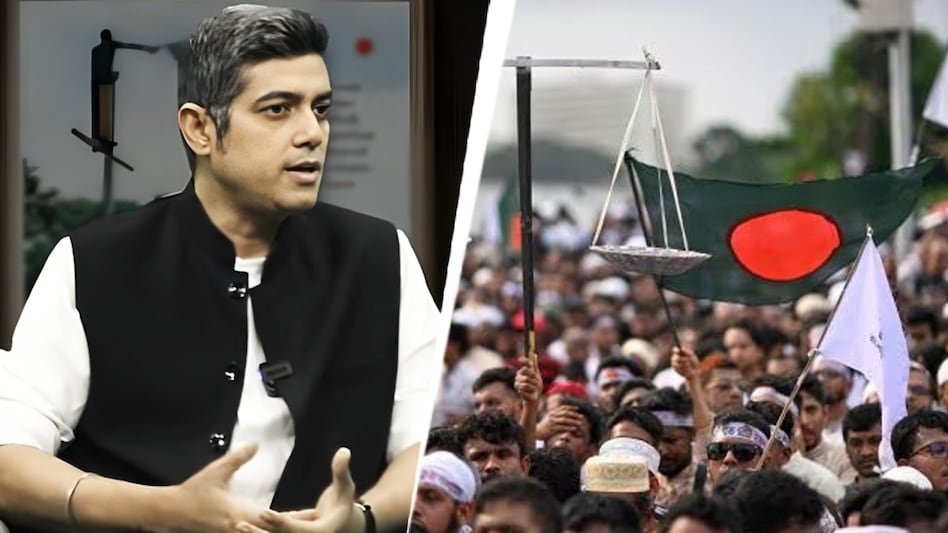
In a conversation with Business Today, Deep Halder, author of 'Inshallah Bangladesh: The Story of an Unfinished Revolution', unpacks what these developments mean for India, why Bangladesh's civil society has moved away from the 1971 ideals, and how the Jamaat is becoming the de facto system in Dhaka. The Bangladesh Nationalist Party (BNP) is widely expected to come to power next year as the Awami League has been kept out of the race, and Hasina is unlikely to return to Dhaka after her conviction. How do you see India-Bangladesh relations under the BNP?
If the BNP were to come to power, then India should hope this is a new BNP. Because the BNP government that came in 2001 had Jamaat as its partner. It was a rather trying period, especially for the Hindus in Bangladesh. There were massacres across Bangladesh. When the BNP lost power, a judicial commission was set up. One of the members of that commission was Mohammad Shahabuddin Chuppu, the current president of Bangladesh, whom I met in 2023, a year before the July protest. He said he had travelled across Bangladesh to record statements of victims of the massacres during the BNP-Jamaat period. He said there were villages he went to where some Hindu women had been raped so many times in a single night that they had lost their mind. I wrote that in 'Being Hindu in Bangladesh' and also in my new book 'Inshallah Bangladesh'. What Chuppu said has stuck with me. He may not repeat these words now that he is in a constitutional post and the political atmosphere in his country has changed. But he did say the BNP's stated aim has not been pro-India. But these are new times. India will have to do business with whichever party comes to power in Bangladesh. And the BNP, or whoever forms the next government, will also have to work with India.
The BNP has been trying hard to change its image. Tariq Rahman, acting chairman of the BNP, is putting up Facebook posts daily telling his party cadre they have to be better.
After the July revolution, there were large-scale attacks on Hindus, and others who were vulnerable-like the rank and file of the Awami League, were not spared, neither were people with money but without political patronage. There were months and months of extortion. Several BNP men were found guilty. You don't want that image before elections.
But only today I saw a video of a Salafi Islamist preacher talking about jihad across India, Bangladesh, and Pakistan. In the crowd, there was a BNP leader and a Jamaat leader. This is mid-November; elections are in February. So concerns remain about what a BNP government will be like.
You said BNP may come to power this time, but Jamaat will most likely be the new system- and that is what they are aiming for. Explain this.
First, we need to see if there will be a pre-poll arrangement with Jamaat. Right now, neither party is saying that. In fact, they seem to have moved away from each other. Whether there is a post-poll arrangement depends on how many seats the BNP gets. But Jamaat is pretty much the system in Bangladesh now. What Jamaat has smartly done is capture institutions-academia, media, judiciary, and law enforcement agencies. Most institutions are filled with Jamaat's people. So, irrespective of who comes to power, Jamaat becomes the de facto system. That's the scare. And the BNP coming to power may not change that immediately.
Jamaat has grown from strength to strength. Today, I spoke to former Minister of State for Information Mohammad Arafat. I said Jamaat is a pro-Pakistan outfit. He corrected me and said: 'Jamaat is not pro-Pakistani. Jamaat is a Pakistani political party operating inside Bangladesh.' Very interesting statement. So, if Jamaat has grown so powerful-not electorally, but otherwise-then just having a BNP prime minister may not change the situation on the ground.
So we have another Pakistan in the east again?
We are definitely seeing a Bangladesh that is moving away from the 1971 idea of Bangladesh. Today's Bangladesh has moved very far away from the 1971 idea and continues to do so.
Only Hasina could stop that slide. Jamaat and BNP won't?
Well, there are other political outfits, the 14 parties that were with the Awami League, the communist parties. But the slide is not just political-it's in civil society. Today's Bangladesh is not the Bangladesh of 1971. And this has been happening even during Hasina's time. Popular discontent against her resulted in very strong anti-India sentiment.
But the government-to-government engagement between Bangladesh and Pakistan wasn't as much earlier as we've seen recently?
Bangladesh cosying up to Pakistan is now out in the open - we're all seeing it. During Hasina's time, even though her government was a strong strategic ally of India under Prime Minister Modi, a big chunk of civil society had turned away from India. There was a lot of anti-India hate on the ground. Now it's getting a political expression. Politicians are openly anti-India. In fact, anti-India hate is politically profitable in today's Bangladesh. You can talk to India - of course, you have to - but you can't be openly pro-India in Bangladesh today.
So, will that force politicians to have a better relationship with Pakistan?
It's not forcing them-they are doing it on their own will. They are taking measures like visa-free travel to Pakistan. Pakistan's Navy Chief was in Bangladesh. There was a leaked tape of a Lashkar-e-Taiba commander talking about using Bangladesh to attack India. These things are happening in real time. They are vocally anti-India now.
So what are India's options?
India must be aware of the situation and not be caught unaware. It must treat Bangladesh with almost equal attention as Pakistan. Because now your eastern border is also hotting up. India can't see Bangladesh as a strategic ally anymore.
And what about Hindus? How will they be treated under BNP or Jamaat?
There are open calls for their genocide. BNP and Jamaat are reaching out to them, but Jamaat is also talking about implementing Sharia law. That may not happen immediately. Even Muslims in Bangladesh are not safe, forget the Hindus. There are attacks on Ahmadiyyas, on people who go to mazars, on Sufis. Those will most likely continue. But they'll also not stop Durga Puja, which is a very big festival for Bengali Hindus. But conversions inside villages will keep taking place. Atrocities will keep happening. Media will be forced not to report them. And like Dr Muhammad Yunus said, India will be blamed for spreading "fake news" if we report.
How would you describe Muhammad Yunus?
Very smart politician. Very bad statesman. He knows how to survive. He has survived this period. He is very smart. But he has empowered fundamentalists. He hasn't looked at the law and order situation in his country. He hasn't protected minorities. He hasn't stopped the slide into Islamic conservatism. But he has survived.
People call him a puppet. Whatever it is, surviving such volatility shows he knows politics. But the real question, a few years down the line, will be: where he has left Bangladesh. He has time and again listened to the fundamentalists. For example, there was a decision to have music teachers in primary school. Fundamentalists said no. The government backtracked. He bowed down. He has allowed Jamaat to have its say, thereby extending his stay.
With Hasina out of Dhaka, it's a very difficult period for India.
Very difficult. With Hasina, you knew who you were dealing with. Now you don't.
Has India's Northeast become vulnerable after Hasina's exit?
India is well-prepared to not have its chicken's neck cut off. But the audacity of a political leader to talk like that-this is not some fringe. This is Muhammad Yunus himself. That's glaring. Fringe groups might say such things, but here it's the premier of the country talking like that. India has to be very careful about Bangladesh.
A death sentence handed down by Bangladesh's International Crimes Tribunal has made Sheikh Hasina's return to Dhaka impossible for now. Hasina, who has been in New Delhi since last August, can challenge the tribunal's verdict in the Bangladesh Supreme Court, but only by appearing in person. It is highly unlikely she will do that.
With the Awami League's political activities banned and the party effectively barred from the next February elections, the political field is now left open to the Bangladesh Nationalist Party and the Jamaat-e-Islami Bangladesh - both regarded as pro-Pakistan. Under interim chief Muhammad Yunus, Dhaka has drifted closer to Islamabad since last August, fundamentalist groups have been emboldened, and open calls for Hindu genocide have made international headlines.
In a conversation with Business Today, Deep Halder, author of 'Inshallah Bangladesh: The Story of an Unfinished Revolution', unpacks what these developments mean for India, why Bangladesh's civil society has moved away from the 1971 ideals, and how the Jamaat is becoming the de facto system in Dhaka. The Bangladesh Nationalist Party (BNP) is widely expected to come to power next year as the Awami League has been kept out of the race, and Hasina is unlikely to return to Dhaka after her conviction. How do you see India-Bangladesh relations under the BNP?
If the BNP were to come to power, then India should hope this is a new BNP. Because the BNP government that came in 2001 had Jamaat as its partner. It was a rather trying period, especially for the Hindus in Bangladesh. There were massacres across Bangladesh. When the BNP lost power, a judicial commission was set up. One of the members of that commission was Mohammad Shahabuddin Chuppu, the current president of Bangladesh, whom I met in 2023, a year before the July protest. He said he had travelled across Bangladesh to record statements of victims of the massacres during the BNP-Jamaat period. He said there were villages he went to where some Hindu women had been raped so many times in a single night that they had lost their mind. I wrote that in 'Being Hindu in Bangladesh' and also in my new book 'Inshallah Bangladesh'. What Chuppu said has stuck with me. He may not repeat these words now that he is in a constitutional post and the political atmosphere in his country has changed. But he did say the BNP's stated aim has not been pro-India. But these are new times. India will have to do business with whichever party comes to power in Bangladesh. And the BNP, or whoever forms the next government, will also have to work with India.
The BNP has been trying hard to change its image. Tariq Rahman, acting chairman of the BNP, is putting up Facebook posts daily telling his party cadre they have to be better.
After the July revolution, there were large-scale attacks on Hindus, and others who were vulnerable-like the rank and file of the Awami League, were not spared, neither were people with money but without political patronage. There were months and months of extortion. Several BNP men were found guilty. You don't want that image before elections.
But only today I saw a video of a Salafi Islamist preacher talking about jihad across India, Bangladesh, and Pakistan. In the crowd, there was a BNP leader and a Jamaat leader. This is mid-November; elections are in February. So concerns remain about what a BNP government will be like.
You said BNP may come to power this time, but Jamaat will most likely be the new system- and that is what they are aiming for. Explain this.
First, we need to see if there will be a pre-poll arrangement with Jamaat. Right now, neither party is saying that. In fact, they seem to have moved away from each other. Whether there is a post-poll arrangement depends on how many seats the BNP gets. But Jamaat is pretty much the system in Bangladesh now. What Jamaat has smartly done is capture institutions-academia, media, judiciary, and law enforcement agencies. Most institutions are filled with Jamaat's people. So, irrespective of who comes to power, Jamaat becomes the de facto system. That's the scare. And the BNP coming to power may not change that immediately.
Jamaat has grown from strength to strength. Today, I spoke to former Minister of State for Information Mohammad Arafat. I said Jamaat is a pro-Pakistan outfit. He corrected me and said: 'Jamaat is not pro-Pakistani. Jamaat is a Pakistani political party operating inside Bangladesh.' Very interesting statement. So, if Jamaat has grown so powerful-not electorally, but otherwise-then just having a BNP prime minister may not change the situation on the ground.
So we have another Pakistan in the east again?
We are definitely seeing a Bangladesh that is moving away from the 1971 idea of Bangladesh. Today's Bangladesh has moved very far away from the 1971 idea and continues to do so.
Only Hasina could stop that slide. Jamaat and BNP won't?
Well, there are other political outfits, the 14 parties that were with the Awami League, the communist parties. But the slide is not just political-it's in civil society. Today's Bangladesh is not the Bangladesh of 1971. And this has been happening even during Hasina's time. Popular discontent against her resulted in very strong anti-India sentiment.
But the government-to-government engagement between Bangladesh and Pakistan wasn't as much earlier as we've seen recently?
Bangladesh cosying up to Pakistan is now out in the open - we're all seeing it. During Hasina's time, even though her government was a strong strategic ally of India under Prime Minister Modi, a big chunk of civil society had turned away from India. There was a lot of anti-India hate on the ground. Now it's getting a political expression. Politicians are openly anti-India. In fact, anti-India hate is politically profitable in today's Bangladesh. You can talk to India - of course, you have to - but you can't be openly pro-India in Bangladesh today.
So, will that force politicians to have a better relationship with Pakistan?
It's not forcing them-they are doing it on their own will. They are taking measures like visa-free travel to Pakistan. Pakistan's Navy Chief was in Bangladesh. There was a leaked tape of a Lashkar-e-Taiba commander talking about using Bangladesh to attack India. These things are happening in real time. They are vocally anti-India now.
So what are India's options?
India must be aware of the situation and not be caught unaware. It must treat Bangladesh with almost equal attention as Pakistan. Because now your eastern border is also hotting up. India can't see Bangladesh as a strategic ally anymore.
And what about Hindus? How will they be treated under BNP or Jamaat?
There are open calls for their genocide. BNP and Jamaat are reaching out to them, but Jamaat is also talking about implementing Sharia law. That may not happen immediately. Even Muslims in Bangladesh are not safe, forget the Hindus. There are attacks on Ahmadiyyas, on people who go to mazars, on Sufis. Those will most likely continue. But they'll also not stop Durga Puja, which is a very big festival for Bengali Hindus. But conversions inside villages will keep taking place. Atrocities will keep happening. Media will be forced not to report them. And like Dr Muhammad Yunus said, India will be blamed for spreading "fake news" if we report.
How would you describe Muhammad Yunus?
Very smart politician. Very bad statesman. He knows how to survive. He has survived this period. He is very smart. But he has empowered fundamentalists. He hasn't looked at the law and order situation in his country. He hasn't protected minorities. He hasn't stopped the slide into Islamic conservatism. But he has survived.
People call him a puppet. Whatever it is, surviving such volatility shows he knows politics. But the real question, a few years down the line, will be: where he has left Bangladesh. He has time and again listened to the fundamentalists. For example, there was a decision to have music teachers in primary school. Fundamentalists said no. The government backtracked. He bowed down. He has allowed Jamaat to have its say, thereby extending his stay.
With Hasina out of Dhaka, it's a very difficult period for India.
Very difficult. With Hasina, you knew who you were dealing with. Now you don't.
Has India's Northeast become vulnerable after Hasina's exit?
India is well-prepared to not have its chicken's neck cut off. But the audacity of a political leader to talk like that-this is not some fringe. This is Muhammad Yunus himself. That's glaring. Fringe groups might say such things, but here it's the premier of the country talking like that. India has to be very careful about Bangladesh.