
J.P. Morgan India sharpens focus on mid-cap firms to deepen market play
From assisting in big-ticket IPOs to focussing on mid-cap firms, J.P. Morgan India is looking to deepen its engagement in India
Surabhi
- Dec 23, 2024,
- Updated Dec 23, 2024 8:03 PM IST
In 2025, J.P. Morgan India is set to complete 80 years in the country. In that time, it has not just expanded its operations here but continues to bet big on the economy and work on further deepening its engagement with Indian clients.
Hey!
Already a subscriber? Sign In
THIS IS A PREMIUM STORY FROM BUSINESS TODAY.
Subscribe to Business Today Digital and continue enjoying India's premier business offering uninterrupted
only FOR
₹999 / Year
Unlimited Digital Access + Ad Lite Experience
Cancel Anytime
-
 Unlimited access to Business Today website
 -
 Exclusive insights on Corporate India's working, every quarter
 -
 Access to our special editions, features, and priceless archives
 -
 Get front-seat access to events such as BT Best Banks, Best CEOs and Mindrush
In 2025, J.P. Morgan India is set to complete 80 years in the country. In that time, it has not just expanded its operations here but continues to bet big on the economy and work on further deepening its engagement with Indian clients.
J.P. Morgan India has once again emerged as the winner in the Best Foreign Bank category in the BT-KPMG Survey of India’s Best Banks and NBFCs for the fourth year in a row this year. It has come out on top across parameters like quality of earnings, strength of employees in terms of productivity and efficiency, and has also shown strong performance in criteria such as three-year CAGR of total deposits, absolute increase in CASA (current account savings account) market share, and the growth in operating profit.
Advertisement
The bank focuses on the wholesale segment in the country with three key themes of Indian corporates, financial institutions and multinational companies (MNCs) operating here. And within this, it wants to focus more on mid-cap firms, those in the new economy, as well as companies working on energy transition.
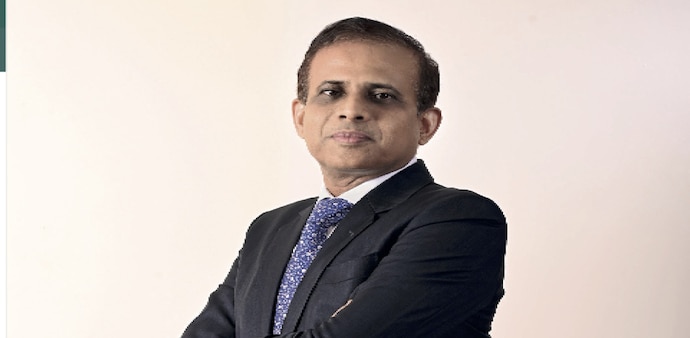
“From a client engagement perspective, we continue to grow deeper across both listed companies and MNCs,” says Kaustubh Kulkarni, Senior Country Officer-India and Vice Chairman-Asia Pacific, J.P. Morgan.
The focus on mid-caps is relatively new. “Our mid-cap business is expected to grow at over 30% for the next few years, buoyed by the higher growth rate of Indian mid-size companies,” says Kulkarni. In the new economy and energy transition segment, the firms it is looking at include digital consumer businesses, fintech, and payments firms, among others, Kulkarni says.
Advertisement
While deal activity has remained slow in the recent past, J.P. Morgan India has been at the forefront of two of the largest listings on the Indian bourses this year. These include the initial public offering (IPO) of Hyundai Motor India, which was the largest listing in the country, raising $3.3 billion. It also shepherded the IPO of online food delivery platform Swiggy, which raised $1.35 billion. And the bank continues to work on several such transactions.
“We were the primary bank for the Swiggy IPO. We were working with Swiggy through various iterations for the last three to four years, and it finally culminated in the IPO,” Kulkarni says, adding that the bank plans to assist in more such IPOs. “If you look at 2025, our team is working on 15 IPOs. And 40% or 50% of them are in effectively new-age or new business companies,” he says.
Advertisement
Hyundai is a classic example, where a large global strategic company which has built a substantial business in India is also looking at capital markets presence, diversifying its shareholder base, connecting more with HNI and retail customers through the stock markets. “What we are saying is that India is moving reasonably quickly on investors’ radar as an active investment destination—both for strategic and financial investors; it is an important destination for raising capital and an attractive place to build businesses at scale in a reasonably short period of time,” Kulkarni elaborates.
Another significant development is the inclusion of Indian government bonds in the J.P. Morgan Government Bond Index-Emerging Markets this June. Kulkarni underlines that global investors on the credit side are quite keen to get exposure to alternate government securities, and, in that context, India is a very important part of an Emerging Market Index.
Indian bonds have a maximum weight of 10% on the index. “We have already seen $8 billion post-close which have come in through the investments and the rest will continue to come,” Kulkarni says, adding that this is a good first step.
Advertisement
Ask Kulkarni about the plans going forward, and he points out that there is intense competition amongst foreign banks, which means there’s very little room for error. “In the overall theme, what we see is that India is going to offer a very predictable growth pattern for at least the medium term of five to six years,” he asserts.
Kulkarni is also optimistic about ties between India and the US and believes that the dynamics between the two present a great opportunity for the lender.
The return of Donald Trump as the President of the US could also benefit India. According to a note by J.P. Morgan economists, India will be the least impacted by the Trump administration compared to other Asian countries they studied. “This actually could be a good opportunity for India and Indian domestic companies to continue strengthening their structural alignment, investments, and manufacturing partnerships,” Kulkarni says.
Ask him if this signals good tidings for the two countries as well as for J.P. Morgan India, and Kulkarni signs off saying in the affirmative. “These are good times.”
@surabhi_prasad
Read more!