
Jyotiraditya Scindia explains why satellite communication services are yet to roll out in India
According to Scindia, satcom licence holders must ensure that sensitive data remains within India and that international gateways comply with security agency norms. This includes lawful interception capabilities and data localisation requirements.
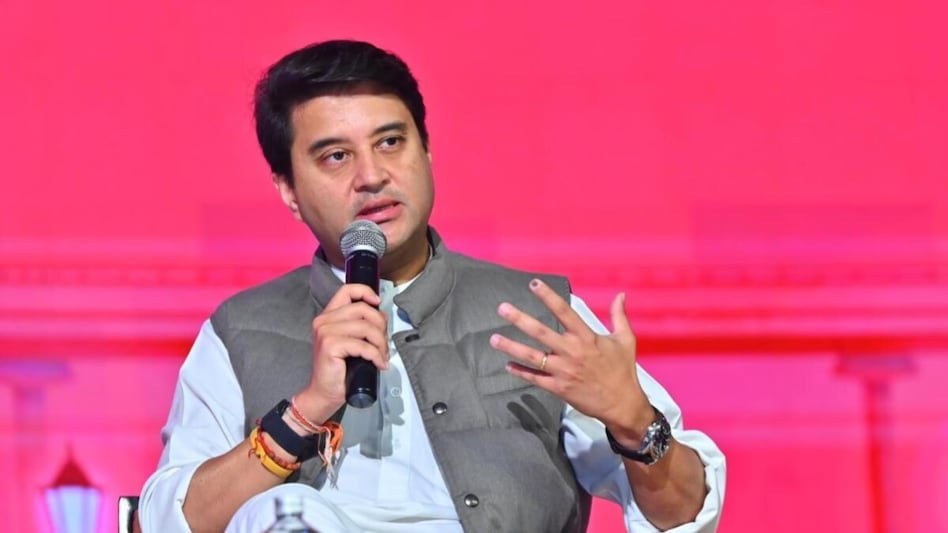
- Dec 28, 2025,
- Updated Dec 28, 2025 6:08 PM IST
India is edging closer to rolling out satellite communication (satcom) services, but security clearances and unresolved spectrum pricing issues remain the final hurdles. Union Telecom Minister Jyotiraditya Scindia has made it clear that players such as Elon Musk-owned Starlink, Eutelsat OneWeb, and Reliance Jio’s satellite arm will be allowed to operate only after they meet stringent national security requirements and the government finalises how much spectrum will cost.
Satellite internet promises high-speed connectivity in remote and underserved regions where laying fibre or expanding mobile towers is not viable. Here’s a breakdown of what’s happening, why it matters, and how it ties into the broader telecom landscape.
Security compliance
According to Scindia, satcom licence holders must ensure that sensitive data remains within India and that international gateways comply with security agency norms. This includes lawful interception capabilities and data localisation requirements.
To test this, the government has already allocated provisional spectrum to companies so they can demonstrate their ability to comply with these security conditions. Only after clearance will full-scale commercial services be allowed.
DoT vs TARI: What’s the disagreement?
The Department of Telecommunications (DoT) and the Telecom Regulatory Authority of India (TRAI) are still not on the same page about how spectrum for satcom services should be priced.
TRAI recently rejected several DoT proposals, including:
- Raising the annual spectrum usage charge from 4% to 5% of adjusted gross revenue
- Imposing a Rs 500 per-connection fee in urban areas
With these differences unresolved, DoT is expected to present its case before the Digital Communication Commission (DCC) — the apex decision-making body in telecom. The DCC could either settle the matter or recommend taking the final decision to the Cabinet.
Until pricing is locked in, full-scale spectrum allocation to Starlink, OneWeb, and Jio’s satcom venture remains on hold.
What did the minister say about Vodafone Idea?
Alongside satcom, Scindia also addressed concerns around Vodafone Idea (VIL), India’s financially stressed telecom operator.
VIL’s total liabilities to the government stand at around Rs 2 lakh crore, including Rs 1.19 lakh crore in spectrum dues. The company has warned that without relief, the government risks losing recoverable dues, equity value, and future AGR payments.
However, Scindia stressed that no fresh relief has been granted so far. The government has already converted part of its dues — about Rs 37,000 crore — into equity, giving it a 49% stake in the company.
In the absence of further relief, VIL faces payments of about Rs 18,000 crore annually from March 2026 for six years, far exceeding its annual operating cash flows of roughly Rs 8,400-9,200 crore.
Why VIL’s survival matters to the govt
Vodafone Idea has repeatedly warned that if its operations are threatened, India could slide into a duopoly, leading to higher telecom tariffs.
Scindia pushed back against that concern, arguing that India’s telecom market remains robust:
- Four operators are currently active
- Vodafone Idea serves about 210 million users
- BSNL serves close to 100 million users
“Very few countries in the world can boast of four telecom providers at this scale,” the minister said, adding that the government wants to preserve this competitive structure.
(With inputs from PTI)
India is edging closer to rolling out satellite communication (satcom) services, but security clearances and unresolved spectrum pricing issues remain the final hurdles. Union Telecom Minister Jyotiraditya Scindia has made it clear that players such as Elon Musk-owned Starlink, Eutelsat OneWeb, and Reliance Jio’s satellite arm will be allowed to operate only after they meet stringent national security requirements and the government finalises how much spectrum will cost.
Satellite internet promises high-speed connectivity in remote and underserved regions where laying fibre or expanding mobile towers is not viable. Here’s a breakdown of what’s happening, why it matters, and how it ties into the broader telecom landscape.
Security compliance
According to Scindia, satcom licence holders must ensure that sensitive data remains within India and that international gateways comply with security agency norms. This includes lawful interception capabilities and data localisation requirements.
To test this, the government has already allocated provisional spectrum to companies so they can demonstrate their ability to comply with these security conditions. Only after clearance will full-scale commercial services be allowed.
DoT vs TARI: What’s the disagreement?
The Department of Telecommunications (DoT) and the Telecom Regulatory Authority of India (TRAI) are still not on the same page about how spectrum for satcom services should be priced.
TRAI recently rejected several DoT proposals, including:
- Raising the annual spectrum usage charge from 4% to 5% of adjusted gross revenue
- Imposing a Rs 500 per-connection fee in urban areas
With these differences unresolved, DoT is expected to present its case before the Digital Communication Commission (DCC) — the apex decision-making body in telecom. The DCC could either settle the matter or recommend taking the final decision to the Cabinet.
Until pricing is locked in, full-scale spectrum allocation to Starlink, OneWeb, and Jio’s satcom venture remains on hold.
What did the minister say about Vodafone Idea?
Alongside satcom, Scindia also addressed concerns around Vodafone Idea (VIL), India’s financially stressed telecom operator.
VIL’s total liabilities to the government stand at around Rs 2 lakh crore, including Rs 1.19 lakh crore in spectrum dues. The company has warned that without relief, the government risks losing recoverable dues, equity value, and future AGR payments.
However, Scindia stressed that no fresh relief has been granted so far. The government has already converted part of its dues — about Rs 37,000 crore — into equity, giving it a 49% stake in the company.
In the absence of further relief, VIL faces payments of about Rs 18,000 crore annually from March 2026 for six years, far exceeding its annual operating cash flows of roughly Rs 8,400-9,200 crore.
Why VIL’s survival matters to the govt
Vodafone Idea has repeatedly warned that if its operations are threatened, India could slide into a duopoly, leading to higher telecom tariffs.
Scindia pushed back against that concern, arguing that India’s telecom market remains robust:
- Four operators are currently active
- Vodafone Idea serves about 210 million users
- BSNL serves close to 100 million users
“Very few countries in the world can boast of four telecom providers at this scale,” the minister said, adding that the government wants to preserve this competitive structure.
(With inputs from PTI)