
Karnataka charts $20 billion quantum push, aims to be Asia's powerhouse by 2035
Anchored in talent development, infrastructure, and global collaboration, the roadmap is led by the Department of Science & Technology and aligns with India’s National Quantum Mission (NQM).
- Jul 31, 2025,
- Updated Jul 31, 2025 4:08 PM IST
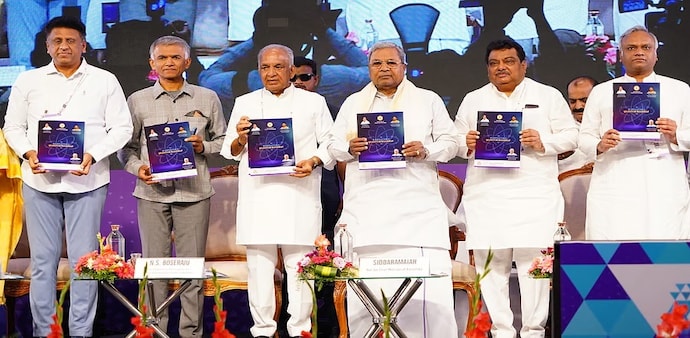
Karnataka has launched a bold quantum technology roadmap to establish itself as Asia’s leading hub in the field, aiming to contribute $20 billion to the state economy by 2035. Anchored in talent development, infrastructure, and global collaboration, the roadmap is led by the Department of Science & Technology and aligns with India’s National Quantum Mission (NQM).
At the core is the Karnataka Quantum Mission (KQM), supported by a dedicated state policy and the creation of a Quantum Hardware Park in Bengaluru — housing a pilot fabrication unit and cryogenic labs to accelerate hardware innovation. The state’s strategy is structured in four progressive phases:
Phase 1: Foundation, Infrastructure & Capacity Building
Karnataka will build on existing strengths such as IISc’s Quantum Research Park (QuRP) to drive collaboration between academia, industry, and startups. A 1000-qubit quantum computer program will kick off at IISc and other state institutions.
Initiatives include:
- MoUs with national quantum hubs to showcase startups at QuRP
- Partnerships with global universities and MNCs
- Launch of quantum skilling programs across 20+ engineering colleges
- Operationalising four Quantum Innovation Zones across core themes
- Early pilots in healthcare, fintech, and cybersecurity using quantum encryption and sensing
- Hosting the India Quantum Conclave and establishing a quantum testbed
- Filing 100+ patents and enabling 50 startups to develop MVPs through state and NQM grants
Phase 2: Operationalising, R&D & Pilots
This phase will focus on deploying pilot projects, advancing research infrastructure, and solidifying quantum use cases. Karnataka will also launch PhD fellowships and specialized training for students and educators to expand the talent pipeline.
Phase 3: Manufacturing & Commercialisation
Quantum sensors and materials will enter mass production. A Quantum Venture Capital Fund will support growth-stage startups, while “Quantum-as-a-Service” (QaaS) platforms and a dedicated Quantum Data Centre cluster will be established to scale research and industry adoption.
Phase 4: Quantum Powerhouse & Export Destination
Karnataka aims to become a global quantum exporter and create over 10,000 high-tech jobs. Plans include launching degree programs in quantum computing, joining global supply chains, and integrating quantum-AI solutions for applications like drug discovery and climate modeling. The state targets recognition as the “Quantum Capital of Asia.”
Launched in April 2023 with a budget outlay of ₹6,003 crore (approximately $730 million), the National Quantum Mission (NQM) aims to position India as a global leader in quantum technologies by developing core capacities across the entire value chain.
Karnataka has launched a bold quantum technology roadmap to establish itself as Asia’s leading hub in the field, aiming to contribute $20 billion to the state economy by 2035. Anchored in talent development, infrastructure, and global collaboration, the roadmap is led by the Department of Science & Technology and aligns with India’s National Quantum Mission (NQM).
At the core is the Karnataka Quantum Mission (KQM), supported by a dedicated state policy and the creation of a Quantum Hardware Park in Bengaluru — housing a pilot fabrication unit and cryogenic labs to accelerate hardware innovation. The state’s strategy is structured in four progressive phases:
Phase 1: Foundation, Infrastructure & Capacity Building
Karnataka will build on existing strengths such as IISc’s Quantum Research Park (QuRP) to drive collaboration between academia, industry, and startups. A 1000-qubit quantum computer program will kick off at IISc and other state institutions.
Initiatives include:
- MoUs with national quantum hubs to showcase startups at QuRP
- Partnerships with global universities and MNCs
- Launch of quantum skilling programs across 20+ engineering colleges
- Operationalising four Quantum Innovation Zones across core themes
- Early pilots in healthcare, fintech, and cybersecurity using quantum encryption and sensing
- Hosting the India Quantum Conclave and establishing a quantum testbed
- Filing 100+ patents and enabling 50 startups to develop MVPs through state and NQM grants
Phase 2: Operationalising, R&D & Pilots
This phase will focus on deploying pilot projects, advancing research infrastructure, and solidifying quantum use cases. Karnataka will also launch PhD fellowships and specialized training for students and educators to expand the talent pipeline.
Phase 3: Manufacturing & Commercialisation
Quantum sensors and materials will enter mass production. A Quantum Venture Capital Fund will support growth-stage startups, while “Quantum-as-a-Service” (QaaS) platforms and a dedicated Quantum Data Centre cluster will be established to scale research and industry adoption.
Phase 4: Quantum Powerhouse & Export Destination
Karnataka aims to become a global quantum exporter and create over 10,000 high-tech jobs. Plans include launching degree programs in quantum computing, joining global supply chains, and integrating quantum-AI solutions for applications like drug discovery and climate modeling. The state targets recognition as the “Quantum Capital of Asia.”
Launched in April 2023 with a budget outlay of ₹6,003 crore (approximately $730 million), the National Quantum Mission (NQM) aims to position India as a global leader in quantum technologies by developing core capacities across the entire value chain.