
Krishnaswamy Sundarji: The General Pakistan feared would split it in half
This fear surfaced during Operation Brasstacks, a military exercise that involved the country's largest-ever troop mobilisation.
- Apr 27, 2026,
- Updated Apr 27, 2026 3:06 PM IST
One and a half decades after Bangladesh's creation, Pakistan was gripped by fears of another break-up. If Bangladesh had been a vertical split, this time the concern was of a horizontal one -- between Bahawalpur in the north and Khairpur in the south.
This fear surfaced during Operation Brasstacks, a military exercise that involved the country's largest-ever troop mobilisation in peacetime. The idea of the exercise took root in the summer of 1986, when, during a military briefing, then Prime Minister Rajiv Gandhi asked whether India's war mobilisation capacity had ever been tested. When told it had not, Gandhi gave the go-ahead for a large-scale exercise that would test the country's ability to mobilise resources for war.
Don't Miss: 40,000 drones a month: Ex-Army chief Naravane lays out scale India needs for future wars
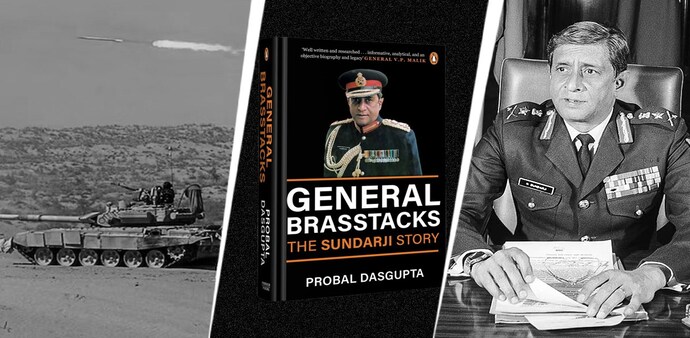
After the PM's clearance, the ball was in the army chief's court. The chief was Krishnaswami Sundarji - the grand strategist who created India's first mechanised force and began modernising the Army.
Military historian Probal Dasgupta, in his new book General Brasstacks - a biography of Sundarji - details the scale and strategic intent behind the exercise.
The 'thinking general', as Sundarji was known, was also involved in planning Operation Blue Star and backed the deployment of the Indian Peace Keeping Force in Sri Lanka. Dasgupta's book also examines in detail the decisions that drew the army into confrontations with Jarnail Singh Bhindranwale at the Golden Temple and Velupillai Prabhakaran in the jungles of Jaffna.
Having seen Pakistan's military adventures in 1965, in East Pakistan, and later in Punjab, where it fuelled militancy, Sundarji was aware of the threat from the western front. He wanted to test the Army's ability to defend against a Pakistani offensive, "and then potentially turn the tide by going into Pakistan."
According to the book, Rajiv Gandhi wanted the exercise to be larger than any seen before in India.
Operation Brasstacks had four phases. Phase I, conducted in May and June, was a map-based exercise held in Delhi. Phase II, in November 1986, was a computerised war game combined with sand model simulations. Phase III focused on evolving standard operating procedures and doctrines in areas such as communications, electronic warfare, and amphibious operations.
The fourth phase involved the large-scale movement of troops, armour, and logistics. Planned for February–March 1987, it simulated a conflict between Northern and Southern forces (representing India and Pakistan) over an area of roughly 160 by 240 km, parallel to the international border.
As per protocol, India's DGMO informed his Pakistani counterpart that troops would be moved to Rajasthan for the exercise. But Pakistan grew increasingly wary of the scale and duration of the mobilisation.
At the SAARC summit in Kathmandu in November that year, Gandhi assured Pakistan's Prime Minister Muhammad Junejo that the exercise was not aimed at an attack.
At the same time, Pakistan conducted its own exercises -- Saf-e-Shikhan in the south and Flying Horse in the north. Saf-e-Shikhan, involving Pakistan's Army Reserve South, was concentrated in the Bahawalpur-Marot sector. Flying Horse, involving the Army Reserve North, took place in the Ravi-Chenab corridor.
Though these exercises concluded by December, Indian intelligence picked up that Pakistan's southern reserve did not pull back to peacetime locations and remained forward deployed, in combat readiness.
The Indian commanders thought this was a natural response of an adversary to monitor India's movements. However, the author writes, Pakistan's army was being positioned to defend against an Indian attack.
"The change in thinking manifested Pakistan's growing anxiety that India could turn the Brasstacks exercise into an aggressive military operation and power its way inside Pakistan, splitting the country into two," Dasgupta writes.
Brasstacks was designed to test offensive doctrines involving combined arms operations. Live ammunition was used, and large numbers of tanks and mechanised platforms were transported by rail to the exercise area.
The operation had grown to be on a scale the world had not seen since the Second World War, four decades earlier, Dasgupta states. "The magnitude of the operation was bigger than a NATO exercise."
Sundarji, who served as army chief from February 1986 to May 1988, sought to surpass NATO's Autumn Forge, which involved about 1.25 lakh troops. Brasstacks aimed to mobilise over 5 lakh troops - nearly four times that number.
Strategic analyst Shuja Nawaz, citing a Pakistani GHQ document, writes in his book that Brasstacks was "designed to bisect Pakistani territory by driving through the centre of the country in a 500-kilometre-long corridor roughly bounded by the towns of Bahawalpur in the north and Khairpur in the south."
As Indian forces massed along the border, American military attachés in New Delhi assessed that Washington would have limited ability to restrain India if hostilities broke out. "If fighting broke out, Pakistan would last no more than a month," they said, unless India made a major error or halted operations.
Lt Gen PN Hoon, then GOC-in-C Western Command, believed Brasstacks had the "larger aim of waging a war." He also writes that he found out the Prime Minister was not aware that the "exercise had developed into a war-like situation."
Dasgupta also mentions a parallel plan - Operation Trident - aimed at capturing Gilgit and Skardu in PoK, though it was eventually shelved as it would have involved overcoming established Pakistani defences en route to Skardu. Operation Trident's other objective was to capture Pakistan territory in Punjab.
However, the book states, President Zia-ul-Haq conveyed to India that if his country was attacked, Pakistan was capable of inflicting serious damage on India.
As Pakistan mobilised forces, Sundarji ordered Indian forces into defensive deployment along the border. This move escalated the situation, and now "the two sides were hurtling dangerously close to war".
The PMO then, to diffuse the tension, directed the army chief to explain to the press the reason behind the additional mobilisation. In January 1987, Arun Singh and Sundarji spoke about India's willingness to negotiate a joint withdrawal from the position.
What unsettled Pakistan most was the scale and location of Brasstacks, Dasgupta writes. Zia feared that a swift Indian thrust into Pakistani territory could trigger internal fault lines, potentially fuelling separatist movements that were gaining ground in Sindh and Balochistan.
American scholars Kenneth Waltz and Robert Art also believed that "Sundarji's strategy was to provoke Pakistan to respond, which then would have provided India the excuse to go on an offensive against Pakistan to destroy its atomic bomb projects in a series of preventive strikes."
Sundarji, however, maintained that India had no intention of attacking Pakistan in January but was prepared to make deep thrusts into Pakistan if the latter attacked.
"Brasstacks was a show of strength," Dasgupta writes, "that demonstrated India's ability to make deep inroads into Pakistan."
One and a half decades after Bangladesh's creation, Pakistan was gripped by fears of another break-up. If Bangladesh had been a vertical split, this time the concern was of a horizontal one -- between Bahawalpur in the north and Khairpur in the south.
This fear surfaced during Operation Brasstacks, a military exercise that involved the country's largest-ever troop mobilisation in peacetime. The idea of the exercise took root in the summer of 1986, when, during a military briefing, then Prime Minister Rajiv Gandhi asked whether India's war mobilisation capacity had ever been tested. When told it had not, Gandhi gave the go-ahead for a large-scale exercise that would test the country's ability to mobilise resources for war.
Don't Miss: 40,000 drones a month: Ex-Army chief Naravane lays out scale India needs for future wars
After the PM's clearance, the ball was in the army chief's court. The chief was Krishnaswami Sundarji - the grand strategist who created India's first mechanised force and began modernising the Army.
Military historian Probal Dasgupta, in his new book General Brasstacks - a biography of Sundarji - details the scale and strategic intent behind the exercise.
The 'thinking general', as Sundarji was known, was also involved in planning Operation Blue Star and backed the deployment of the Indian Peace Keeping Force in Sri Lanka. Dasgupta's book also examines in detail the decisions that drew the army into confrontations with Jarnail Singh Bhindranwale at the Golden Temple and Velupillai Prabhakaran in the jungles of Jaffna.
Having seen Pakistan's military adventures in 1965, in East Pakistan, and later in Punjab, where it fuelled militancy, Sundarji was aware of the threat from the western front. He wanted to test the Army's ability to defend against a Pakistani offensive, "and then potentially turn the tide by going into Pakistan."
According to the book, Rajiv Gandhi wanted the exercise to be larger than any seen before in India.
Operation Brasstacks had four phases. Phase I, conducted in May and June, was a map-based exercise held in Delhi. Phase II, in November 1986, was a computerised war game combined with sand model simulations. Phase III focused on evolving standard operating procedures and doctrines in areas such as communications, electronic warfare, and amphibious operations.
The fourth phase involved the large-scale movement of troops, armour, and logistics. Planned for February–March 1987, it simulated a conflict between Northern and Southern forces (representing India and Pakistan) over an area of roughly 160 by 240 km, parallel to the international border.
As per protocol, India's DGMO informed his Pakistani counterpart that troops would be moved to Rajasthan for the exercise. But Pakistan grew increasingly wary of the scale and duration of the mobilisation.
At the SAARC summit in Kathmandu in November that year, Gandhi assured Pakistan's Prime Minister Muhammad Junejo that the exercise was not aimed at an attack.
At the same time, Pakistan conducted its own exercises -- Saf-e-Shikhan in the south and Flying Horse in the north. Saf-e-Shikhan, involving Pakistan's Army Reserve South, was concentrated in the Bahawalpur-Marot sector. Flying Horse, involving the Army Reserve North, took place in the Ravi-Chenab corridor.
Though these exercises concluded by December, Indian intelligence picked up that Pakistan's southern reserve did not pull back to peacetime locations and remained forward deployed, in combat readiness.
The Indian commanders thought this was a natural response of an adversary to monitor India's movements. However, the author writes, Pakistan's army was being positioned to defend against an Indian attack.
"The change in thinking manifested Pakistan's growing anxiety that India could turn the Brasstacks exercise into an aggressive military operation and power its way inside Pakistan, splitting the country into two," Dasgupta writes.
Brasstacks was designed to test offensive doctrines involving combined arms operations. Live ammunition was used, and large numbers of tanks and mechanised platforms were transported by rail to the exercise area.
The operation had grown to be on a scale the world had not seen since the Second World War, four decades earlier, Dasgupta states. "The magnitude of the operation was bigger than a NATO exercise."
Sundarji, who served as army chief from February 1986 to May 1988, sought to surpass NATO's Autumn Forge, which involved about 1.25 lakh troops. Brasstacks aimed to mobilise over 5 lakh troops - nearly four times that number.
Strategic analyst Shuja Nawaz, citing a Pakistani GHQ document, writes in his book that Brasstacks was "designed to bisect Pakistani territory by driving through the centre of the country in a 500-kilometre-long corridor roughly bounded by the towns of Bahawalpur in the north and Khairpur in the south."
As Indian forces massed along the border, American military attachés in New Delhi assessed that Washington would have limited ability to restrain India if hostilities broke out. "If fighting broke out, Pakistan would last no more than a month," they said, unless India made a major error or halted operations.
Lt Gen PN Hoon, then GOC-in-C Western Command, believed Brasstacks had the "larger aim of waging a war." He also writes that he found out the Prime Minister was not aware that the "exercise had developed into a war-like situation."
Dasgupta also mentions a parallel plan - Operation Trident - aimed at capturing Gilgit and Skardu in PoK, though it was eventually shelved as it would have involved overcoming established Pakistani defences en route to Skardu. Operation Trident's other objective was to capture Pakistan territory in Punjab.
However, the book states, President Zia-ul-Haq conveyed to India that if his country was attacked, Pakistan was capable of inflicting serious damage on India.
As Pakistan mobilised forces, Sundarji ordered Indian forces into defensive deployment along the border. This move escalated the situation, and now "the two sides were hurtling dangerously close to war".
The PMO then, to diffuse the tension, directed the army chief to explain to the press the reason behind the additional mobilisation. In January 1987, Arun Singh and Sundarji spoke about India's willingness to negotiate a joint withdrawal from the position.
What unsettled Pakistan most was the scale and location of Brasstacks, Dasgupta writes. Zia feared that a swift Indian thrust into Pakistani territory could trigger internal fault lines, potentially fuelling separatist movements that were gaining ground in Sindh and Balochistan.
American scholars Kenneth Waltz and Robert Art also believed that "Sundarji's strategy was to provoke Pakistan to respond, which then would have provided India the excuse to go on an offensive against Pakistan to destroy its atomic bomb projects in a series of preventive strikes."
Sundarji, however, maintained that India had no intention of attacking Pakistan in January but was prepared to make deep thrusts into Pakistan if the latter attacked.
"Brasstacks was a show of strength," Dasgupta writes, "that demonstrated India's ability to make deep inroads into Pakistan."