
'Learn more about India': Govt pushes back at Dutch PM's remarks on press freedom, minorities
Ministry of External Affairs Secretary (West) Sibi George addressed the media directly, arguing that criticism of India typically reflected a gap in knowledge rather than a genuine understanding of the country
- May 18, 2026,
- Updated May 18, 2026 11:09 AM IST
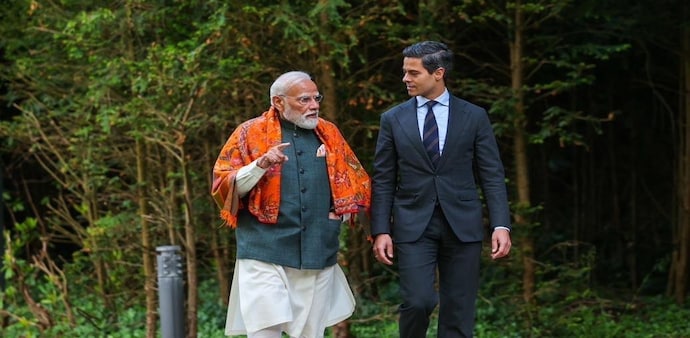
A Dutch journalist's question at The Hague triggered one of the more pointed diplomatic exchanges of Prime Minister Narendra Modi's visit to the Netherlands. When asked about the absence of a joint press interaction and concerns over media freedom and minority rights in India, the Indian government pushed back, firmly and at length.
Ministry of External Affairs Secretary (West) Sibi George addressed the media directly, arguing that criticism of India typically reflected a gap in knowledge rather than a genuine understanding of the country. "We face these kinds of questions basically because of the lack of understanding of the person who asks the question," he said.
DON'T MISS: PM Modi pitches five-sector India vision to Europe's biggest boardrooms
India's democratic and civilisational case
George laid out a detailed defence of India's pluralistic character, beginning with its scale and antiquity. "India is a country of 1.4 billion people, the largest populated country in the world. A country of civilisation of more than 5000 years old. It's a diverse country – diversity in terms of culture, diversity in terms of languages, diversity in terms of food, diversity in terms of religion," he said.
He highlighted that four major world religions, Hinduism, Buddhism, Jainism, and Sikhism, originated in India. "There is no other country in the world where four religions have originated," he said, before noting the long and uninterrupted presence of other faiths as well. Jewish communities, he said, had lived in India for over 2,500 years without persecution. "Christianity came to India immediately after the resurrection of Jesus Christ and continued to flourish in India. Islam came to India during the time of Prophet Muhammad himself and flourished in India," he added.
On democracy and minority growth
George also pointed to India's electoral participation as evidence of the country's democratic health. "Recently, we had elections. You need to know what the level of participation was. More than 90 per cent of the electorate voted. This is the beauty of India," he said.
He argued that India had achieved economic progress and poverty reduction through democratic means alone. "We did not go for violence to eliminate poverty. We went through the democratic process to eliminate poverty," he said.
His sharpest statistical rebuttal came on the question of minorities. "When we became independent, the minority population in India was 11 per cent. Now it is more than 20 per cent. Name a country where the population of minorities has gone up? You won't find it anywhere other than India," George said, adding: "This is the beauty of India. I would request you to learn more about India so that you will have more appreciation of what India is, and how it is progressing."
What the Dutch PM actually said
The exchange was sparked by reports that Dutch Prime Minister Rob Jetten had raised concerns about India ahead of his meeting with PM Modi. According to Dutch newspaper De Volkskrant, Jetten said his government had concerns "not just about press freedom" but also about "the rights of minorities, which are under severe pressure there," adding that such issues were "regularly raised" with the Indian government.
A Dutch journalist's question at The Hague triggered one of the more pointed diplomatic exchanges of Prime Minister Narendra Modi's visit to the Netherlands. When asked about the absence of a joint press interaction and concerns over media freedom and minority rights in India, the Indian government pushed back, firmly and at length.
Ministry of External Affairs Secretary (West) Sibi George addressed the media directly, arguing that criticism of India typically reflected a gap in knowledge rather than a genuine understanding of the country. "We face these kinds of questions basically because of the lack of understanding of the person who asks the question," he said.
DON'T MISS: PM Modi pitches five-sector India vision to Europe's biggest boardrooms
India's democratic and civilisational case
George laid out a detailed defence of India's pluralistic character, beginning with its scale and antiquity. "India is a country of 1.4 billion people, the largest populated country in the world. A country of civilisation of more than 5000 years old. It's a diverse country – diversity in terms of culture, diversity in terms of languages, diversity in terms of food, diversity in terms of religion," he said.
He highlighted that four major world religions, Hinduism, Buddhism, Jainism, and Sikhism, originated in India. "There is no other country in the world where four religions have originated," he said, before noting the long and uninterrupted presence of other faiths as well. Jewish communities, he said, had lived in India for over 2,500 years without persecution. "Christianity came to India immediately after the resurrection of Jesus Christ and continued to flourish in India. Islam came to India during the time of Prophet Muhammad himself and flourished in India," he added.
On democracy and minority growth
George also pointed to India's electoral participation as evidence of the country's democratic health. "Recently, we had elections. You need to know what the level of participation was. More than 90 per cent of the electorate voted. This is the beauty of India," he said.
He argued that India had achieved economic progress and poverty reduction through democratic means alone. "We did not go for violence to eliminate poverty. We went through the democratic process to eliminate poverty," he said.
His sharpest statistical rebuttal came on the question of minorities. "When we became independent, the minority population in India was 11 per cent. Now it is more than 20 per cent. Name a country where the population of minorities has gone up? You won't find it anywhere other than India," George said, adding: "This is the beauty of India. I would request you to learn more about India so that you will have more appreciation of what India is, and how it is progressing."
What the Dutch PM actually said
The exchange was sparked by reports that Dutch Prime Minister Rob Jetten had raised concerns about India ahead of his meeting with PM Modi. According to Dutch newspaper De Volkskrant, Jetten said his government had concerns "not just about press freedom" but also about "the rights of minorities, which are under severe pressure there," adding that such issues were "regularly raised" with the Indian government.