
Look closer, Mr Bessent: Ex-US official reminds EU spent €21.9 bn on Russian oil
EU imports of Russian fossil fuels totalled EUR 21.9 billion in the third year of the invasion, only a 6% drop in value and a mere 1% fall in volume compared to the previous year.
- Sep 8, 2025,
- Updated Sep 8, 2025 1:52 PM IST
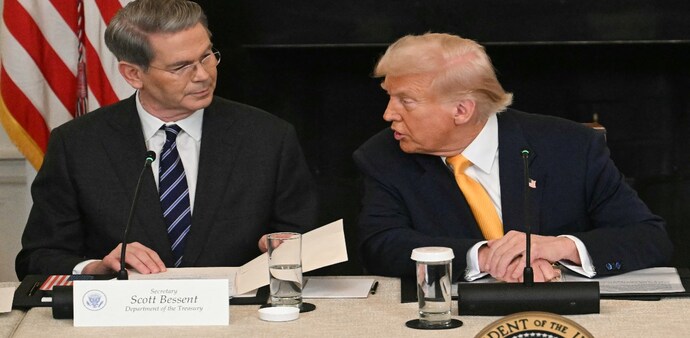
Evan A. Feigenbaum, a leading Asia expert and former U.S. deputy secretary of state, has accused Washington and Brussels of hypocrisy after U.S. Treasury Secretary Scott Bessent suggested that India should face secondary sanctions for buying Russian crude.
"In which the U.S. Treasury Secretary calls for a joint coalition with the European Union to ‘sanction’ India for its Russian oil purchases. We can perhaps forgive the good folks in India for thinking that this is beyond hypocritical since two European Union member states still buy both Russian oil and Russian gas and the phaseout isn't exactly imminent," Feigenbaum said in a post on X.
He went on to ask whether the coalition would also sanction China, before citing data from the Centre for Research on Energy and Clean Air. "Notably, EU imports of Russian fossil fuels in the third year of the invasion surpassed the EUR 18.7 bn of financial aid they sent to Ukraine in 2024," he wrote.
The research group's April report showed that EU imports of Russian fossil fuels totalled EUR 21.9 billion in the third year of the invasion, only a 6% drop in value and a mere 1% fall in volume compared to the previous year.
Russia earned EUR 242 billion globally from fossil fuel exports during the same period, with China (EUR 78 bn), India (EUR 49 bn), and Turkey (EUR 34 bn) accounting for nearly three-quarters of its fossil fuel revenues.
Since the invasion began in February 2022, Russia has earned an estimated EUR 847 billion from fossil fuel sales, according to the report. Despite sanctions, Russian revenues have declined only 8% compared to pre-war levels.
Bessent said Sunday that a coordinated push by the U.S. and EU to impose secondary tariffs on countries purchasing Russian oil could force Moscow into talks. "If the U.S. and EU can come in, do more sanctions, secondary tariffs on the countries that buy Russian oil, the Russian economy will be in full collapse. That will bring President Putin to the table," he told NBC News.
He said President Donald Trump and Vice President J.D. Vance had a "very productive" call with European Commission President Ursula von der Leyen and that she later followed up directly with him to discuss tightening pressure on Russia.
The remarks came as Washington's relations with New Delhi worsened after Trump doubled tariffs on Indian imports of Russian oil to 50% on August 27. Trump said from the Oval Office that he was "very disappointed" with India’s purchases. "We put a very big tariff on India, 50 percent tariff, very high tariff," he said. "I get along very well with Prime Minister Modi, he’s great. He was here a couple of months ago."
Trump officials, including Bessent and trade adviser Peter Navarro, have repeatedly accused India of indirectly funding Russia’s war through its oil purchases. Feigenbaum suggested such criticism rings hollow when EU members remain major buyers of Russian oil and gas.
Evan A. Feigenbaum, a leading Asia expert and former U.S. deputy secretary of state, has accused Washington and Brussels of hypocrisy after U.S. Treasury Secretary Scott Bessent suggested that India should face secondary sanctions for buying Russian crude.
"In which the U.S. Treasury Secretary calls for a joint coalition with the European Union to ‘sanction’ India for its Russian oil purchases. We can perhaps forgive the good folks in India for thinking that this is beyond hypocritical since two European Union member states still buy both Russian oil and Russian gas and the phaseout isn't exactly imminent," Feigenbaum said in a post on X.
He went on to ask whether the coalition would also sanction China, before citing data from the Centre for Research on Energy and Clean Air. "Notably, EU imports of Russian fossil fuels in the third year of the invasion surpassed the EUR 18.7 bn of financial aid they sent to Ukraine in 2024," he wrote.
The research group's April report showed that EU imports of Russian fossil fuels totalled EUR 21.9 billion in the third year of the invasion, only a 6% drop in value and a mere 1% fall in volume compared to the previous year.
Russia earned EUR 242 billion globally from fossil fuel exports during the same period, with China (EUR 78 bn), India (EUR 49 bn), and Turkey (EUR 34 bn) accounting for nearly three-quarters of its fossil fuel revenues.
Since the invasion began in February 2022, Russia has earned an estimated EUR 847 billion from fossil fuel sales, according to the report. Despite sanctions, Russian revenues have declined only 8% compared to pre-war levels.
Bessent said Sunday that a coordinated push by the U.S. and EU to impose secondary tariffs on countries purchasing Russian oil could force Moscow into talks. "If the U.S. and EU can come in, do more sanctions, secondary tariffs on the countries that buy Russian oil, the Russian economy will be in full collapse. That will bring President Putin to the table," he told NBC News.
He said President Donald Trump and Vice President J.D. Vance had a "very productive" call with European Commission President Ursula von der Leyen and that she later followed up directly with him to discuss tightening pressure on Russia.
The remarks came as Washington's relations with New Delhi worsened after Trump doubled tariffs on Indian imports of Russian oil to 50% on August 27. Trump said from the Oval Office that he was "very disappointed" with India’s purchases. "We put a very big tariff on India, 50 percent tariff, very high tariff," he said. "I get along very well with Prime Minister Modi, he’s great. He was here a couple of months ago."
Trump officials, including Bessent and trade adviser Peter Navarro, have repeatedly accused India of indirectly funding Russia’s war through its oil purchases. Feigenbaum suggested such criticism rings hollow when EU members remain major buyers of Russian oil and gas.